


HubSpot is the giant of the marketing and sales world. It’s a powerful platform that can feel like a superpower, but that power often comes with a substantial price tag and a level of complexity that doesn’t fit every business.
If you’re reading this post, you’re likely looking for HubSpot alternatives that deliver results without the steep learning curve or runaway costs. You’ve come to the right place. This data-driven guide breaks down the top 11 alternatives by use case, helping you find the perfect fit whether you’re replacing the entire suite or just one expensive Hub.
There’s no doubt that HubSpot offers a great suite of tools, and that searching for a new platform is a big decision. However, it’s often a smart one. While HubSpot’s marketing is top-notch, the reality of using the platform presents a few challenges. Addressing these challenges often involves re-evaluating your entire software stack, including searching for 1Password alternatives to ensure your team’s login data is managed as effectively as your marketing campaigns.
The biggest selling point of HubSpot is that everything is in one place. While convenient, this “jack-of-all-trades” approach can mean you may be using a tool that’s good, but not great at specific functions. Making the switch is often a move towards a “best-in-class” tool that excels at the function most critical to your business.
For example, if you’re running a small e-commerce business, you may need to focus strategically on inventory management and order fulfillment. Depending on the tools you use, this may require a customer relationship management (CRM) platform with integrations that extend beyond what HubSpot offers. For example, Salesforce has over 4,000 integrations, four times as many as HubSpot.
HubSpot’s pricing is complex and can quickly become unsustainable as you grow.
Its model is built on:
Plus, there are 1-year commitments and hefty one-time setup and onboarding fees ($3,000–$7,000) for the Professional and Enterprise tiers.
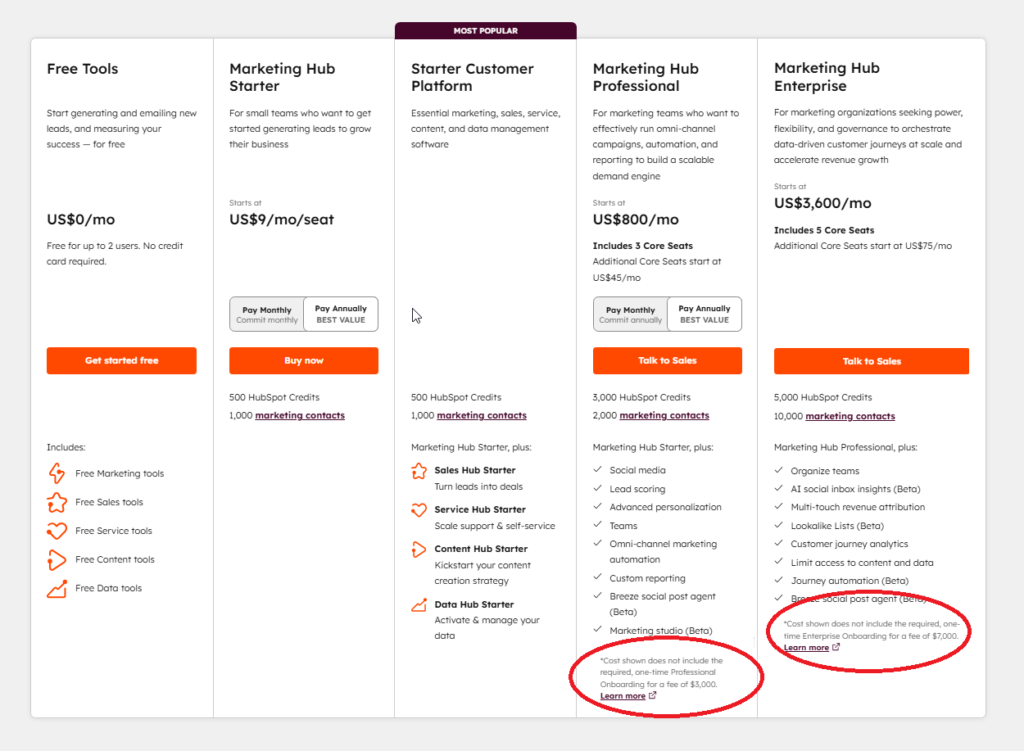
This pricing model means your bill can balloon unexpectedly as your business succeeds. Many alternatives offer more predictable pricing that lets you scale without breaking the bank.
Let’s look at some of the most popular alternatives to HubSpot for different use cases, starting with an apples-to-apples comparison of similar all-in-one sales, marketing, and customer service suites.
This section is for you if you’re looking to replace the entire HubSpot ecosystem. Zoho One and EngageBay offer a similarly integrated experience, combining CRM, marketing, and sales, but with their own unique advantages in pricing and functionality.
| Criterion | Zoho One | EngageBay | HubSpot Suite |
|---|---|---|---|
| Best For | Businesses that need a full software ecosystem on a tight budget | Startups & SMBs that want a HubSpot-like experience for less | All-in-one platform for businesses focused on inbound marketing |
| Pricing Model | Starts at $30/employee/mo (All Employee Pricing billed annually) | Predictable tiered pricing with a generous free plan and paid plans from $15 to $120/user/mo | Starts at $9/user/mo (Starter), balloons to $3,600/mo for 5 core users + $75/user/mo per additional user |
| Key Differentiator | Unmatched breadth of applications (45+) for a single price | Closest all-in-one functionality to HubSpot at a much lower cost | Deep, native integration between best-in-class marketing & sales tools |
If you want an all-in-one platform that goes far beyond marketing and sales, Zoho One is in a league of its own.
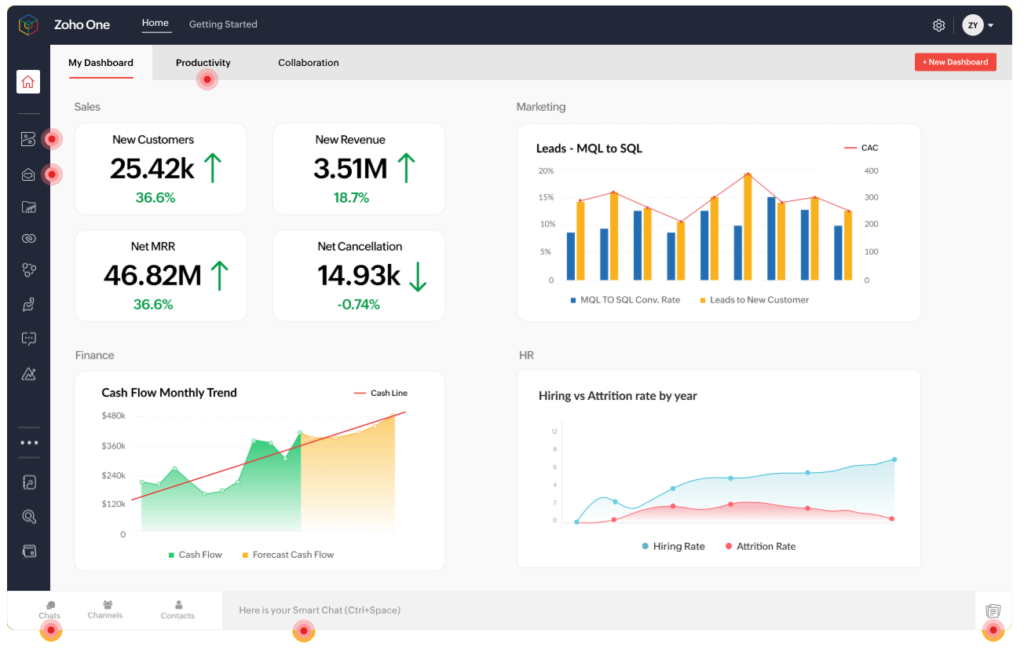
For a single, competitive price, you get access to over 45+ integrated applications, including:
For businesses seeking a true “operating system,” Zoho One’s value is unmatched. The best part is that you only pay about a third of the price if you commit to licensing the software for all employees on your payroll. If you’re a small business with few employees, Zoho One can be a very cost-effective HubSpot alternative.
| Plan / Feature | Details |
|---|---|
| Price | Varies based on pricing model |
| Free Tier? | No |
| Free Trial? | Yes (30-day trial) |
| All Employee Pricing | $30/mo (annual) / $35/mo (monthly) per employee |
| Flexible User Pricing | $75/mo (annual) / $90/mo (monthly) per user |
EngageBay is arguably the most direct HubSpot competitor for small businesses, mirroring its structure with Marketing, Sales, and Service “Bays.”
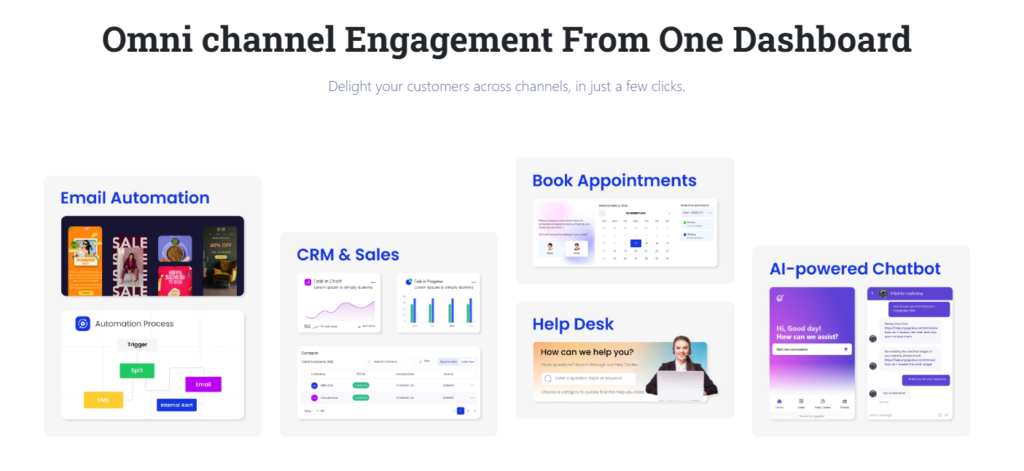
It covers all the core features you’d expect: email marketing, functional landing pages, and a visual sales pipeline. Its generous freemium plan, affordable paid tiers, and a library of pre-made templates make it the ideal entry point for startups and solopreneurs.
| Plan / Feature | Details |
|---|---|
| Price (per user) | Varies by plan and billing cycle |
| Free Tier? | Yes |
| Free Trial? | Yes (via the “Free Plan”) |
| Basic | $12.74/mo (biennial) / $13.79/mo (annual) / $14.99/mo (monthly) |
| Growth | $55.24/mo (biennial) / $59.79/mo (annual) / $64.99/mo (monthly) |
| Pro | $101.99/mo (biennial) / $110.39/mo (annual) / $119.99/mo (monthly) |
The CRM landscape is dominated by two giants. According to BuiltWith, HubSpot (45.1%) and Salesforce (37.62%) control over 80% of the market.
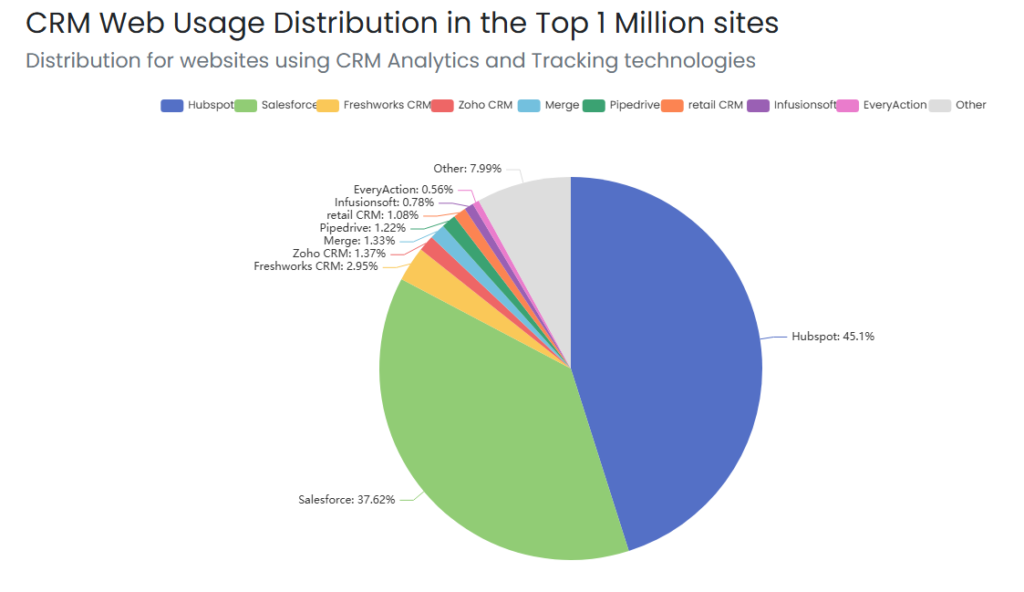
However, for businesses that need a different approach, a powerful set of alternatives offers more flexibility, a better user interface, or a lower price point. These are the three top HubSpot alternatives for CRM and sales.
| Criterion | Salesforce | Freshworks | Pipedrive | Insightly CRM by Unbounce | HubSpot (Sales Hub) |
|---|---|---|---|---|---|
| Best For | Mid-market to enterprise companies with complex sales processes | SMBs looking for a modern, easy-to-use sales CRM | Sales-focused teams who want simple, highly visual sales pipelines | SMBs, agencies, and teams that want affordability, ease of use, and strong automation | Teams wanting a sales CRM deeply integrated with marketing tools |
| Pricing Model | Starts at $25/user/mo, scales to $550/user/mo | Free plan; paid plans go from $9 to $71/user/mo (depending on billing cycle) | Starts ~$15/user/mo | Starts ~$29/user/mo | Free CRM available; Starter plan starts at $9/mo/seat |
| Key Different iator | Unmatched customiza bility, scalability, and app ecosystem | Intuitive UI and a unified platform for sales and support | Simplicity and a laser focus on activity-based selling | Native project management built into the CRM for end-to-end deal and delivery tracking | Seamless integration with Marketing Hub for full-funnel visibility |
Salesforce is the platform businesses graduate to. It’s HubSpot’s single largest competitor in the CRM space with a similar user base.
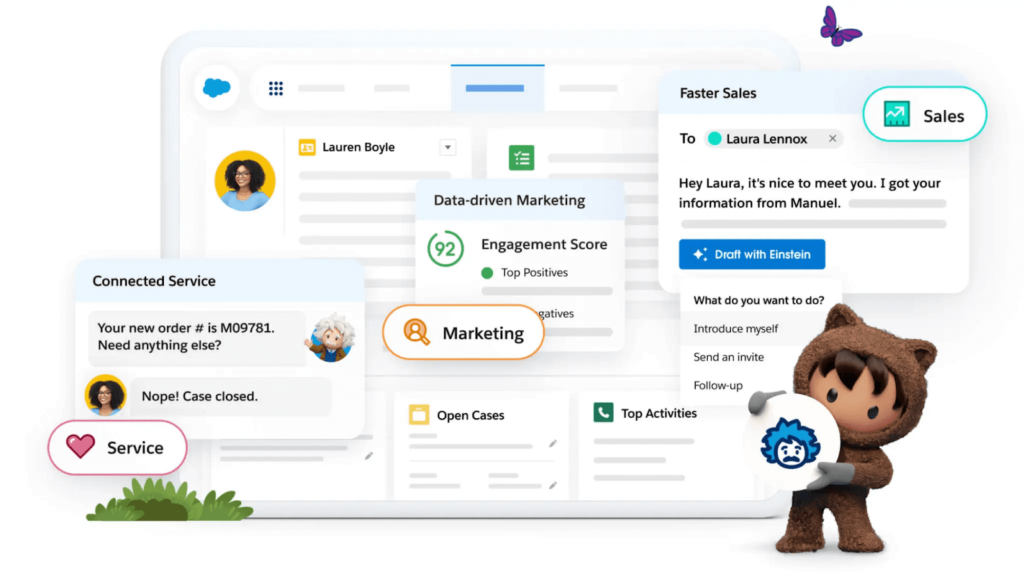
If your company has outgrown HubSpot or requires deep customization, Salesforce is the heavyweight champion, offering unparalleled power in sales forecasting and custom workflow automation.
Salesforce also offers granular reporting options and metric-rich reporting tools that provide deep insights into sales performance. As a leader in AI research, it also provides a robust framework and ethical AI guidelines for its users.
However, while powerful, it comes with a higher price tag than HubSpot. It also has a steeper learning curve, often requiring a dedicated administrator to manage.
| Plan / Feature | Price |
|---|---|
| Free Tier | Yes |
| Free Trial | Yes (30-day trial for paid plans) |
| Free Suite | $0 (Up to 2 users) |
| Starter Suite | $25/user/mo (billed monthly or annually) |
| Pro Suite | $100/user/mo (billed annually) |
| Sales Cloud Enterprise | $175/user/mo (billed annually) |
| Service Cloud Enterprise | $175/user/mo (billed annually) |
| Marketing Cloud Growth | $1,500/org/mo (billed annually) |
| Commerce Cloud B2B | Contact for pricing |
The Freshsales Suite is for teams who want a powerful sales CRM that they will actually enjoy using.
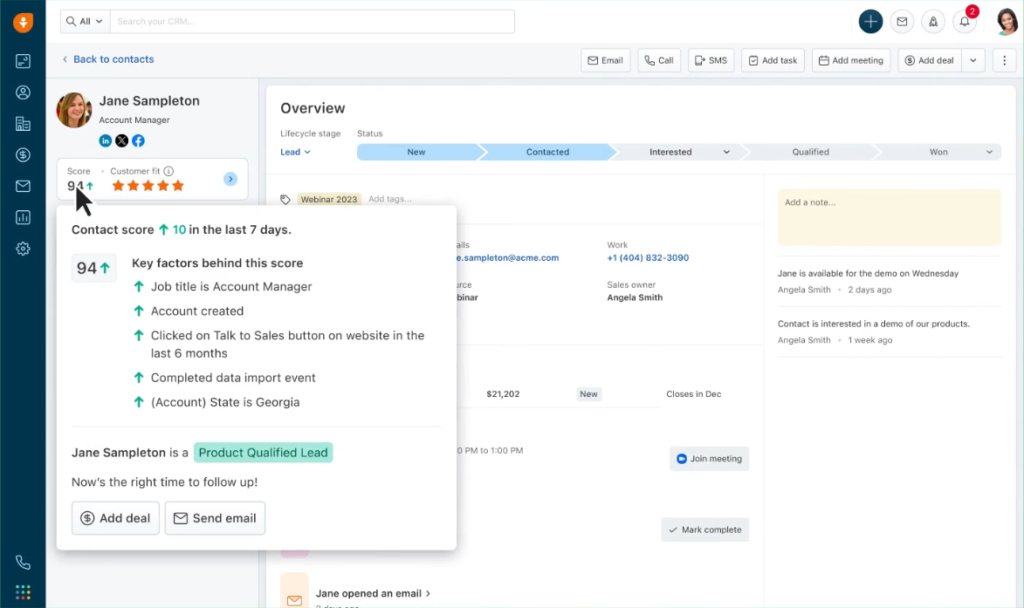
It stands out with one of the cleanest and most intuitive dashboards on the market, incorporating:
It’s an ideal choice for SMBs who want to unify their sales and customer support in a single view.
| Plan / Feature | Price |
|---|---|
| Free Tier | Yes (for up to 3 users) |
| Free Trial | Yes (21-day trial) |
| Growth | $9/mo (annual) / $11/mo (monthly) |
| Pro | $39/mo (annual) / $47/mo (monthly) |
| Enterprise | $59/mo (annual) / $71/mo (monthly) |
Pipedrive is the master of one thing: helping salespeople sell. Its entire platform is designed around its highly visual sales pipeline, keeping reps focused on the actions that move deals forward.
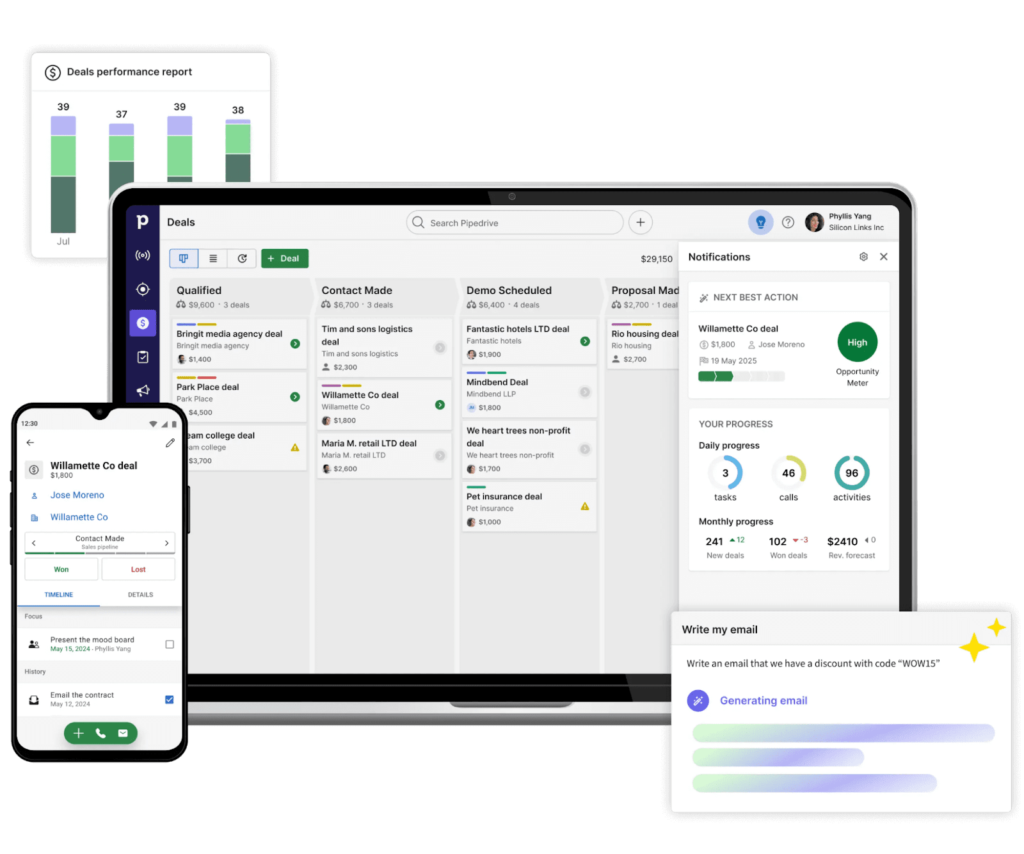
If you’re looking for a tool that eliminates distractions and empowers your team to focus exclusively on closing deals, Pipedrive is one of the best HubSpot alternatives for pure sales execution.
| Plan / Feature | Price |
|---|---|
| Free Tier | No |
| Free Trial | Yes (14-day trial) |
| Lite | $14/mo (annual) / $24/mo (monthly) |
| Growth | $39/mo (annual) / $49/mo (monthly) |
| Premium | $59/mo (annual) / $79/mo (monthly) |
| Ultimate | $79/mo (annual) / $99/mo (monthly) |
Insightly CRM by Unbounce is a highly customizable CRM with project management features built in, making it a strong contender and alternative to HubSpot for growing businesses that need more than just a sales pipeline.
It is one of the few CRMs that seamlessly combines sales, project management, and marketing into one system – without the hefty price tag of enterprise platforms. It’s designed to help teams stay organized, automate repetitive tasks, and keep customers engaged from first contact through delivery. For growing businesses, it’s a cost-effective way to run the entire customer lifecycle in one place.
Whether you’re closing deals, delivering projects, or tracking campaigns, Insightly helps streamline the process without overwhelming users with complexity. Its mix of affordability, scalability, and built-in AI features makes it especially appealing to small and mid-sized businesses looking to work smarter.
| Plan / Feature | Price |
|---|---|
| Free Tier | No |
| Free Trial | Yes (14-day trial, no credit card required) |
| Plus | $29/user/mo (billed annually) |
| Professional | $49/user/mo (billed annually) |
| Enterprise | $99/user/mo (billed annually) |
While HubSpot leads in the marketing automation space with a 14% share of all websites, the market is far more fragmented than CRMs. BuiltWith data shows over 30 companies share 80% of the market, meaning you have a wealth of powerful, specialized options.
Let’s look at two popular options, Brevo and ActiveCampaign.
| Criterion | Brevo | ActiveCampaign | HubSpot (Marketing Hub) |
|---|---|---|---|
| Best For | Businesses needing a multi-channel platform (Email, SMS, Chat) | SMBs & e-commerce needing best-in-class automation | SMBs looking for an all-in-one platform for inbound marketing |
| Pricing Model | Generous free plan; paid plans range from ~$8–$18/mo, based on email volume | No free tier; plans range from $15/mo to $1,169+/mo, based on contacts & features | No free tier. Starts at $9/mo, scales significantly with contact tiers & features |
| Key Differentiator | Combination of marketing & transactional tools at a low cost | Enterprise-level automation workflows at an SMB price point | A single, natively integrated platform for all marketing activities |
Brevo has evolved into a comprehensive, multi-channel marketing platform perfect for connecting with customers beyond the inbox.
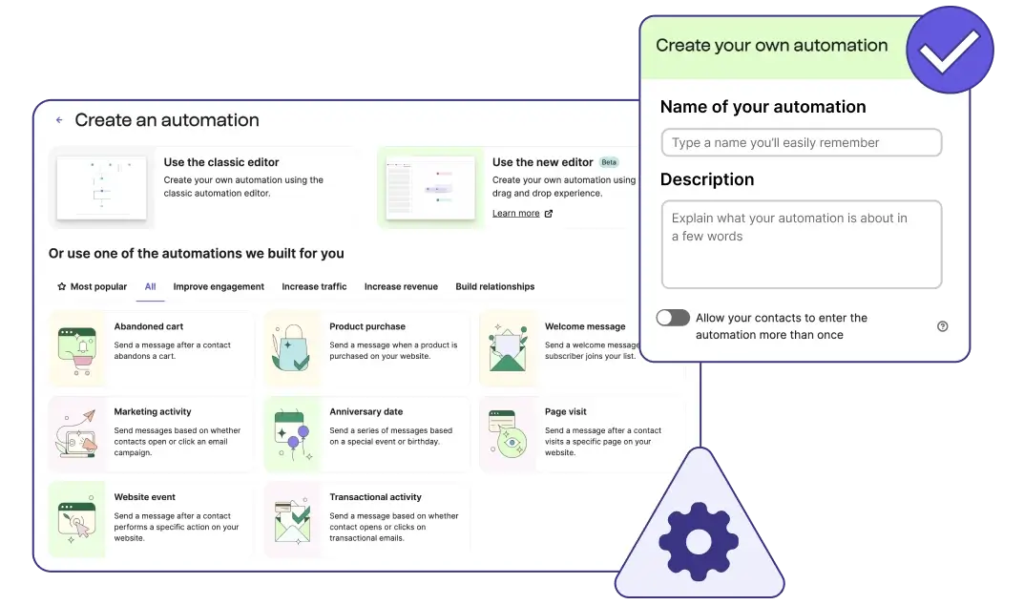
Brevo includes automations for a broad array of channels, including:
A key advantage is its pricing. It has a generous free tier and a pay-as-you-go model based on email volume rather than contact list size. This model makes it highly scalable.
| Plan / Feature | Price (per month) |
|---|---|
| Free Tier | Yes |
| Free Trial | Yes (via Free Plan) |
| Starter | $8.08 (annual) / $9.00 (monthly) |
| Standard | $16.17 (annual) / $18.00 (monthly) |
| Professional | $449.08 (annual) / $499.00 (monthly) |
| Enterprise | Custom |
ActiveCampaign is an email marketing tool platform above all else. It’s a clear winner for small businesses or any eCommerce business whose primary goal is not CRM.
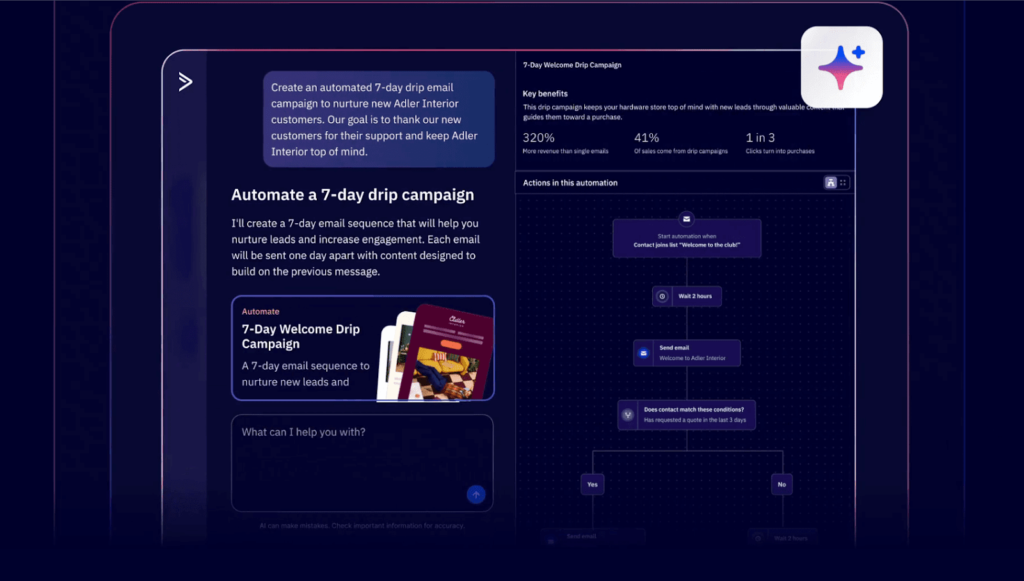
What stands out is its robust automation software through workflows and event tracking. Its visual workflow builder is deep and intuitive, allowing you to create complex, behavior-based email sequences with ease.
With ActiveCampaign, there are no limits to what you can do in your sales and marketing automation strategy. All this comes at an affordable price with no hidden costs.
That said, for larger businesses that need contact management for lists with 50,000+ contacts and want the full feature set, the price reaches well above $1,000/mo.
While it offers a CRM focused on deals and pipelines, one of its main disadvantages is that it doesn’t have landing pages.
| Plan / Feature | Price |
|---|---|
| Free Tier | No |
| Free Trial | Yes (14-day trial) |
| Starter (Email) | $15/mo |
| Plus (Email) | $49/mo |
| Pro (Email) | $79/mo |
| Enterprise (Email) | $145/mo |
| Core (WhatsApp) | $99/mo |
| Advanced (WhatsApp) | $99/mo |
| Premium (WhatsApp) | $218/mo |
| Plus (Email + WhatsApp) | $112/mo |
| Pro (Email + WhatsApp) | $142/mo |
| Enterprise (Email + WhatsApp) | $284/mo |
Here, the story is completely different. The HubSpot CMS powers a mere 0.2% of websites, while the giant WordPress dominates with over 43%, 10X more than the runner-up (Source: W3Techs).
HubSpot’s strength is its native CRM integration and its fast site performance. However, for those who prioritize flexibility, customization, and ownership, the choice is clear.
| Criterion | WordPress.org | HubSpot (CMS Hub) |
|---|---|---|
| Best For | Anyone needing a flexible, customizable website with full ownership | Marketers looking for a CMS natively connected to their CRM data without a patchwork of plugins to update |
| Pricing Model | Software is free; costs vary based on hosting, themes, and plugins | HubSpot CMS tools are free |
| Key Differentiator | Ultimate flexibility and a massive, open-source ecosystem | Seamless, native integration with the full HubSpot suite |
The WordPress CMS is an open-source content management system and website builder. But it isn’t just a HubSpot alternative for content management; it’s the industry standard. It powers over 43% of the internet.
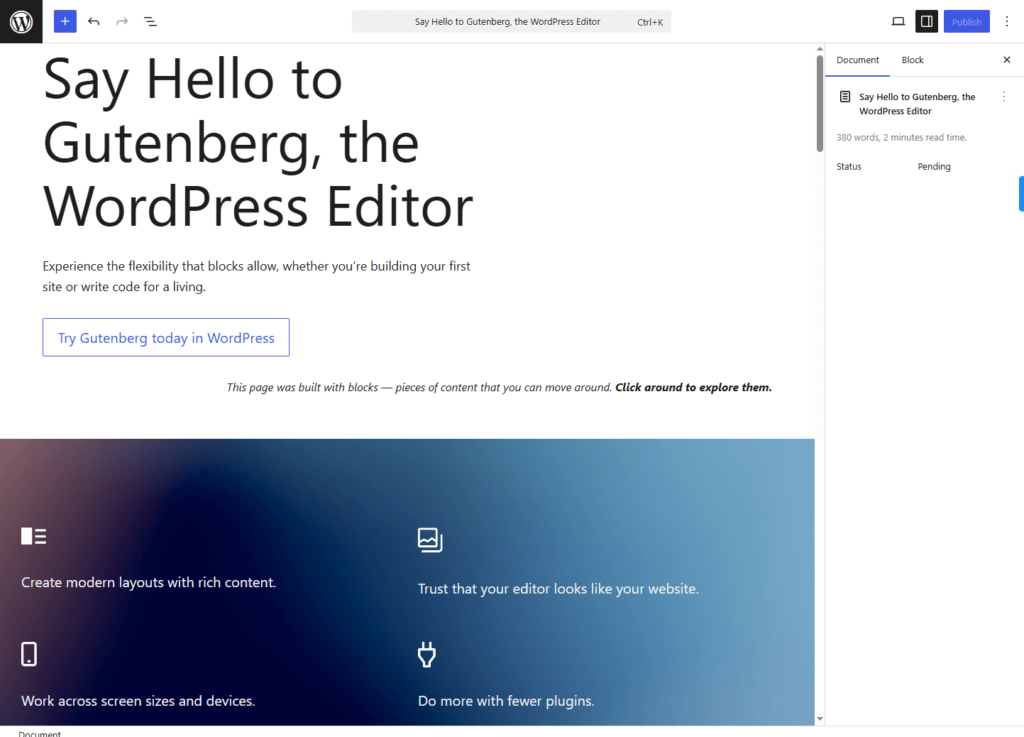
Its open-source nature means you own your website outright, and its massive ecosystem of themes and plugins allows you to build virtually any kind of site imaginable. So, if you’re looking for complete control and limitless possibilities, the choice is clearly WordPress.
However, switching from the HubSpot CMS to WordPress and moving hundreds of posts can be daunting. This is where a tool like Wordable becomes a lifesaver.
Wordable lets you bulk export content and upload it directly to WordPress in a single click, perfectly preserving formatting, images, and metadata. It turns a week-long migration headache into a simple task.
| Plan / Feature | Details |
|---|---|
| Free Tier | Yes (The software is free) |
| Free Trial | Doesn’t apply |
| Software Cost | $0 |
| Possible Additional Costs | $5–$50/mo (for hosting, domain, and premium themes/plugins) |
Exceptional customer service is non-negotiable for growth. While HubSpot’s Service Hub is convenient and scalable, dedicated platforms, like Zendesk and Intercom, often provide more powerful and specialized features for managing customer service.
| Criterion | Zendesk | Intercom | HubSpot (Service Hub) |
|---|---|---|---|
| Best For | Teams needing a robust, traditional, ticket-based support system | Teams focused on proactive, real-time, conversational support | Teams looking for scalable AI-powered support tools integrated with their CRM/sales data |
| Pricing Model | $19–$169/agent/mo | $29–$139/seat/mo + $0.99/per resolution from AI agent Fin | Free tools available; Paid plans from $9–$150/seat/mo |
| Key Differentiator | Power and scalability for traditional, omnichannel ticketing | Leader in proactive, conversational engagement and bots | Native integration with the HubSpot CRM for a unified customer view |
Zendesk is the go-to solution for teams that need a powerful, traditional, ticket-based support system.
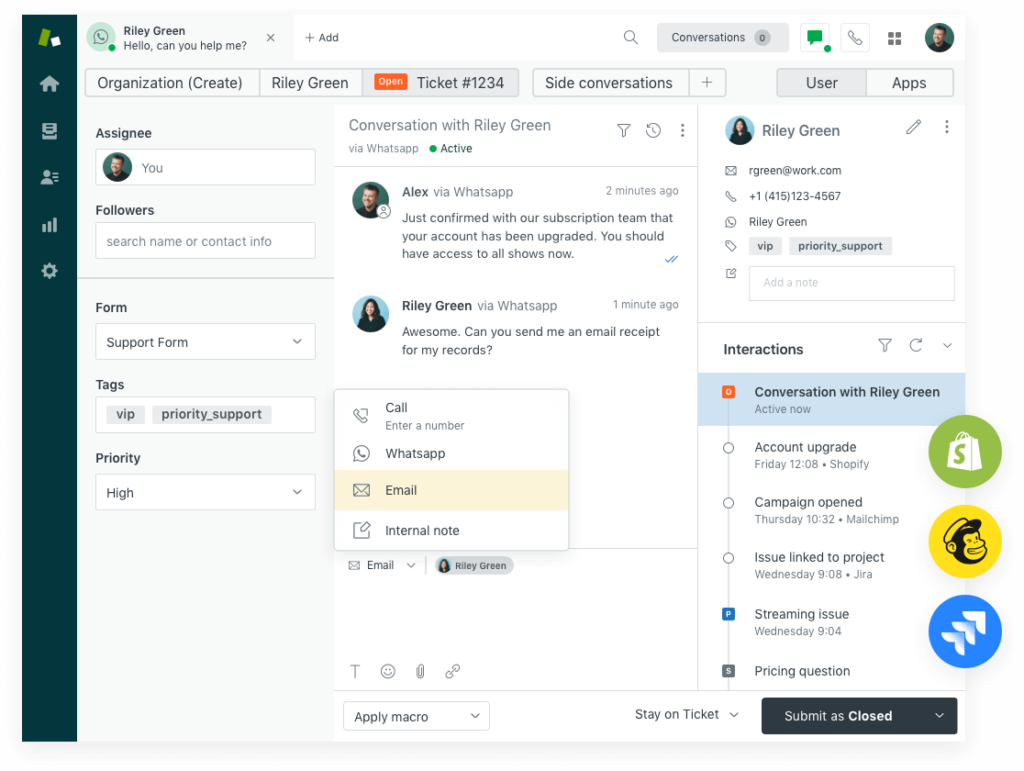
It’s a robust desk software solution that excels at managing omnichannel communication and complex customer service workflows at scale. Starting from the Suite Team plan ($55/agent/mo), you get a suite of agentic AI tools to automate customer service.
| Plan / Feature | Price (per agent) |
|---|---|
| Free Tier | No |
| Free Trial | Yes (14-day trial) |
| Support Team | $19/mo (annual) / $25/mo (monthly) |
| Suite Team | $55/mo (annual) / $69/mo (monthly) |
| Suite Professional | $115/mo (annual) / $149/mo (monthly) |
| Suite Enterprise | $169/mo (annual) / $219/mo (monthly) |
Intercom is the leader in modern, conversational support.
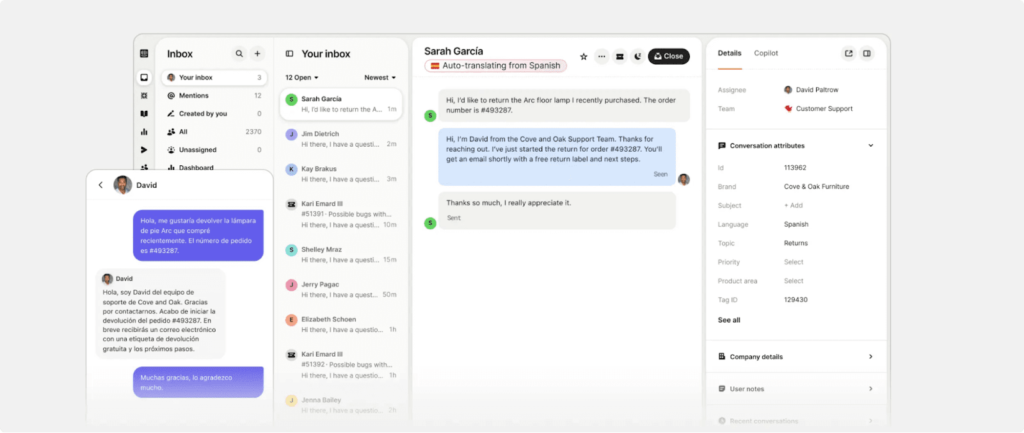
Intercom is a platform built around a best-in-class messenger and AI-powered bots. It focuses on proactive, real-time engagement with customers directly on your site or in your app. It’s a great alternative to HubSpot’s Service Hub for its powerful AI features with predictable, transparent, performance-based pricing.
| Plan / Feature | Price (per seat) |
|---|---|
| Free Tier | No |
| Free Trial | Yes (14-day trial) |
| Essential | $29/mo (annual) / $39/mo (monthly) |
| Advanced | $85/mo (annual) / $99/mo (monthly) |
| Expert | $132/mo (annual) / $139/mo (monthly) |
Feeling overwhelmed? Don’t be. You can find the perfect platform by answering two simple questions.
First, decide if you’re replacing the entire HubSpot system or just one part of it. If you need a fully integrated suite, focus on the all-in-one alternatives like Zoho One. If you just need a better tool for one job—like sales or automation—explore the best-of-breed options.
Make a list of your non-negotiables, like a specific integration or advanced analytics for sales management. Compare this list against your top contenders and set a realistic budget to narrow down your final choice.
As you’ve surely noticed, a key difference between these tools is how they scale. Look at your current needs and forecast how they’ll likely evolve in the next 2–5 years. Choose the platform or software that:
HubSpot is a great platform, but it’s not the only one. The modern SaaS landscape is filled with incredible HubSpot alternatives designed to fit every budget, use case, and business size. The “best” platform is simply the one that aligns with your specific process, empowers your team, and scales predictably as you grow.
Now that you’ve chosen the perfect platform to manage your customer relationships, you need to fuel it with high-quality content. Stop wrestling with formatting and automate your publishing process with Wordable. Sign up for a free trial to see how much time you can save creating and shipping content from Google Docs to your CMS in a single click.