


Marketing teams are overwhelmed.
They’re juggling keyword research, search engine optimization (SEO), marketing campaigns, visual elements, audience engagement — and on and on — all while trying to extract actionable insights from analytics tools and performance tracking platforms.
It’s not possible to do this efficiently by hand.
That’s why a centralized content marketing platform and the right automation tools are so valuable. They speed up content processes while helping you understand what’s working.
Let’s explore the best content marketing tools that help you scale smarter so you can produce high-quality content without adding extra work. 👇
Highlights
Content marketing tools are software platforms that support content production, distribution, and performance tracking at scale, often combining automation tools, AI-powered content creation, and website analytics tools into one system.
They act as the operational backbone of modern marketing. Without them, scaling feels almost impossible.
This is because today’s marketers have to produce tons of content to keep up with demand. They’re producing SEO blogs, video content, email campaigns, and social media posts across multiple channels.
In fact, as HubSpot’s 2026 State of Marketing report found, 75% of marketers use five or more marketing channels.
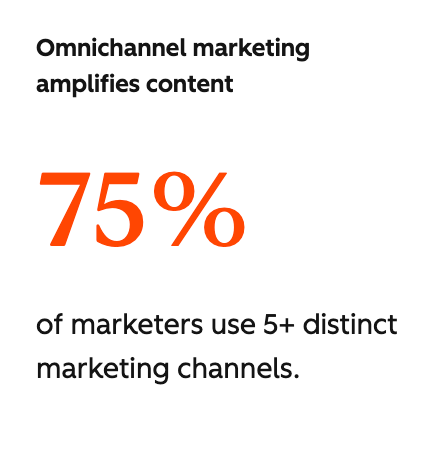
Marketers Use Five or More Marketing Channels
Add personalization into the mix, and manual execution quickly becomes unrealistic. As Salesforce’s 2024 State of Marketing report shows, high performers personalize content across six channels on average. There’s no way you can compete if you’re creating and distributing by hand.
This is why marketers turn to technology. With the best content marketing tools, you can produce and distribute content in a fraction of the time.
Here are the types of content marketing tools popular today …
Together, these tools transform content marketing from effort-driven to system-driven.
Let’s explore the best of these tools available today. 👇
The right content marketing tools help you move from scattered production to scalable systems.
Here are the best content marketing tools across research, creation, and optimization so you can choose the right fit for your stack:
Before you create anything, you need clarity on three things:
Research and strategy tools answer these questions so you’re not publishing randomly and praying for results.
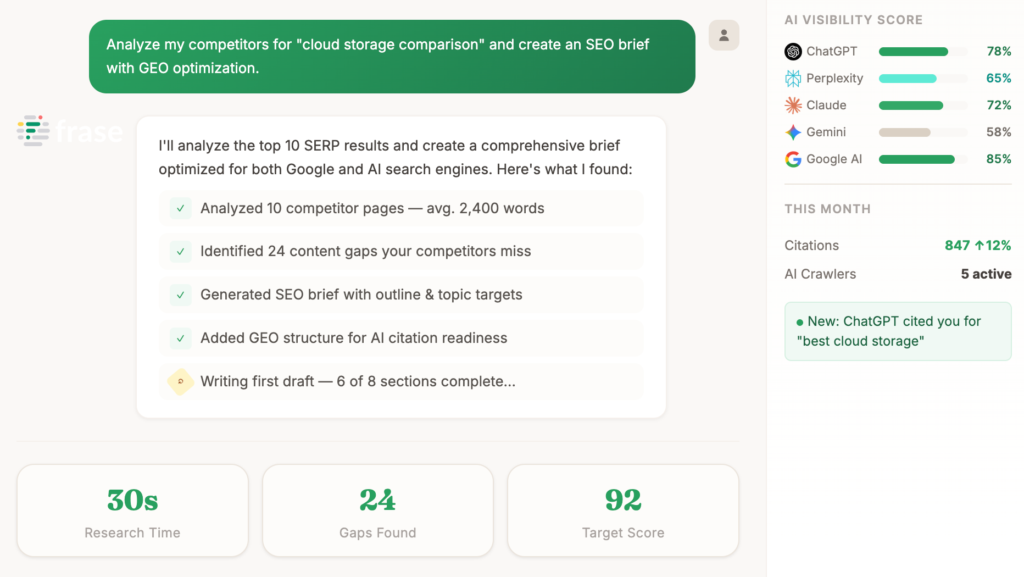
Frase is an AI-powered content research and writing platform for SEO.
You enter a target keyword, and Frase analyzes the top-ranking pages on Google. It shows you what headings, questions, and subtopics those pages cover so you can match real search intent.
But it doesn’t stop at research.
Frase also includes AI drafting tools. You can generate outlines, first drafts, and FAQ sections directly inside the platform. This makes it useful for speeding up content creation without losing SEO alignment.
Pros:
Cons:
Price: Pricing starts at $39 monthly if paid annually.
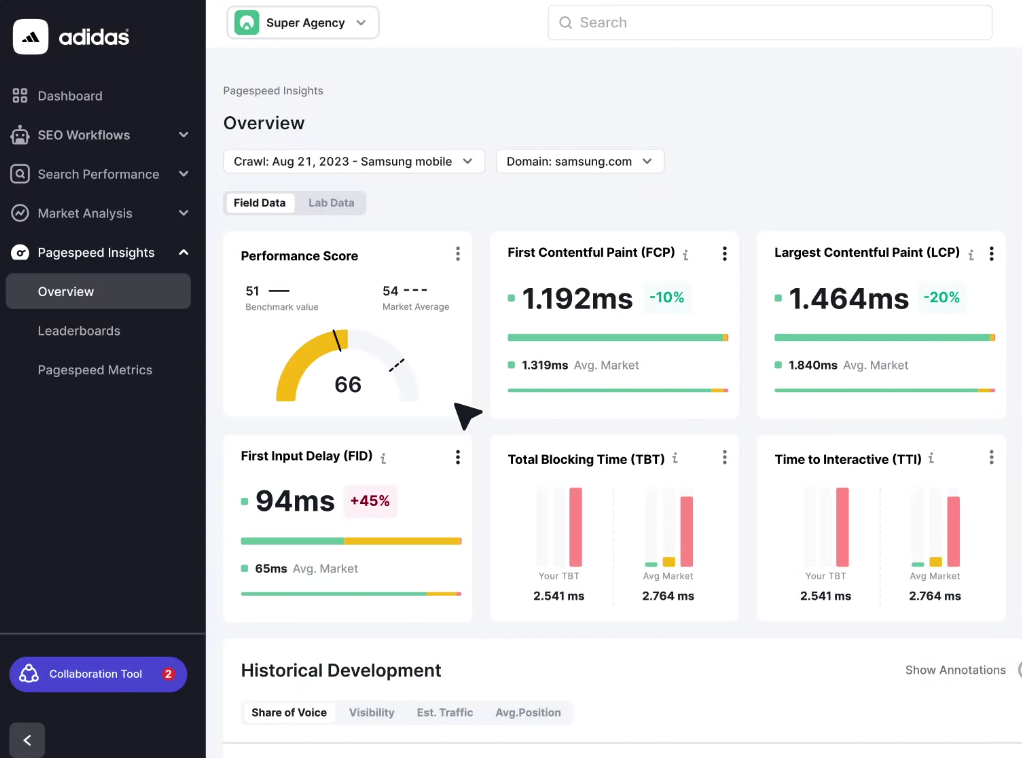
Semrush shows you how your website performs in Google. And how your competitors are performing, too. You can find new keywords, track rankings, analyze competitor content, and run site audits to fix technical SEO issues.
If you invest in SEO blogging, this tool helps you see what’s driving traffic and where gaps exist. It’s powerful and comprehensive, but it takes time to learn and use it well.
Pros:
Cons:
Price: Pricing starts at $165.17 monthly when paid annually.
Content creation and optimization tools help you turn ideas into polished, high-performing marketing content at speed and scale.
ChatGPT is a generative AI assistant powered by a large language model that works like a thinking partner. When you’re stuck on angles, headlines, or structure, it helps you move fast. You can ask it to outline a blog post or draft a rough email outreach sequence. You can use it to spin one article into social media posts or sketch a script for short-form video content.
It’s especially useful when you need to scale output without starting from scratch every time.
Pros:
Cons:
Price: ChatGPT offers a free model, and pricing starts at $8 a month.

Jasper is an AI writing platform for marketing teams that need content fast.
It generates blog drafts, email campaigns, ad copy, and social media posts across formats. Its brand voice feature helps you keep messaging consistent, especially across multi-channel campaigns.
Jasper works best when you need speed and volume, but it still requires strong editing and governance to avoid generic output.
Pros:
Cons:
Price: Jasper’s plans start at $59 per month.

Canva is a design platform that helps non-designers create professional graphics, slide decks, whitepapers, and social media visuals.
It comes with a large library of templates and drag-and-drop editing to speed up production. It also includes lightweight video editing for short-form content.
For small teams without in-house designers, Canva makes visual content creation far more accessible and scalable.
Pros:
Cons:
Price: Canva offers a comprehensive free tool, with paid plans starting at $120 per year.
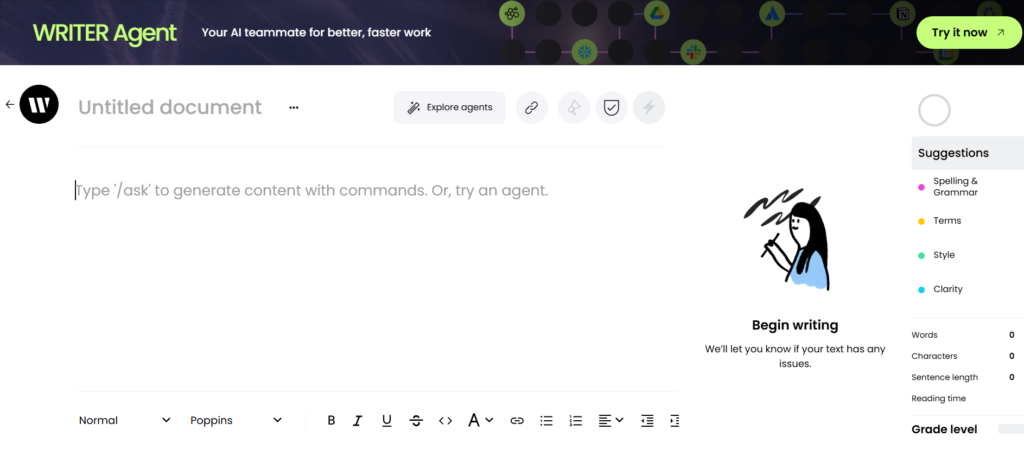
Writer is a writing assistant that helps you check your content for grammar errors, clarity, and tone before it goes live. It offers integrations for Google Docs, email, browsers, and CMS platforms.
If you publish large volumes of marketing content, it serves as a final quality-control layer. This helps you protect credibility and keep your messaging consistent across teams.
Pros:
Cons:
Price: Writer offers a free starter plan. Contact sales about paid plans.
Creating content is one thing. Managing it across teams, campaigns, and revenue targets is another. These platforms connect planning and publishing to performance so content doesn’t live in silos.
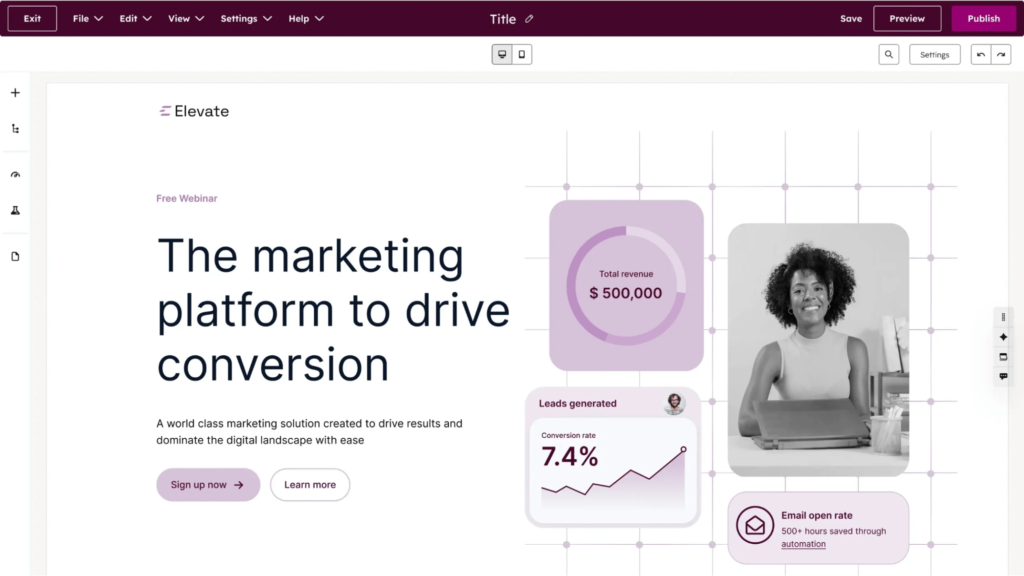
HubSpot Landing Page Editor Interface
HubSpot combines content management system(CMS), customer relationship management (CRM), email marketing and automation into one platform.
Instead of publishing content in one tool and tracking leads in another, everything lives in the same database. You can see how each piece of content drives conversions and track how contacts move through the funnel.
Pros:
Cons:
Price: HubSpot’s Content Hub has a free limited plan, with paid plans starting at $9 a month.
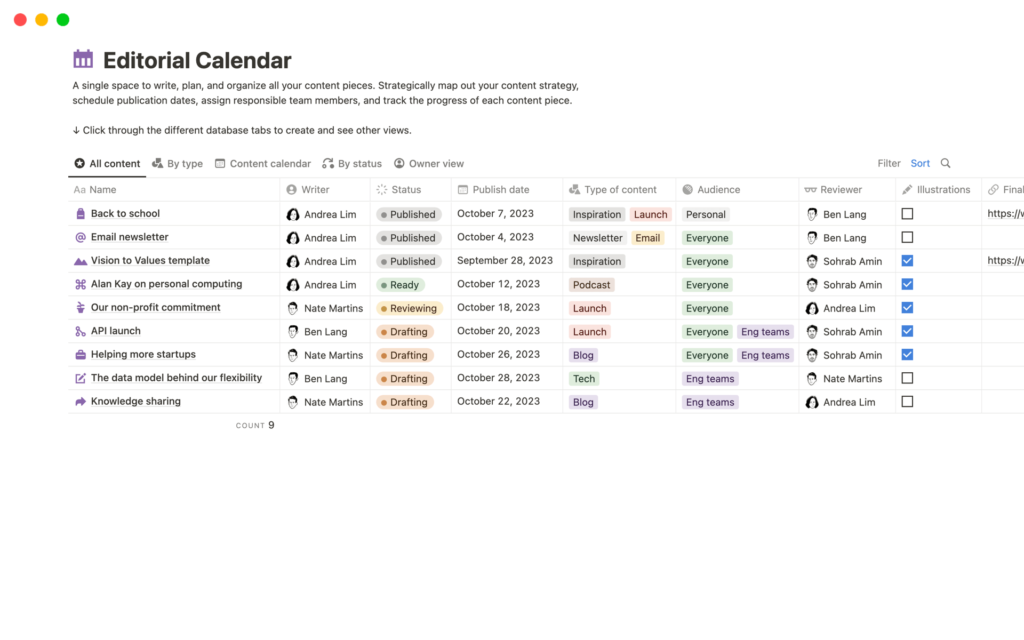
Notion is where you plan everything and store all of your content assets.
Teams use it to build content calendars, manage briefs, document standard operating procedures (SOPs), and track production stages. You can create databases for campaigns or assets, and view them as calendars, boards, or timelines.
If you want control over your content workflow without rigid software rules, Notion offers a flexible content operating system.
Pros:
Cons:
Price: Notion has a free version of its tool, with plans starting at $10 a month.
Once you’ve created your content, you need to distribute it consistently and manage engagement to keep campaigns moving through the funnel. These tools help you publish across channels, while nurturing audiences and extending content lifespan.
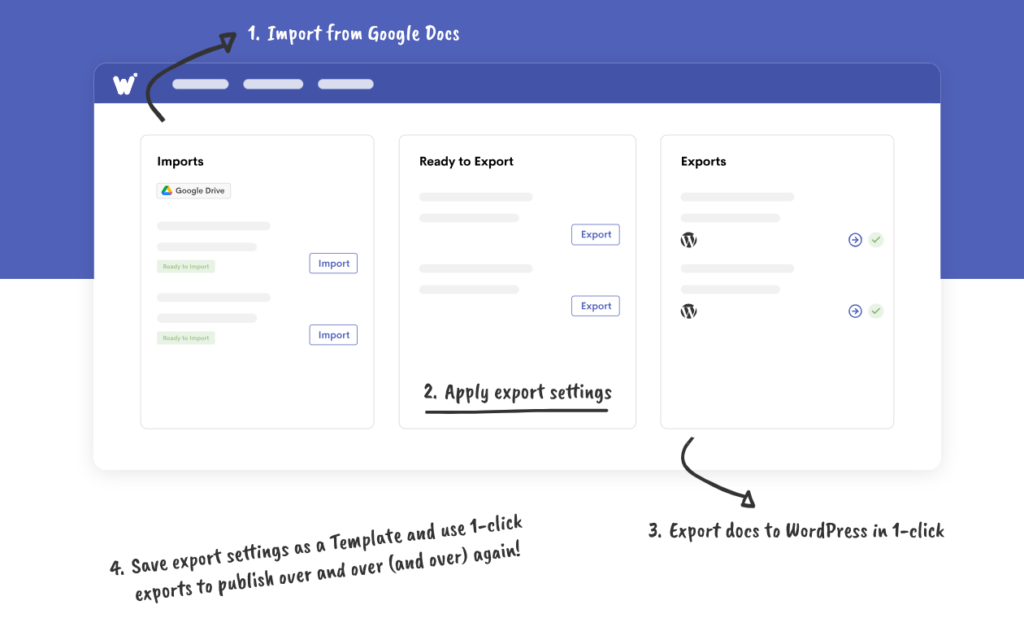
Wordable helps content teams move drafts from Google Docs into WordPress (or other CMS platforms) without losing formatting.
Instead of copying and pasting, which can break headings, images, or links, Wordable automatically preserves styles, images, and embedded media. This saves teams hours per week when publishing multiple blog posts or long-form content.
It’s especially valuable for agencies or internal marketing teams that need to get content live quickly. (While maintaining brand standards and SEO formatting.)
Pros:
Cons:
Price: Wordable offers a free Hobbyist plan. Paid plans start at $29 per year.
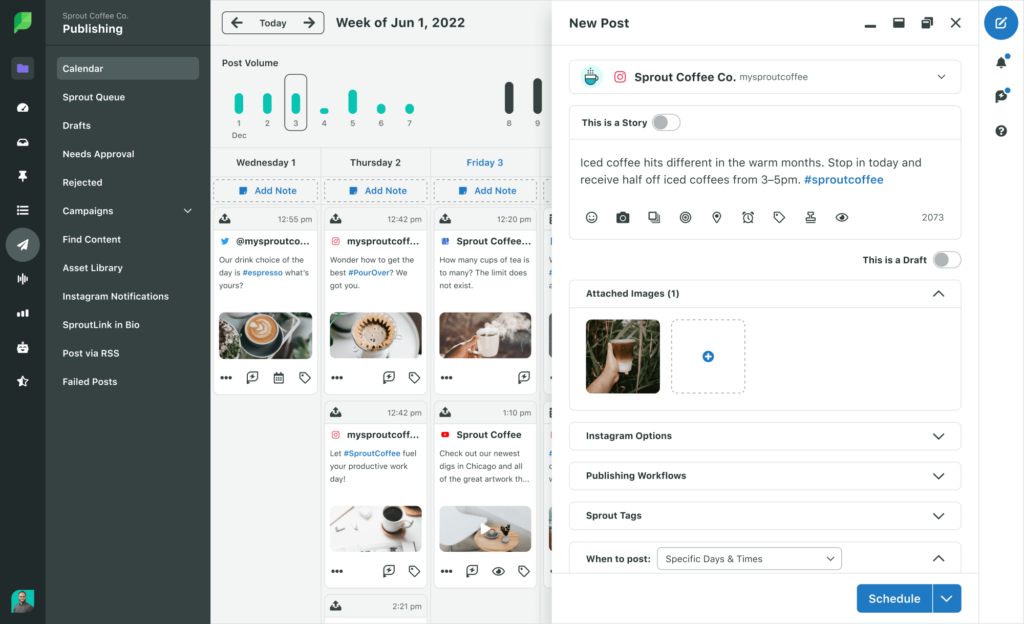
Sprout Social Publishing Dashboard
Sprout Social is a social media management platform built for teams running multiple accounts or campaigns.
You can personalize content, schedule posts, manage comments in one inbox, and generate reports that show how social media supports business goals.
Sprout is popular for the control and visibility it gives, while reducing manual omnichannel management.
Pros:
Cons:
Price: Sprout Social offers a free 30-day trial, with monthly plans starting at $199 a month.
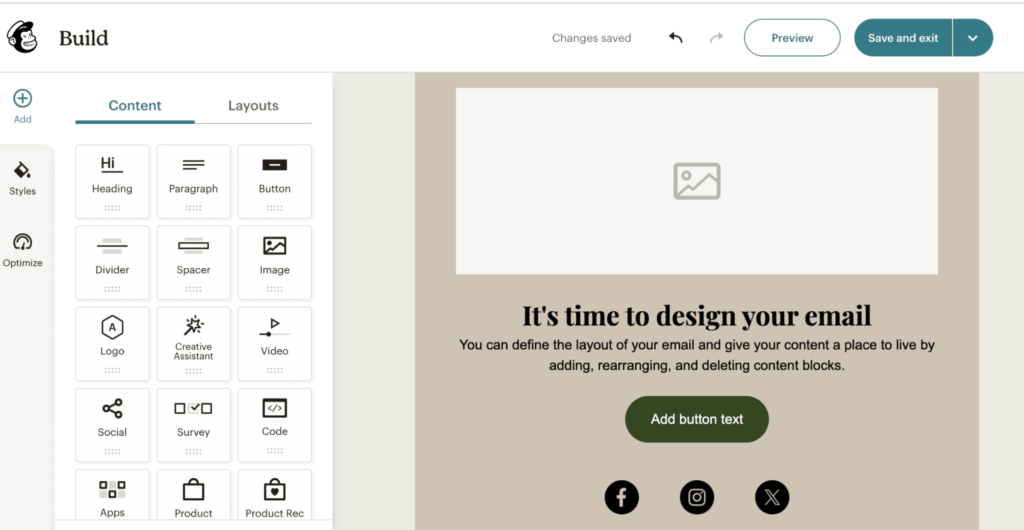
Mailchimp Email Builder Interface
Mailchimp is an email marketing platform that helps you send newsletters, nurture leads, and automate email outreach without complex infrastructure.
You can segment contacts and build automated journeys to personalize outreach while reducing manual work. Mailchimp also offers multi-variate testing and analytics to help you improve campaign performance.
Pros:
Cons:
Price: Mailchimp has a limited free plan, with paid plans starting from $20 per month.
To improve performance, you need to measure it.
These content marketing analytics tools show what’s working, what’s not, and where to focus next.

Google Analytics 4 (GA4) tracks how people find your site. It shows you what content they consume and what actions they take next. By connecting blog traffic, landing pages, and campaigns to conversions, you can see which content results in real outcomes.
For most teams, it’s the baseline content marketing analytics layer.
Pros:
Cons:
Price: GA4 is free, but its enterprise plan (GA360) starts at $50,000 a year.

Hotjar shows how people use your pages. Instead of bare numbers, you see heatmaps, session recordings, and on-page feedback.
With this information, it’s easier to see why visitors drop off. You can see where they ignore CTAs, struggle with forms, miss user experience signals, or overlook certain products.
GA4 tells you what happened, Hotjar shows you why.
Pros:
Cons:
Price: Hotjar offers a limited “forever free” plan, with paid plans starting from $39 per month.
Content marketing works best when it’s consistent and intentional, and you’re measuring its impact.
The right content marketing tools make that possible.
They give you clarity on what to create, help you produce it efficiently, and show you what actually gets results.
But don’t feel like you have to implement them all at once.
Work out where your content workflows feel most messy and find a tool to fit there first. Once you’re getting value, you can scale up your content marketing tech stack to streamline your processes further.
Hint: If you publish blog posts often, you’ll LOVE Wordable. I just saved four hours using it this week! Try it now. ✨
Small businesses usually benefit from tools that cover research, creation, and distribution without heavy complexity.
Try platforms like Frase for keyword research, Canva for visual elements, ChatGPT for ideation and drafting, and Wordable for publishing blog posts. These tools provide strong coverage without requiring enterprise budgets.
Content marketing tools improve ROI because they remove guesswork. They show what your audience is searching for, how your content performs, and where opportunities exist.
Instead of producing content blindly, you make decisions based on data. This clarity helps you invest time and budget where it actually drives results.
AI tools aren’t mandatory, but they significantly speed up research, drafting, and repurposing. When you use them with a clear strategy and human oversight, they reduce production time. This can help you scale content creation without lowering quality or consistency.