


Creative teams are not the same as any other team you have in your organization. Their workflow is different as creativity can knock at any time. Many changes occur before these teams land on a “final” version.
For instance, a designer may refine something completely based on a writer’s draft. However, it didn’t meet the client’s expectations. Now, it goes back to the designer to make further changes to meet the client’s expectations.
Creative work is less linear and more explanatory than other projects. It requires constant alteration, experimentation, and collaboration across skill sets. This makes project management for creative teams essential.
Without the right structure, numerous problems arise. Deadlines slip, scope creeps, and endless external feedback arises. All this affects productivity.
On the other hand, excessive rigidity can undermine creativity.
The article breaks down the key challenges faced by creative teams. You will also explore best practices to overcome them along with tools that make creative process smoother.
Even the most talented teams can fail when managing the creative content lifecycle. Unlike other work, creative projects are hard to measure, predict, and control.
Here are some of the biggest challenges faced by creative teams:
New ideas often lead to changes in creative projects, but scope creep can result from this. Clients may add new requirements, which could extend the creative process and push deadlines. This can put work stress on your creative teams and cause work-life imbalance.
According to Harvest, scope creep is a big challenge in ongoing projects. It can cause performance issues and raise costs.
For example, a design team is developing a logo design. The client came in and said, ” I need one more change.” Before you realize it, the design has gone through five variations. The launch deadline has passed, and your team is still deciding on the color.
Without clear boundaries, teams can get stuck in an endless revision cycle. This can also result in lower quality. You need to avoid such challenges.
Creative projects don’t follow the traditional timeline. This is one of the major challenges faced by such teams. A design concept usually takes more time at the ideation stage than at execution. This unpredictable time makes it difficult for creative project managers to set realistic deadlines. Also, it becomes challenging to delegate resources and keep tabs on the progress.
Let’s understand it through an example!
Imagine a marketing team is creating a campaign video. Scripting took one day, but storytelling took almost a week due to various revisions. When you track such variations, the team blocks extra time for creative-heavy tasks.
Feedback plays an essential role in meeting the actual requirements. When there is no clear structure, it becomes a never-ending cycle. Various comments, conflicting opinions, and delayed approvals can postpone the delivery.
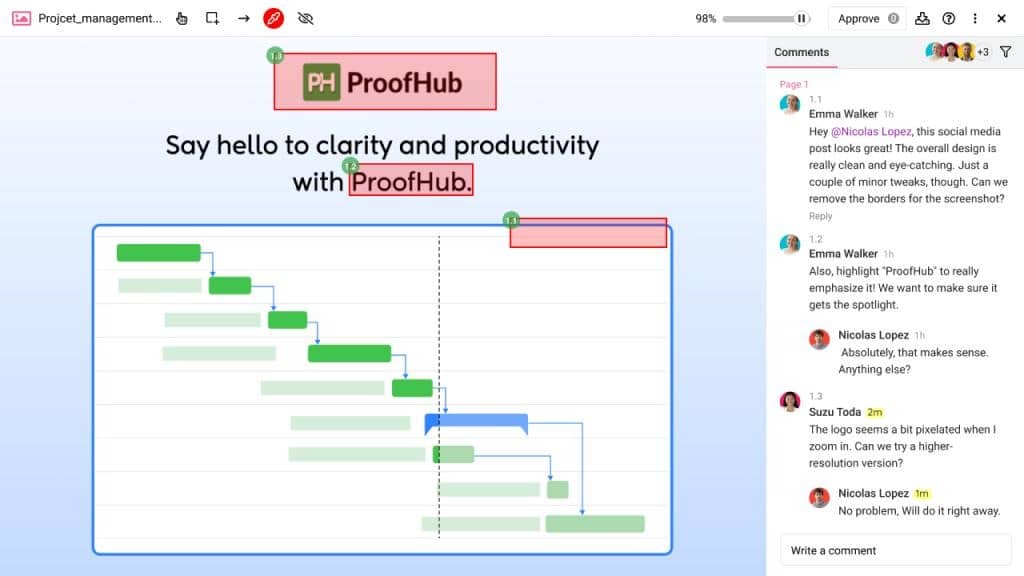
For example, your team is working on a website design. You found out that the feedback is available across different applications. Now, the designers have to revise the same elements in different ways. They can even miss out on details when they keep getting scattered information.
This is a reference image showing a structured feedback cycle, where every change is in a single place.
Screenshot provided by the author
Clients often have a mental image of what they want that doesn’t match the team’s rendition. When there is no structured communication, the misalignments cause trouble. The teams have to rework, which wastes time for both clients and themselves.
Poor communication doesn’t just slow projects down. It also affects employee retention. In fact, Staffbase reports that more than 60% of employees consider leaving their current jobs due to poor communication.
If a marketing team is working on a product launch, all the campaigns are on hold. The client wanted an elegant and minimal look for the brand positioning. Client approval is a must for a launch. Due to misalignment, the team would have a lot of work to do.
Creative teams need a balanced combination of structure and flexibility. Too many processes diminish creativity and productivity, while too few makes them miss deadlines.
The following are some of the best practices which can help you manage your creative projects effectively-
When you start a new project, you need todefine objectives, timelines, and deliverables beforehand. Make sure you show the team what success looks like while leaving room for creativity. A good creative project manager gives enough space for innovation while avoiding scope creep. Which is why it is important to plan properly.
The project scope will help you guide decisions, align expectations, and keep everyone focused. It also minimizes confusion when new ideas, requests, or feedback start pouring in. When you are clear from the start, the team can channel its creativity in the right direction.
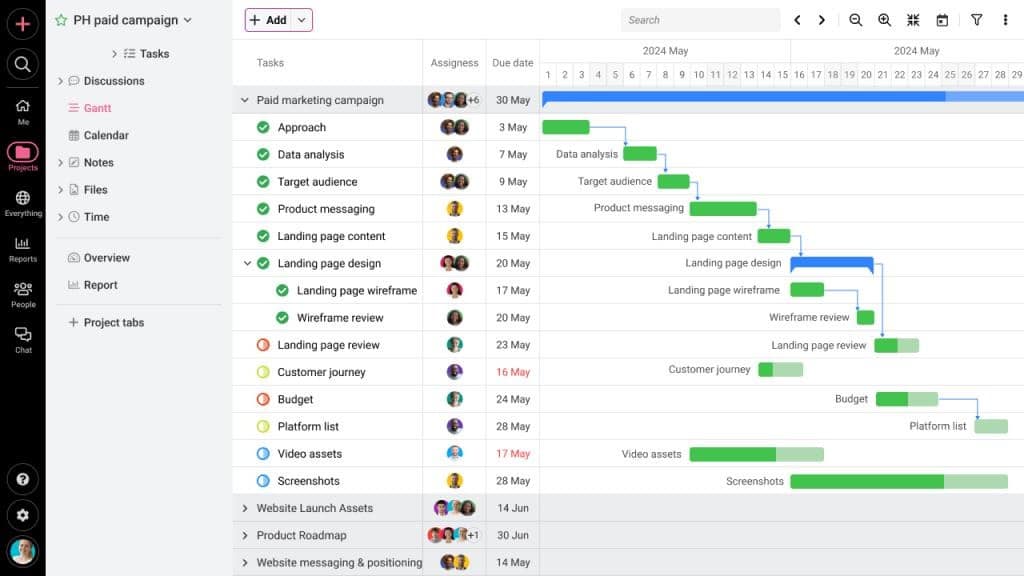
Most creative teams work best when they can see progress at a glance. There are several tools, such as Kanban boards, Gantt charts, and shared calendars. You can use them for task tracking, timelines, and deadlines to organize projects. This workflow keeps everyone aligned and makes clear what’s done and what’s overdue.
Beyond tracking, the visual presentation of workflow gives a sense of momentum. You can know how far you have come and what’s left to achieve. This can reduce continuous back-and forth, and let you know about project progress. When you have a structured workflow, it ensures you never miss a deadline.
To further improve clarity and efficiency, workflow examples can provide proven frameworks that teams can follow, helping standardize processes and optimize collaboration across projects.
Screenshot provided by the author
Instead of letting feedback trickle in from different directions, create a structured process. Set review stages, define who provides feedback and when, and limit revision rounds. These help you avoid endless back-and-forth while meeting expectations on time.
Feedback management is essential for keeping projects on track. You can save time and reduce confusion by using a central feedback hub or a reliable Qualtrics alternative for collecting and organizing stakeholder feedback. You will know exactly who is managing what. This can help in preventing a situation where last-minute feedback derails the project.
With the help of clear feedback, you can keep everyone aligned and protect your team’s focus. At the end, it can help ensure efficient project progress. It also strengthens team dynamics by building trust and collaboration.
The best ideas come when many perspectives collide. You need to bring writers, designers, and marketers together to brainstorm. When teams collaborate early in a project, it prevents misalignment. It can also help build team ownership and generate more innovative outcomes.
Whenever someone gets praise, they tend to work better than before. In psychology, it’s known as Positive Intermittent Reinforcement. Collaboration can help break down silos and ensure that you priortize creativity. Encourage open communication and idea-sharing to help spark creativity and reduce friction. It results in giving a strong sense of responsibility.
Ensure that the clients and decision-makers are in the loop. They provide regular updates, previews, and knowledge of all discussions. Transparency helps build trust and prevent misalignment.
Transparency ensures that you can see potential challenges at early stages. When you share your progress, it can help with faster approvals. It can also help in smoother decision-making. Clients can know that their input matters, and teams know that alignment prevails. It can help in carrying out projects in a smooth manner, strengthen trust, and make fewer changes.
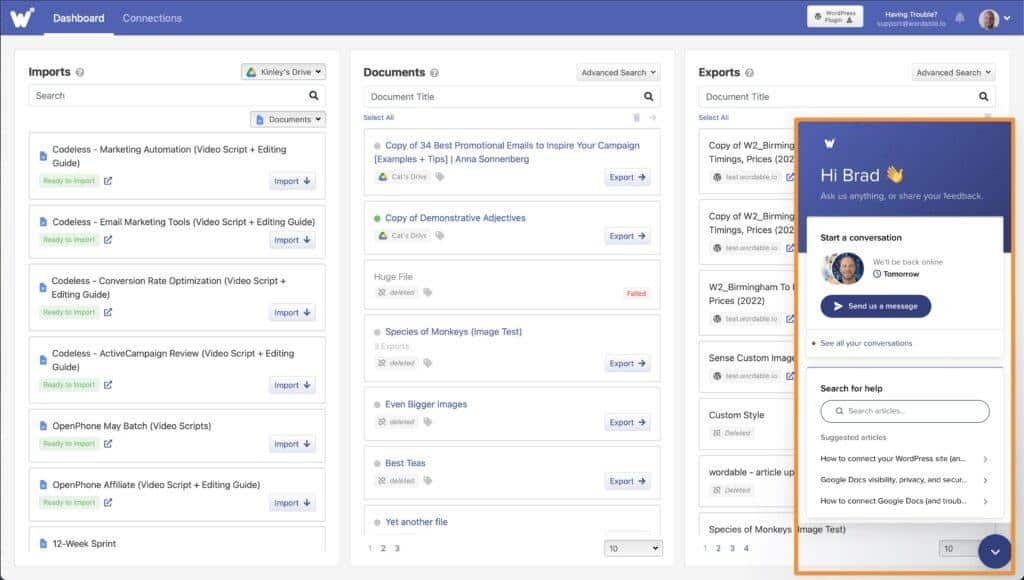
Content teams that work on Google Docs can use Wordable. You can easily export your documents to WordPress, Medium, and HubSpot. You can publish it when the project is completed.
Here’s a screenshot of Wordable’s dashboard:
The right tool can help you manage the creative teams so they can meet deadlines. But there are so many options available in the market. How do you choose the right one?
These are some of the things that you should keep in mind while choosing the right tool for your team-
Here are some popular options that align well with creative workflows:
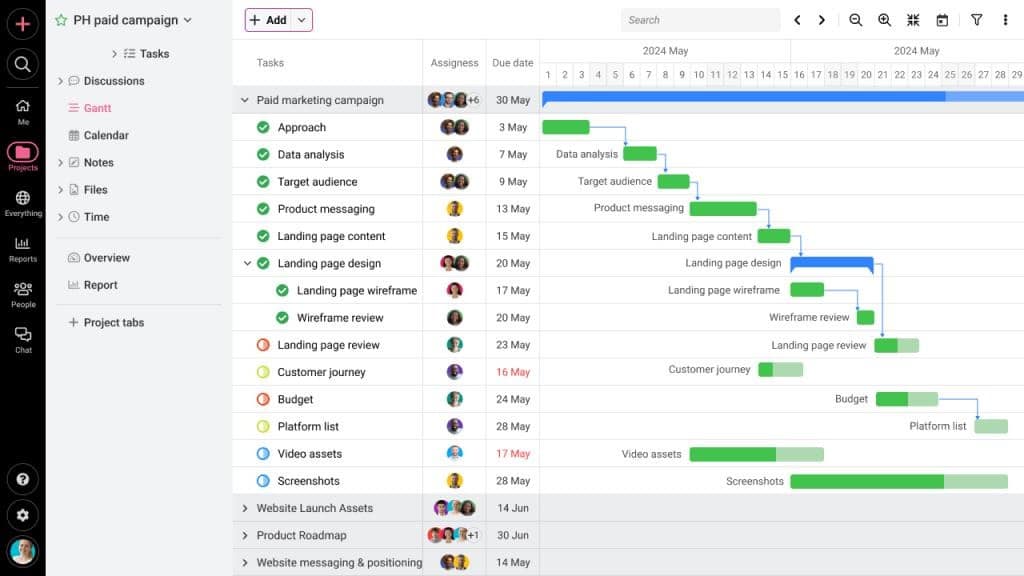
ProofHub is an all-in-one project management tool built to simplify creative workflows. It can help you handle more than one client, resource, and deadline. The tool makes collaboration central, easy, and keeps everything in a single place. Its feature, proofing, can help your team share files, annotate on designs, and approve work. You can get access to Kanban boards, Gantt charts, and discussions in one place.
There is also an in-built chat feature that can help you communicate with your peers. The tool also eliminates the need for different apps, especially a time tracking software. It combines project management, collaboration, and feedback into one system. It is ideal for creative agencies with tight deadlines.
Features
(Screenshot provided by author)
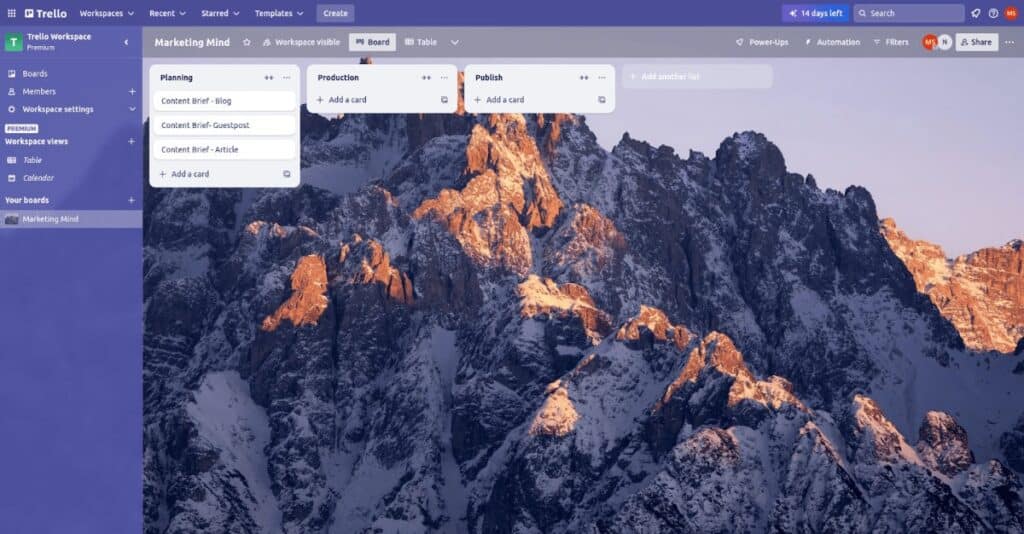
Trello is a simple tool that can help you use Kanban boards to visualize process and task tracking. You get to move tasks through different stages and assign responsibility with clarity. You get to mention details related to different tasks in each card. You can get used to the tool after using it one or two times. You can also integrate with Slack and Google Drive to connect workflows in an easy way.
Features
(Screenshot provided by author)
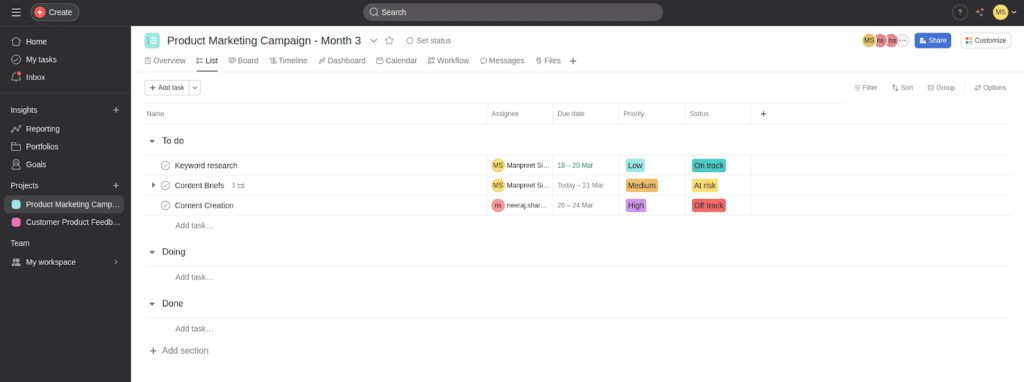
Asana is good for those teams that can’t do without timelines, goals, and reporting. This tool can help you organize projects, track progress, and ensure accountability. Your team can break a project into tasks, assign owners, and keep an eye on dependencies. Your team can also hit milestones on time. It also has a reporting tool to highlight potential risks.
You will also get various integrations such as Slack, Zoom, and Outlook. It is well-suited for growing teams, helping you keep your projects structured and aligned.
Features
(Screenshot provided by author)
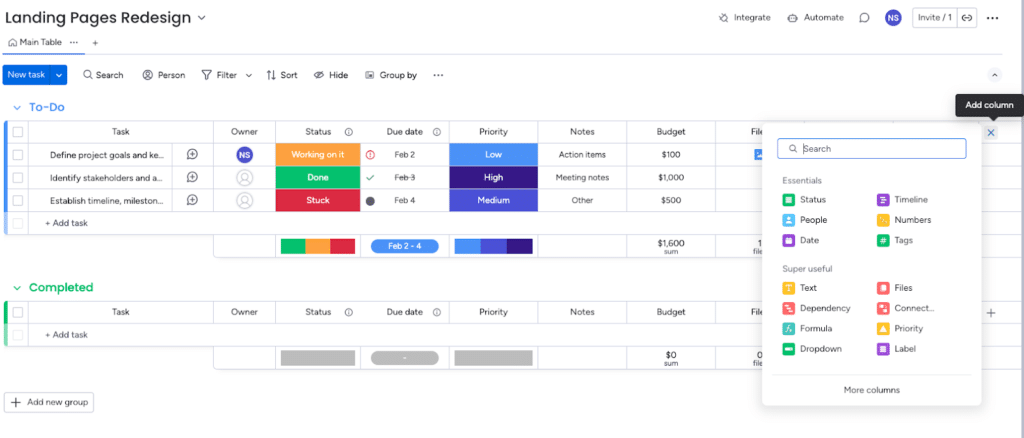
Monday.com is a customizable and flexible tool that can adapt to a team’s workflow. It doesn’t matter if you are managing a project or creating a campaign. You get to build dashboards and boards to fit your unique process. This template can help you track tasks, deadlines, and responsibilities.
You can follow up on a task and get updates on its status. You can also visualize your project progress through Gantt and Kanban views. This tool offers scalability to small and large teams.
Features
(Screenshot provided by author)
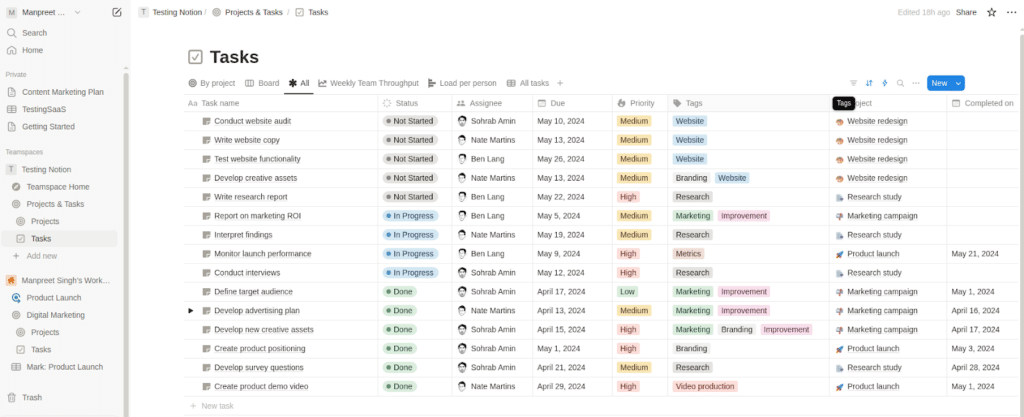
Notion is a tool that gives you a flexible workspace. It is beyond traditional task management. It will allow you to combine project tracking with documents and notes in one place. Teams can learn it in a single use, as the interface is clean and straightforward.
This tool centralizes scattered information so you don’t have to switch between tools. It is like a content planning tool. It empowers teams so they can stay organized, collaborative, and aligned.
Features
(Screenshot provided by author)
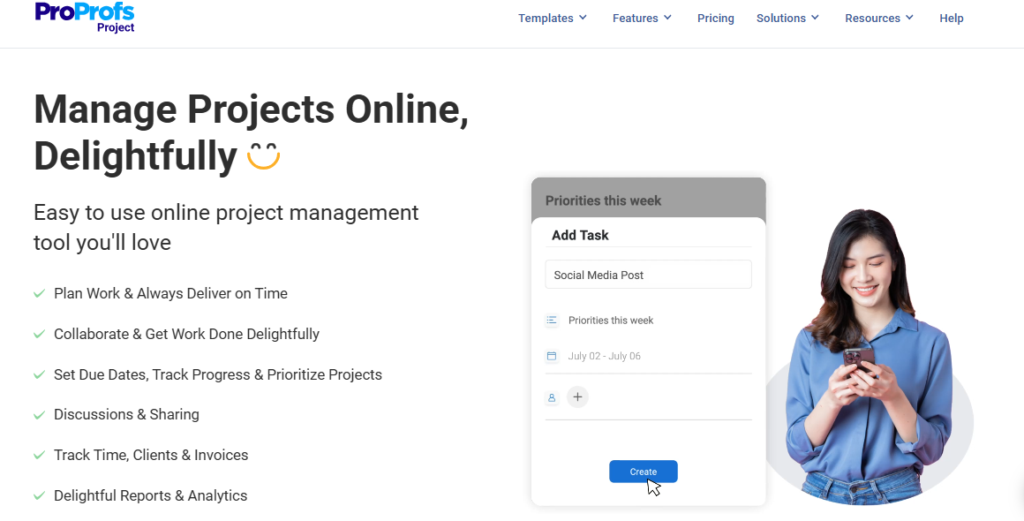
ProProfs Project is known for its simplicity and ease of use, making it a go-to choice for startups and growing teams. It offers task management, time tracking, Gantt charts, and Kanban boards to keep projects on schedule. Its flat-rate pricing and seamless integrations make it a practical, budget-friendly option for small to medium-sized businesses.
Features of ProProfs Project
Creative projects don’t become successful on creativity alone; they need structure and support.
As a team lead, for project management, maintaining clarity and focus becomes your primary goal. All this helps address challenges and complete milestones to make projects manageable.
When the right practices are supported by the right tools, creative teams can focus on what they do best. They can produce original, impactful work knowing they have a system they can count on.
P. S. If you want smoother workflows from draft to publish, try Wordable and streamline the final step of your creative process.