


Organic growth rewards scale. More search-focused pages mean more chances to capture search demand.
But many teams hit a problem the moment they increase content production. The publishing workflow breaks.
CMS limits slow releases. Editorial approvals stall. Templates drift. Content workflows become messy.
This is where programmatic SEO enters the conversation.
It helps you create many pages using templates and data. But this only works if your systems scale too.
Let’s take a closer look at what programmatic SEO is. Then we’ll see how to scale content without breaking your workflow.
Highlights
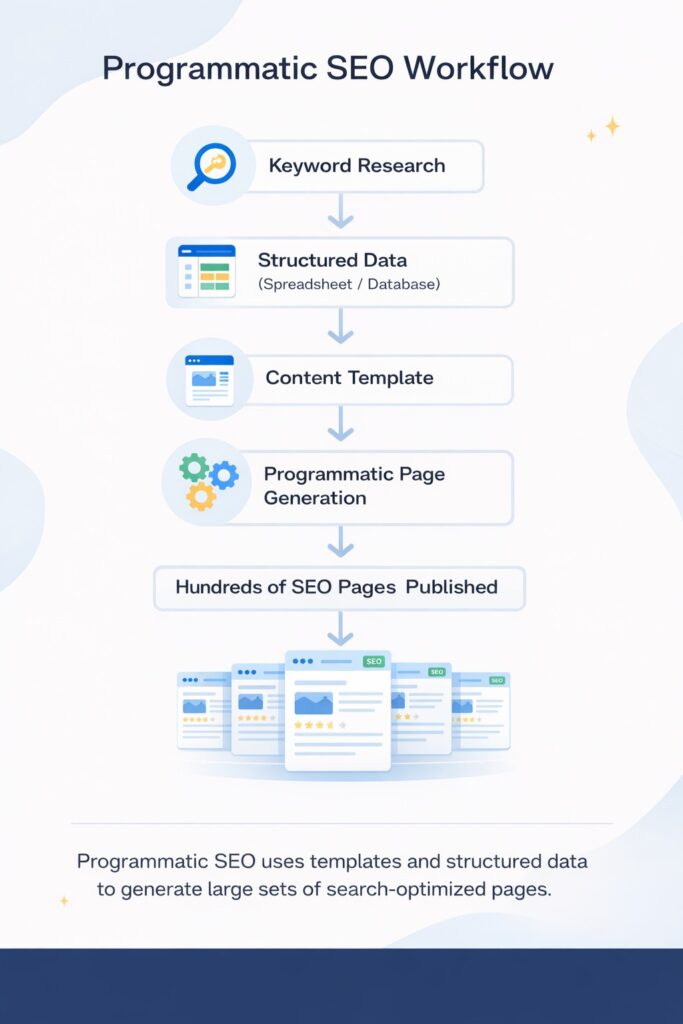
Programmatic SEO is a way to create many search-optimized pages without writing each one from scratch.
Instead of producing every blog post from scratch, you start with a template. The template pulls data from a spreadsheet or database. It uses that data to create a finished page.
(Image by Ioana)
For example, a company might use programmatic SEO to generate hundreds of:
But since the goal is scale with control, each would have a templated structure.
You’re not creating pages one by one. You use keyword research, templates, and data to create many pages from one framework. This helps you scale content and keep your workflow organized.
Content scaling means producing more content. But only if you do it without losing quality or control over your content workflows.
Many marketing teams try to scale by publishing more. But volume alone doesn’t create scale.
Your systems need to be able to handle that growth in output. If the process becomes messy, quality drops.
Real content scaling comes from structure.
One approach is programmatic SEO. You use templates and structured data to generate repeatable page types.
Another approach is content repurposing. One article can become social media posts, an email sequence, video content, or visual assets.
But to make this possible, you need three things:
Only with structure in place does scaling become repeatable. (That’s when you’re able to produce more content without losing control.)
Programmatic SEO can speed up content scaling.
It can generate large page sets using structured templates and data. This lets you cover more search queries than traditional editorial workflows can.
When done well, the results can be significant.
One case study by Suso Digital reported a 398% increase in organic traffic. And A Search Initiative case study recorded a 700+ uplift in referring domains.

Programmatic SEO helps you produce more content. But without the right systems, it can also put quality at risk.
Why? Because automation increases output … but it also multiplies mistakes.
As Dejan Mladenovski, SEO Director at Shuffle Digital, explains:
“Programmatic SEO works much better when you have an established brand and you actually already have the main authority.”
That’s because search engines look at both scale and trust. Without trust, large page sets may not rank.
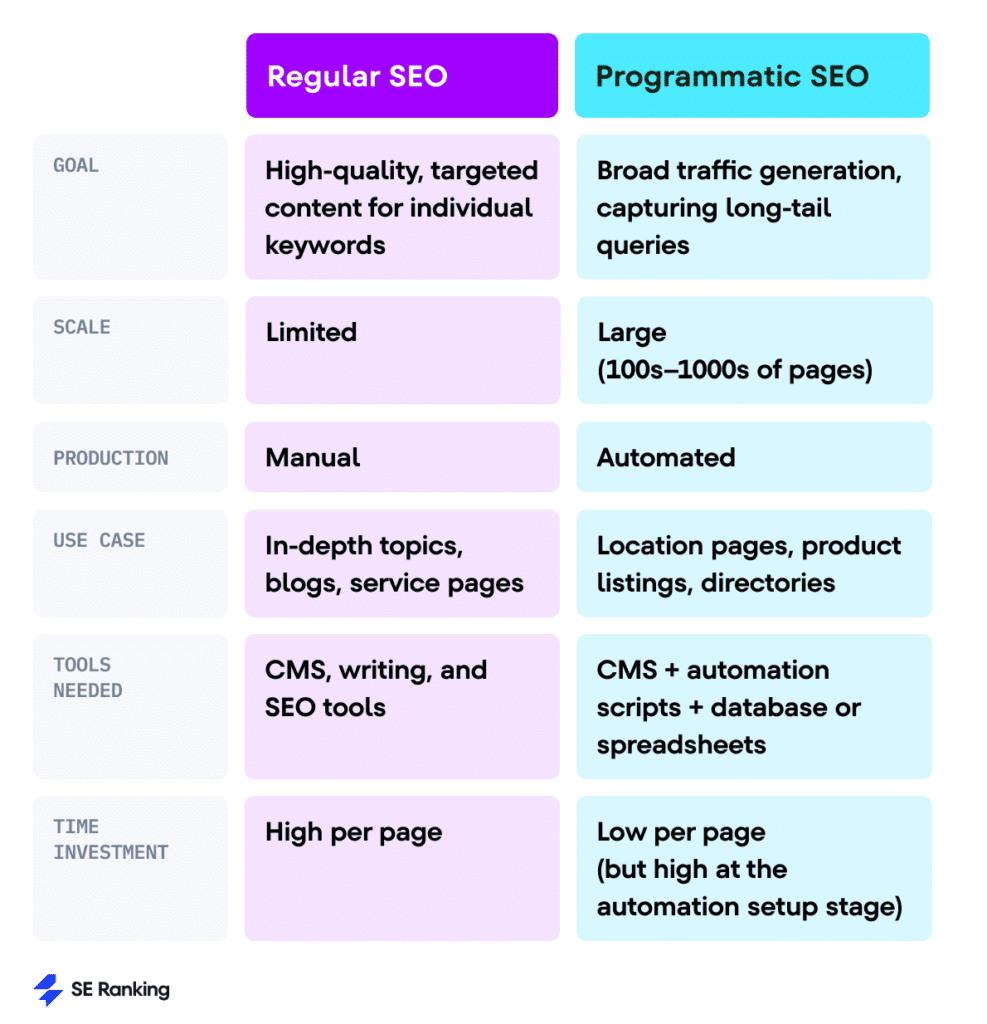
Let’s explore the benefits and drawbacks in more detail below! 👇
Programmatic SEO helps you scale content while expanding organic reach. Here’s how it helps your SEO efforts:
Programmatic SEO is powerful, but it requires thought and effort.
Scaling pages creates new risks. When many pages use one template, small mistakes spread fast.
That’s why you need to watch out for the following challenges:
Programmatic SEO is not effective for every topic.
Queries that require expert analysis, unique opinions, or original research usually perform better with traditional editorial content rather than templated pages.
Many teams assume programmatic SEO is a technical shortcut:
But that barebones approach rarely works for long.
Real content scaling requires systems thinking. You need to design repeatable processes that support high output. Otherwise, you sacrifice content quality or publishing stability. 🛑
Ultimately, you’re trying to increase output while keeping your content workflows stable.
Here’s how experienced programmatic SEO teams do it:
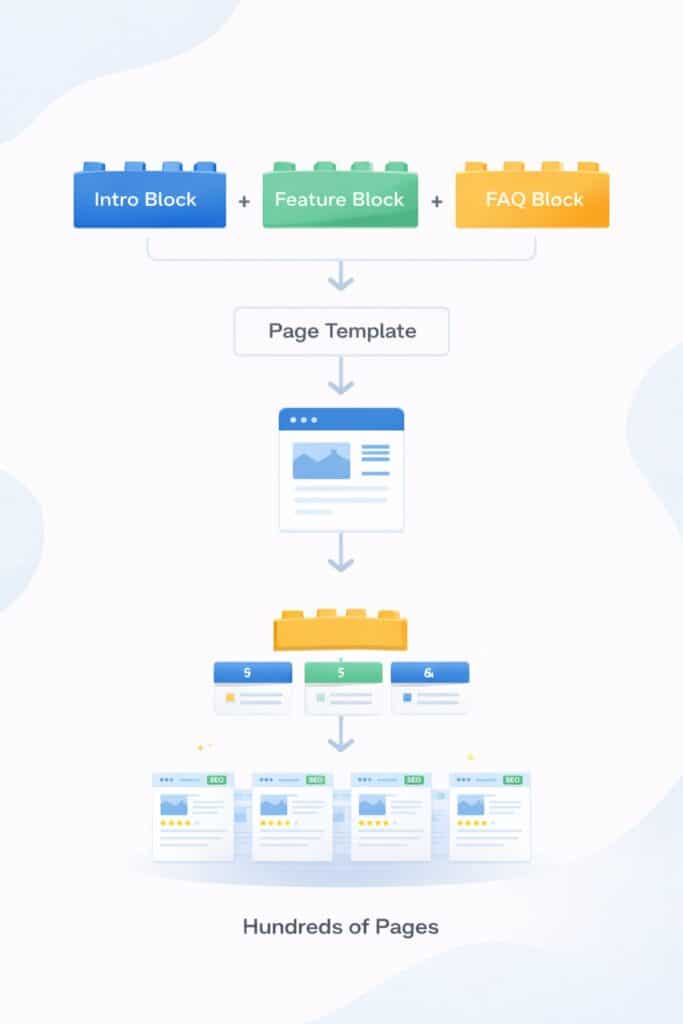
Start by designing structured content models before creating any pages.
Programmatic SEO works best when your pages follow a clear framework. Each page should draw from the same modular structure. This lets one template create hundreds of pages.
(Image by Ioana)
With this approach, content scales without becoming chaotic.
Here’s how to do it:
Structured content models make scaling predictable. If there’s no structure, every page becomes a one-off. And that slows production and breaks content workflows.
Define a clear content creation process before scaling output.
If you’re publishing hundreds of pages, workflow clarity becomes essential. Clear steps mean you can produce work and publish it instead of letting it stall in the pipeline. There’s nothing worse than building hundreds of pages only to watch them pile up in edits.
To build a strong workflow that makes scaling feel manageable:
When the workflow is clear, your team knows exactly what comes next.
Once the content structure is defined, editorial rules ensure every template produces consistent messaging.
Establish strong editorial guardrails before scaling content.
These guidelines keep your messaging consistent as your production pipeline grows.
This is important since large page sets amplify small mistakes.
Think of it this way. If you have one weak phrase in a template, it’ll repeat across hundreds of pages before you notice.
Editorial rules keep your style consistent.
To do this, create a clear content style guide that defines:
Document your approved messaging so every template reflects the same voice.
Then build editorial checkpoints into the process. Define what editors should check before anything goes live. (Clear review rules help keep quality consistent even as you scale content production.)
Connect your templates, datasets, and CMS so publishing happens reliably.
For programmatic SEO to work, you need a CMS that can handle bulk page uploads without crashing. It must also handle both automation and human edits simultaneously.
This is why choosing scalable WordPress website hosting is important when you plan to publish hundreds or thousands of pages programmatically.
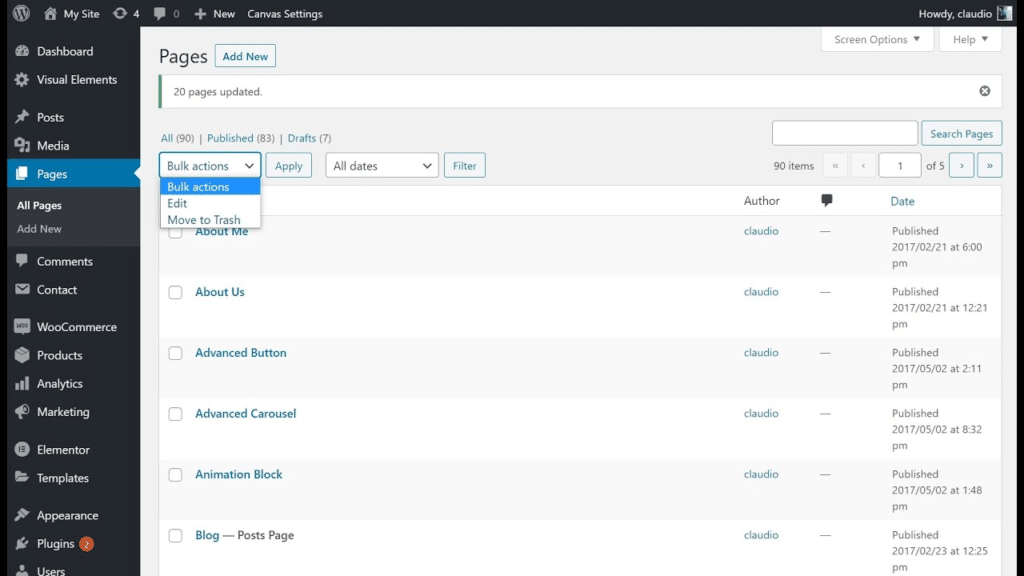
In practice, teams do this by:
Test templates with a small set of pages before you scale.
This helps you catch mistakes before they spread across hundreds of pages.
Start by publishing a small batch.
Then review those pages.
When the template works well, scaling feels safer.
Add both human and automated checks to your content workflows.
Manual reviews alone aren’t enough. (Programmatic SEO creates too many pages to check one by one.)
That’s why strong teams combine editor reviews with automated safeguards.

(Image by Ioana)
Here are a few ways to maintain quality at scale:
These checks create a safety net. They stop small template mistakes from spreading across your content library.
Monitor results and improve your templates over time.
Programmatic SEO needs ongoing optimization to work well. This is why you need to track how they perform once they’re live.
The goal is simple.
Find what ranks well and what your audience responds to. You should also look for pages that compete with each other or fail to climb the rankings.
Here’s how to track performance and improve their systems:
Over time, these improvements strengthen the whole content system.
Just as mistakes can scale, so can corrections. Every improvement to a template lifts the performance of every page it builds from it.
And that’s the real advantage of programmatic SEO. It turns content scaling into a repeatable growth engine.
For content scaling to work, your workflows need to grow alongside your output.
Programmatic SEO can generate hundreds or even thousands of pages. But without that structure, those pages quickly overwhelm your publishing process.
The teams that succeed focus on systems before they scale. They build clear templates, structured content models, and reliable publishing infrastructure.
A few principles matter most …
When the system is strong, scaling becomes sustainable. Programmatic SEO becomes a predictable engine for long-term content marketing growth.
When teams begin scaling content through programmatic SEO, publishing efficiency becomes just as important as template design.
Looking for a faster way to publish your blog posts? Wordable publishes your pieces from Google Docs to WordPress in seconds.
Content scaling means creating more content without losing control of your content workflows. Instead of posting pages at random, you build systems that help your team publish more.
These systems include templates, clear processes, and organized publishing steps. When done well, content scaling helps you reach more search topics. But it also keeps your brand voice and content quality consistent.
Yes, if you use it carefully. Programmatic SEO works best when pages give real value and match search intent. To do this, use clear templates, good data, and editor reviews to avoid thin or duplicate pages. When these systems are in place, programmatic pages can support strong SEO.
The best tools help teams manage large content sets and track results.
Common tools include: