


Most people who want to start an online business get stuck at the same point: they think they need a lot of money upfront. That includes product inventory, warehousing, and shipping equipment, and then comes the logo designer, a developer, and the rest.
Not all online businesses work that way anymore.
Shopify has made it genuinely low-cost and fast to launch a real business. You don’t need to buy stock. You don’t need a warehouse, and you don’t need to be a developer. With the right business model, you can get a store live, take orders, and generate revenue, all without spending thousands of dollars to get started.
In this guide, you’ll find seven of the best low-cost businesses you can start with Shopify right now. Each one is beginner-friendly and scalable, requiring minimal upfront capital investment.
Highlights
Before diving into specific business ideas, it’s worth understanding why Shopify sits at the center of so many low-budget launches.
Shopify powers roughly 30% of all US ecommerce websites, and most of its merchants are small businesses (Source: Statista). The platform was built for people starting out, but today even enterprise brands use it. Plans start at a low monthly rate, the setup is quick, and the app ecosystem handles almost everything you’d otherwise need a developer for.
What makes Shopify particularly well-suited to low-cost entrepreneurship ideas is its integration with third-party fulfillment and delivery services. You can connect your store to print-on-demand platforms, digital product delivery apps, dropshipping suppliers, and service-booking tools.
Without any custom development, you can just set up the product, and the integration handles the logistics.
And that’s what makes the following business models possible for anyone with a computer and a few dollars a month.
The best low-cost Shopify businesses are easy to launch, test, and run without a big team. Here are seven such ideas you can implement with Shopify at any time.
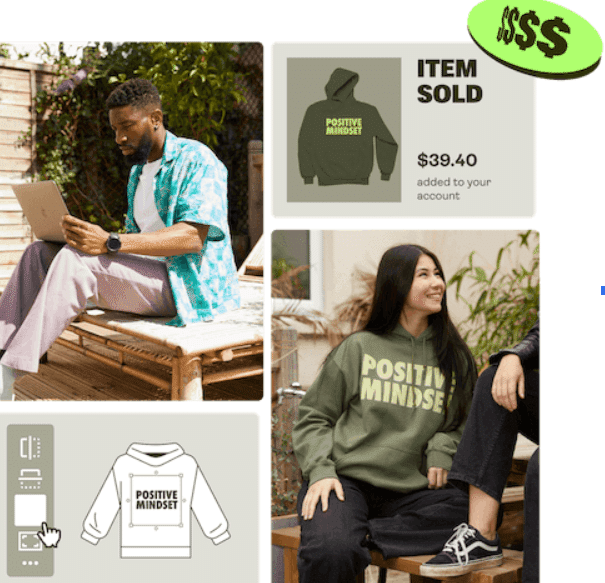
Print-on-demand apparel and accessories are among the easiest ways to start selling on Shopify without a high upfront cost. There is also real demand behind the model. The print-on-demand market is valued at $10.78 billion globally (Source: GrandviewResearch).
With beginner-friendly platforms like Printful and Printify, the barrier to entry is almost zero. You upload original designs to one of these platforms, add the products to your Shopify store, and start selling.
When a customer places an order, the product is automatically sent to the print provider. The provider handles printing, packing, and shipping.
You can start with products that are simple to brand and easy to test. T-shirts, tote bags, caps, stickers, and phone cases all work well. If you want a higher-value item, custom hoodies are a smart place to start because they usually sell for more than smaller accessories and fit a wide range of niches. Pet owners, gamers, teachers, nurses, gym-goers, and nearly any niche community are potential buyer bases.
The process remains simple even as you expand into other products, such as custom mugs, posters, or bags.
Profit margins typically are around 20-30% per product. Some niches, like themed apparel, command higher prices. The key is to find a specific audience rather than trying to sell generic designs to everyone.
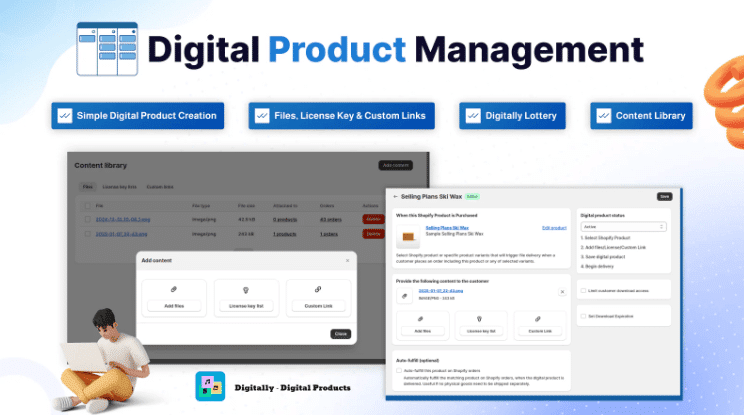
If you have any kind of knowledge or creative skill, selling digital products on Shopify is one of the highest-margin businesses you can run. There are no manufacturing, shipping, or recurring costs per sale. You make the product once and sell it as many times as people buy it.
Shopify’s setup helps here. You can upload files, use an app to automate delivery, set download limits, bundle products, and sell through a standard product page. That means a customer can buy and get access right away. And you don’t have to email files or manually manage orders one by one.
You can start with products that solve one clear problem. Good examples include templates, digital planners, printable worksheets, design assets, stock photos, Notion dashboards, mini-courses, swipe files, checklists, or short guides.
If you plan to grow traffic through content, it also helps to send visitors to optimized landing pages that drive conversions.
The only real investment here is your time creating the product and a delivery app subscription.
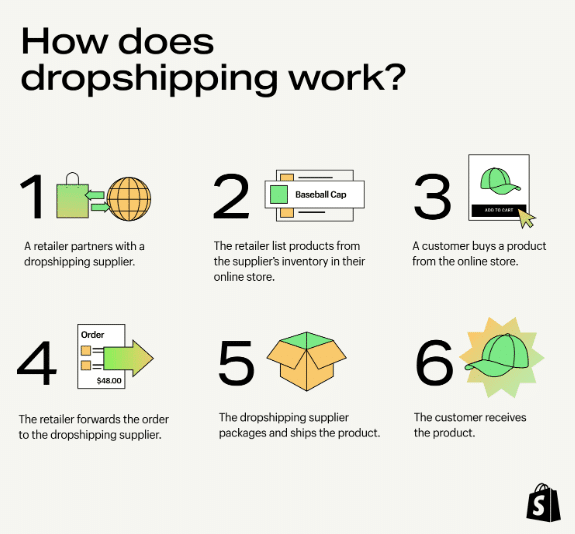
Dropshipping is another low-cost business model where you sell products you don’t physically hold. When a customer buys from your store, your supplier ships the order directly to them. You handle the marketing and customer service. The supplier handles the rest.
Shopify integrates with dropshipping platforms such as DSers (for AliExpress suppliers), Zendrop, and Spocket. All of these let you import products directly into your store and automate order fulfillment.
You can sell home goods, beauty tools, pet products, fitness accessories, kitchen items, office products, and fashion basics. It helps to avoid generic catalog dumping. Start with a narrow niche to have a better shot at standing out.
The cost to start is mainly your Shopify subscription plus the apps you use. A few hundred dollars for early-stage testing ads is smart. But some sellers build initial momentum through organic content on social media or SEO before spending on paid traffic.
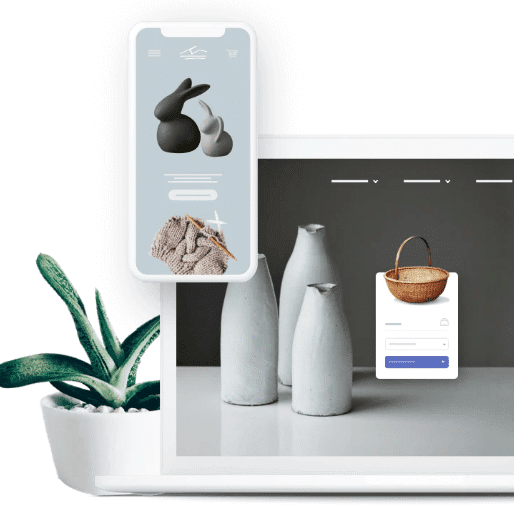
If you want to start small and keep control over what you sell, handmade products are a great fit for Shopify. You can make products in small batches or to order. That lowers the amount of cash you need on day one. You’ll just need simple tools, and grow production only when demand becomes steady.
The tradeoff is that you have to produce inventory (or use a made-to-order model) and handle shipping. But the cost to start is still low: your materials, your Shopify plan, and decent product photography. That’s largely it.
You can start with products that are small enough to make consistently and distinct enough to stand out. Good examples include candles, soaps, pottery, jewelry, embroidered goods, handmade arts, wood products, home décor, and gift items. Labeling these products for retail or gifting also becomes straightforward with a free barcode generator that handles standard formats like EAN, UPC, and QR without any software to install.
The biggest risk you may face is underpricing. Many new sellers count material costs but overlook the time required to make, pack, and manage each order. If the product takes real effort, the pricing has to reflect that.
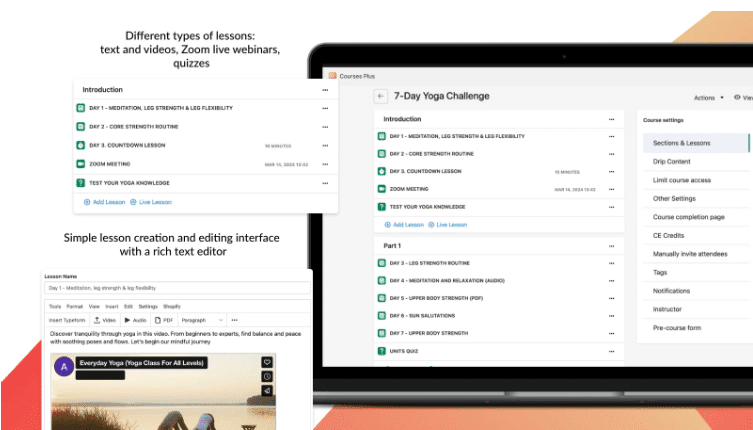
Shopify isn’t just for physical goods. If you have expertise you can teach (marketing, fitness training, cooking, coding, photography, business strategy), you can sell courses and memberships directly through your Shopify store.
LMS platforms like Thinkific and Docebo integrate with Shopify to let you create and deliver course content. You can also gate access behind a purchase and manage memberships without needing another platform.
Short courses, workshops, paid newsletters, coaching libraries, resource hubs, expert communities, or member-only training. If you already have an audience somewhere, like a YouTube channel or a social following, it’s better.
Your material must prove useful before they pay. So, adding social proof to the page can help reduce doubt and improve conversions.
The main upfront investment is time spent creating the course content.
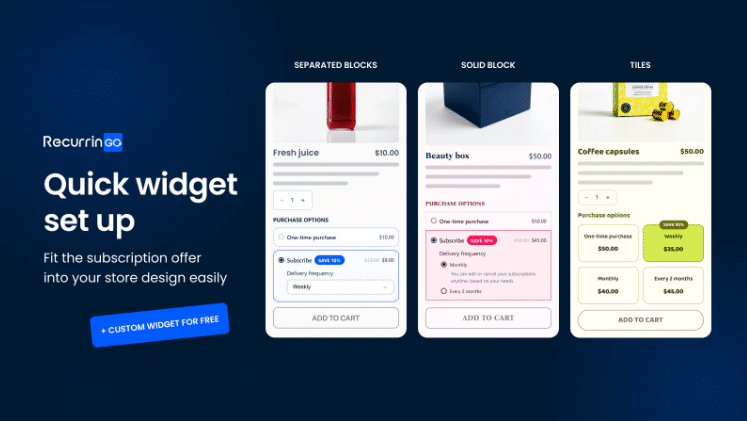
Subscription boxes can work well on Shopify when you want repeat orders and not one-off sales. Here, the customers subscribe to receive a curated box on a set schedule, usually monthly or quarterly.
Shopify’s subscription features (and apps like Recharge or Bold Subscriptions) make it easy to set up a recurring billing model. You curate the contents of the box, charge subscribers monthly or quarterly, and handle the shipment.
Anything from snack boxes, skincare boxes, coffee subscriptions, pet treat boxes, craft kits, baby product boxes, to niche hobby boxes works. This model works best when the products are replenishable, collectible, or easy to curate around a theme.
Specificity can change the whole game in subscription boxes. A generic “self-care” box will have a hundred other options to compete. But a box aimed specifically at watercolor artists or amateur home brewers has a far more defined audience to market to.
Most people don’t think of Shopify as a platform for service businesses. But it works well for freelancers and consultants who want a clean, professional website with built-in payment processing. QR code payments make checkout easier, and a reliable QR code generator helps create secure, scannable codes.
You can use Shopify’s partner program to sell one-time service packages (a brand audit, a copywriting project, a coaching session) as fixed-price products. If not, you can also set up recurring billing for retainer clients. Apps in the Shopify ecosystem also support rescheduling, customer self-service, staff calendars, and virtual appointments.
You can sell one-off consultations, audits, strategy calls, coaching sessions, freelance writing, blog writing, retainers, and small fixed-scope packages. This model works best when the offer is specific. For example, “digital marketing” is vague. SEO audit for Shopify stores or SaaS content marketing services is easier to understand and easier to buy.
The real limit is capacity. A service-based business is easy to launch, but it does not scale like a product business. So you should consider raising prices, productizing the offer, or moving into courses, templates, or memberships later.
Seven business models are a lot to weigh up. Here are three questions that narrow it down fast:
If yes, digital products, online courses, or freelance writing services will give you the highest margins with the least startup cost. You’re selling what you already know.
Print-on-demand is made for you. Get your designs on products, connect to Shopify, and let platforms like Printify and Printful handle production and shipping. And you can work on building an audience.
Dropshipping gives you the most flexibility to test different niches before committing to one. It takes more work to stand out, but it’s a low-stakes way to learn what sells.
Whatever model you choose, Shopify’s startup costs stay low. You don’t need investors or loans to get started. You need a niche, a store, and a business plan for getting your first 100 visitors.
The old argument against starting a business, that it costs too much, doesn’t hold up the way it used to. With Shopify, you can go from zero to a live store in a weekend. And if you pick a low-inventory or no-inventory model, your financial risk is limited to your monthly subscription and whatever time you put in.
To get started, explore the lowest-cost options on the list. Print-on-demand is the standout option for beginners who want to test ideas fast without any upfront stock. Digital products offer the best margins for knowledge-based creators. Dropshipping gives product-focused sellers the flexibility to iterate quickly.
Pick one model, start lean, and focus on getting your first real customers. The rest follows from there.