


Did you hear the news? Broad, generic TOFU content has left the building. 😯
“But Ioana, that’s the whole point of TOFU content!”
Not anymore, my friend.
Buyers are now asking precise questions in AI-driven search, and LLMs pull answers from text, videos, images, and structured data. If your content is generic and structured incorrectly, AI likely won’t surface it.
Going forward, your TOFU content has to answer real buyer questions, show how your product solves problems, and guide readers with relevant CTAs and email follow-ups.
Let’s take a closer look at how to adjust your content funnel for AI, so your TOFU content gets surfaced and attracts the right buyers. (*Pro-Tip: Bookmark this post! You need to come back to it as you plan your content marketing strategy for 2026.)
K, here’s what you need to do. 👇
Highlights
TOFU (top-of-the-funnel) content has always played an integral role in content marketing. Brands targeted short-tail generic keywords to educate searchers, hoping it would nudge readers to download a guide or join their email list.
Like this:
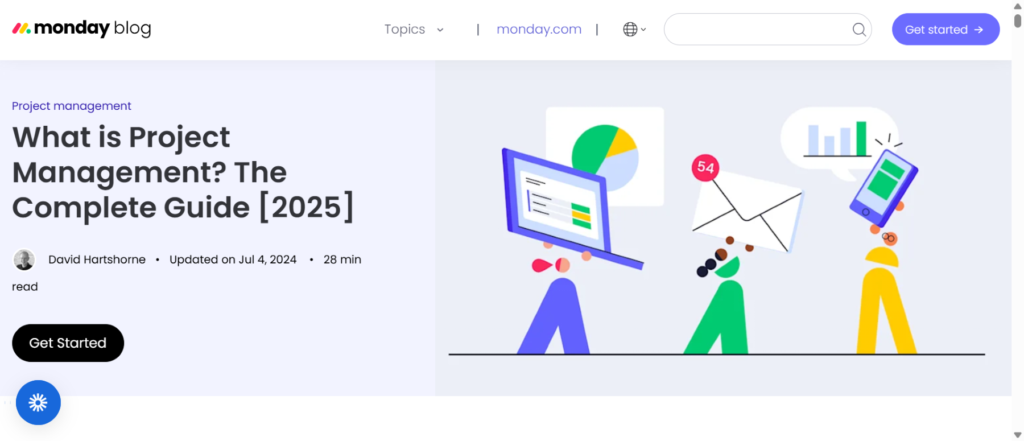
It worked.
The problem is that AI has changed the game. Yet most companies are still chasing traffic instead of buyers. They’re publishing broad TOFU topics that pull in visitors, but none of those visitors are converting.
The truth is …
They haven’t learned how to use brand awareness for SEO now that AI search is here.
The opportunity now sits inside LLM-driven search. (Where buyers ask specific, high-intent questions like “best project management tool for teams under 25” instead of “project management guide.”)
This is where the next wave of SEO is headed. You match the exact intent your buyer types into ChatGPT, Claude, or Perplexity. You structure your pages so AI can parse them. And you build authority in the places LLMs pull from.
In fact, McKinsey research describes AI search as the “new front door to the internet, with 50% of consumers reporting using AI-powered search already.
What’s also wild is that nearly 50% of Google searches already have AI summaries. And by 2028, that’s expected to rise to more than 75%! 😱
➜ Here’s the mini formula you need: Target buyer-level LLM queries. Use Q&A formatting and schema. Show up in Reddit, Quora, and similar sources that LLMs trust.
For example:
For example:
If you have a project management tool, skip broad topics like “project management tips.” Instead, create a page built around the exact buyer prompt, like: “Best project management software for agencies under 50 employees.”
Structure it with a Q&A block, a comparison table using the comparison table plugin, and a clear schema.
Then answer that same question in a helpful, neutral way on Reddit so LLMs see you as a relevant source in multiple places.
This is how you get in front of real buyers instead of casual readers.
Open ChatGPT, Claude, or Perplexity and type in your product category and ICP. (You can also try searching for a use case.) Look at the auto-suggested prompts and follow-up questions — they reveal the real buyer queries LLMs surface most often.
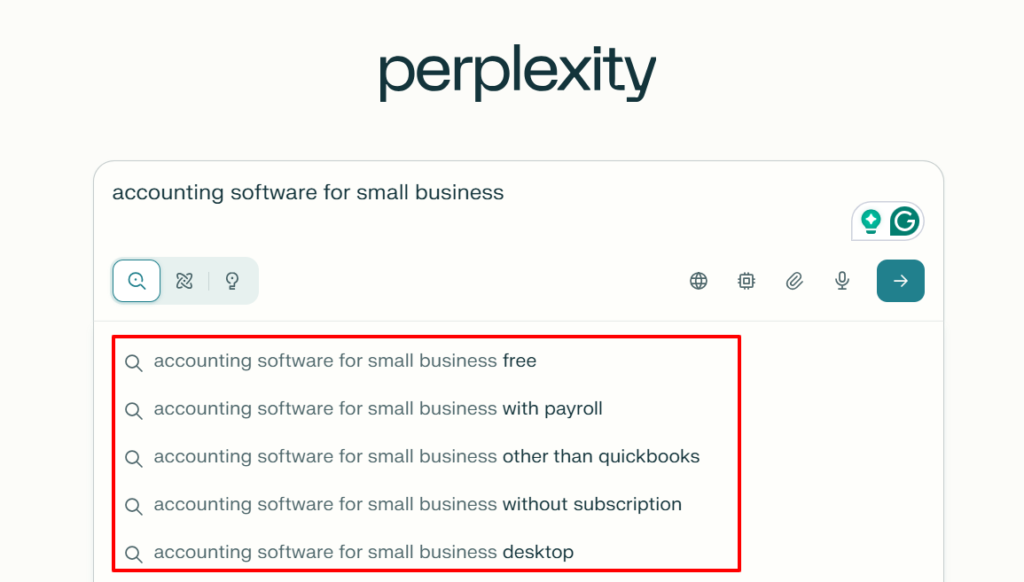
(Screenshot by Ioana)
Then search Reddit, Quora, Slack communities, and niche forums for “best,” “tool for,” “alternative,” and “vs” discussions related to your space. Scroll through the repeated questions buyers ask when they’re close to making a decision.
Take the high-intent queries you found and build landing pages, blog posts, guides, and videos around them.
*Pro-Tip: Be careful when choosing how to word your content titles. You have mere seconds to hook readers. I wrote a piece about Clickbait Titles and SEO that’s worth checking out. It breaks down how to build genuine intrigue with your headlines without misleading anyone.
Companies winning today are treating TOFU content like product marketing.
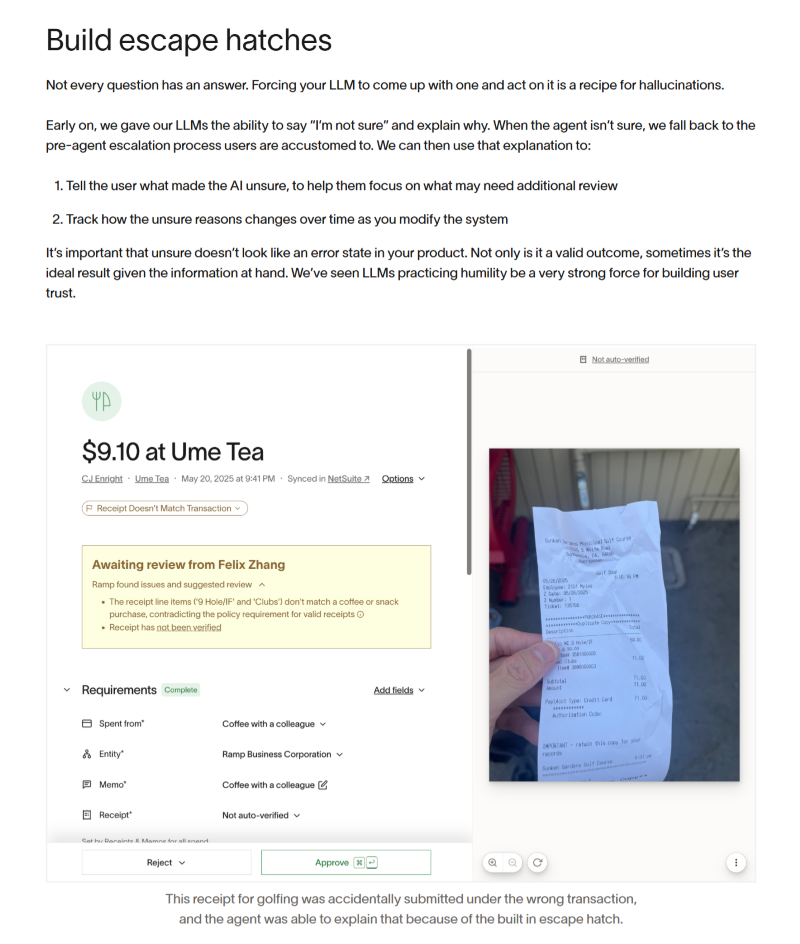
Notion ranks for workflows that match real product use cases. ClickUp owns “alternatives” keywords because every page pushes readers into evaluating ClickUp. And Ramp wins by leading with CFO pain points and ending with clear product solutions.
They’re literally baking their products into their pieces.
Here’s an example by Ramp:
➜ Here’s the mini formula you need: Turn every page into a product story. Tie pages directly to use cases, and create content that speaks to the person who can buy or influence the purchase.
Here’s how:
For example:
If you have a finance automation product, move away from generic content like “accounting automation guide.” Instead, write a page focused on a real CFO pain point, such as “how to reduce accounting software spend.”
Walk through the workflow using your product. Show the actual interface and lay out the steps a CFO would take to evaluate your solution.
Your end goal is to create a guided product experience for decision-makers.
If you want SEO to operate like product marketing, your product and content teams can’t work in separate lanes.
Your product team understands the features, workflows, and real problems your tool solves. And your content team knows how buyers search, compare, and make decisions.
When those two groups collaborate, every page becomes sharper. You get content that shows the product in action, explains why specific features matter, and speaks directly to the decision maker evaluating solutions. This alignment is what turns SEO from traffic generation into revenue generation.
*But keep in mind that if you sell to enterprises, you’ll also need to weave in a product-led sales (or PLS) approach. In other words, you’ll need to have a sales team. Enterprise sales are too complex for a 100% product-led growth (or PLG) approach.
McKinsey research confirms this.
“By combining their strong self-serve motion with a top-down sales approach, existing try-before-you-buy users (trial or freemium) become the primary funnel for the new sales team,” McKinsey notes.
In other words, your product-led content should naturally lead prospects into free trials. And your sales reps should lead prospects from free to paid plans.
Email nurturing is a must-have when planning your digital sales funnel. Publishing guides, blog posts, and videos is only half the battle. The real challenge is turning that TOFU traffic (people just discovering your brand) into qualified leads who eventually buy.
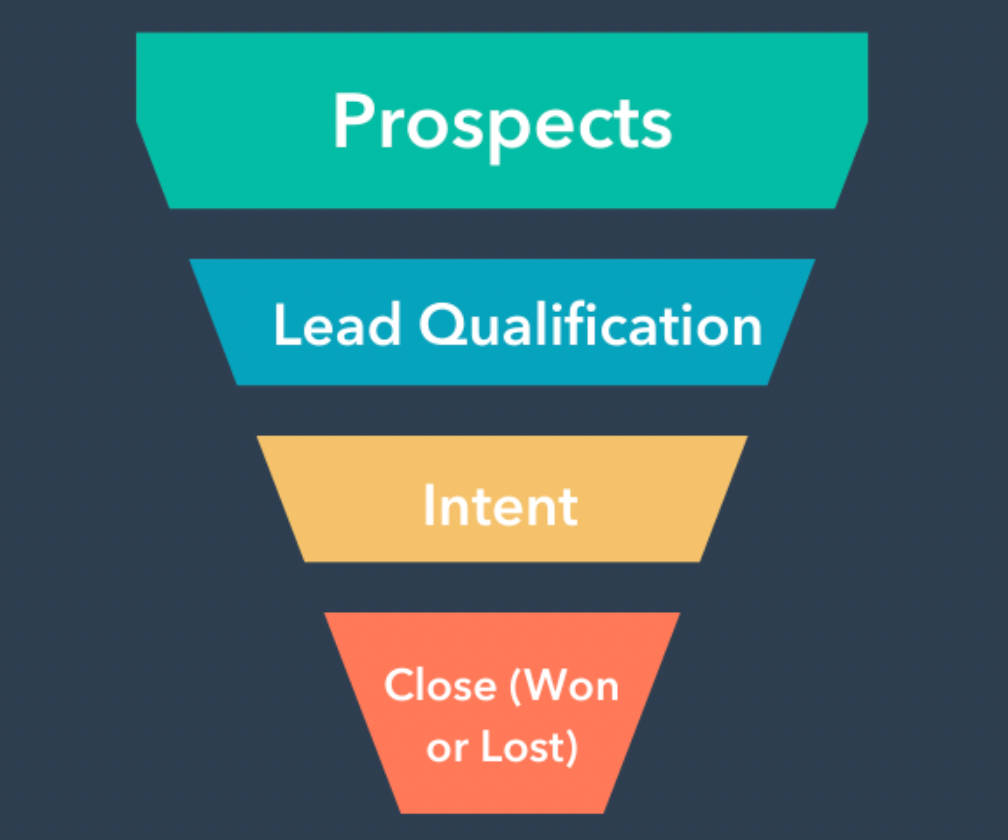
The basic sales funnel graphic shows the prospect stage, lead qualification stage, intent stage, and close stage.
That’s why you should always find ways for top-of-funnel content to lead into strategic email nurturing.
Here’s how:
Every TOFU asset should have a next step. Offer a downloadable version of your guide, a checklist, or bonus video content in exchange for an email address. Or, if the piece is relevant to your weekly newsletter, add a CTA inviting users to subscribe.
Don’t push a hard sale, though. Focus on giving value and building trust.
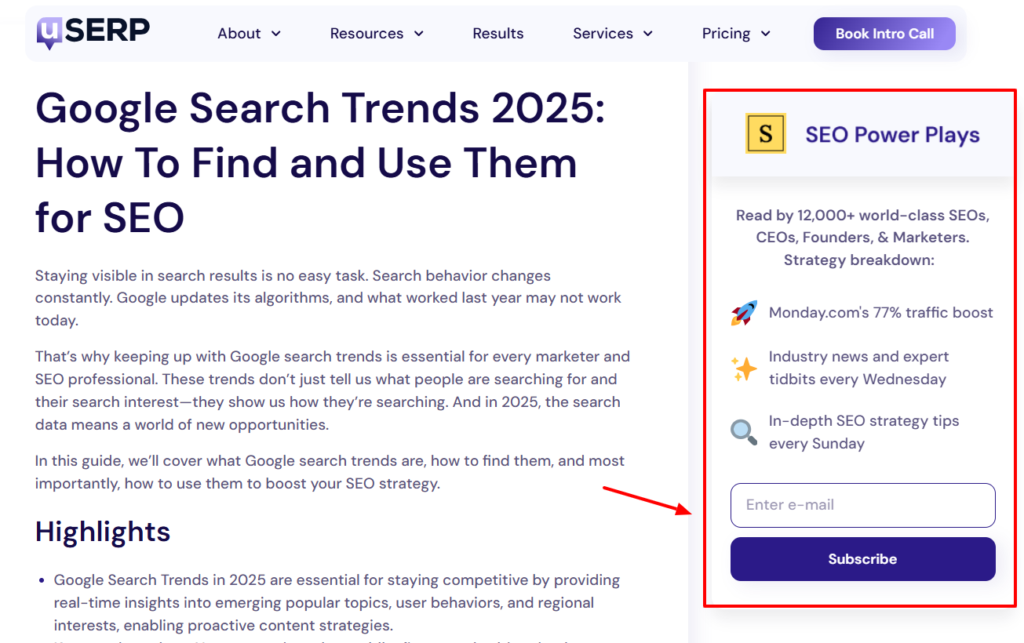
This Google Search Trends piece naturally warrants a CTA to an SEO newsletter:
Not every visitor has the same goals. Segment new leads based on the content they engaged with.
Someone reading a guide on “best project management tools for small teams” likely has different needs than someone watching a video on “how to automate workflows for finance teams.”
Segmentation allows you to send targeted follow-ups that feel relevant, not spammy.
Once someone opts in, deliver content that mirrors their buyer journey. Start with educational emails, then move to use-case stories, product demos, or case studies.
Each email should:
Keep it concise, actionable, and focused on the reader’s intent.
Use email data to guide leads back to high-intent pages on your site. If someone downloaded a guide on small-team project management, follow up with comparison guides, a free trial invite, or a demo scheduling link.
This creates a seamless journey from TOFU content to decision-ready consideration.
Tracking opens or clicks barely scratches the surface.
Make sure to also look at assisted conversions. Which TOFU assets and nurturing sequences are leading to trials, demos, or purchases? Optimize your workflow based on behavior, not vanity metrics.
Say you run a project management SaaS.
Here’s what your new content funnel might look like:
Matching buyer intent isn’t enough, though. LLMs and AI-driven search pull from multiple content types — text, videos, images, tables, and structured data. To maximize visibility, optimize your TOFU content for all of the ways AI surfaces answers.
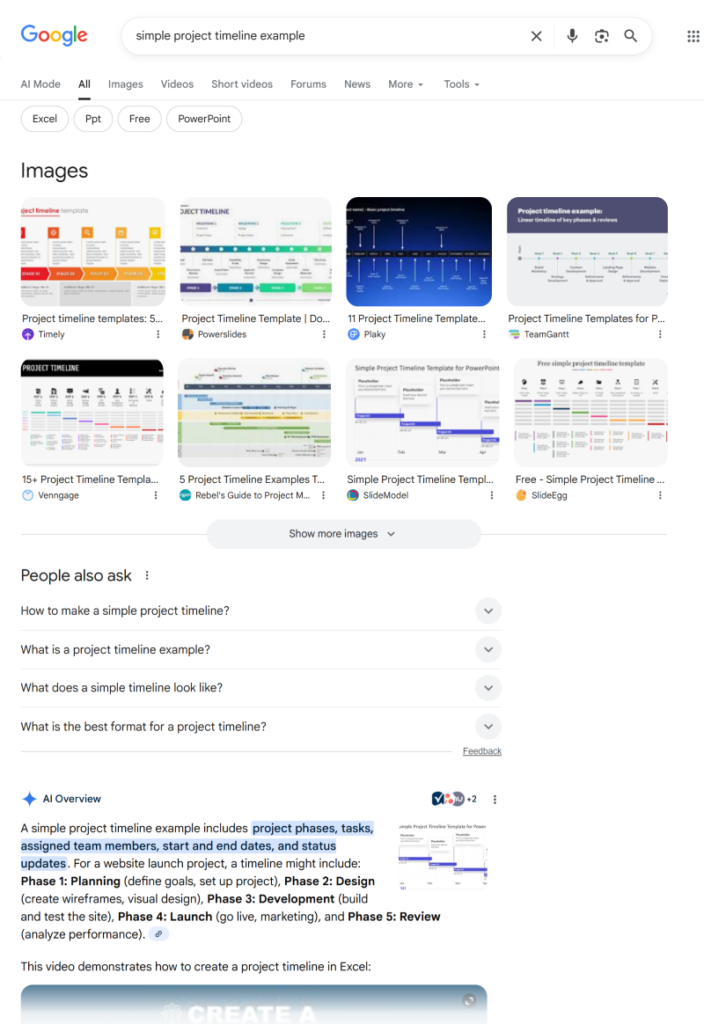
Here’s an example search for “simple project timeline example.” It immediately shows featured images, an AI overview, and a video. If you scroll further down, it features more videos.
(Image pulled by Ioana)
This is about making sure your content gets used, not merely indexed.
That’s why it’s so important to learn how to optimize for featured snippets.
Follow these steps:
More on this below. 👇
Write short, scannable responses in bullet points or numbered lists. (Notice the Highlights section at the top of this article?) In each section, lead with the answer, highlight key terms in headings, and format paragraphs so LLMs can extract your content.
Video can dominate AI results and featured snippets.
Produce short tutorials, demos, or explainer clips that showcase your solution in action. Include detailed titles, captions, and transcripts. Embed videos in context on your pages to boost engagement and signal relevance.
Screenshots, diagrams, and annotated workflows clarify complex ideas faster than text alone. Optimize alt text, captions, and file names with high-intent keywords. AI often surfaces visuals to support answers, so make yours informative and easy to interpret.
Infographics are also great content assets to create. (Canva has a free infographic maker you can use. 👇)
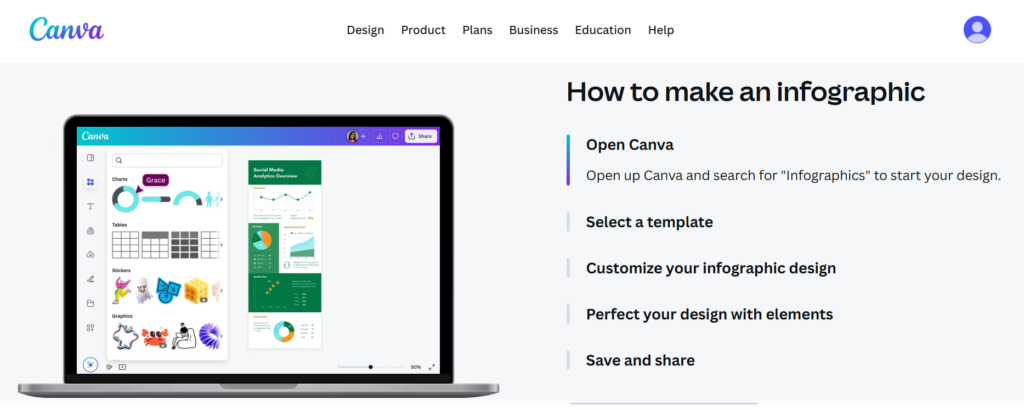
Screenshot of how Canva’s free infographic maker works.
Use the FAQ or HowTo schema to answer common buyer questions. Keep answers concise and precise to improve extraction chances.
Include calls to action (CTAs) that are highly relevant, contextual, and dialed into your audience’s stage in the journey.
Content drives awareness, but it also needs to guide readers toward the next step. Relevant CTAs turn passive readers into active leads. They keep your audience moving down the funnel without feeling sold to, increasing the chances that TOFU traffic converts into qualified prospects.
Use these steps to make it happen:
More on this below. 👇
Every CTA should reflect what the reader is looking for. If a visitor reads a blog post comparing project management tools for small teams, offer a CTA for a checklist, workflow template, or free trial specifically for small-team solutions. (Don’t send them to a generic product page.)
Embed CTAs where they feel like the next logical step.
Use inline links, buttons at the end of helpful sections, or contextual banners that relate directly to the content above. This makes the transition seamless and non-intrusive.
Experiment with different CTA types to see which ones boost conversions. Try downloadable resources, interactive demos, short videos, or links to related use-case pages. Different formats appeal to different learning styles and increase engagement.
See what I mean? TOFU content that works has shifted.
And honestly, it’s for the better. Instead of having visitors reading your pages for general information, you’re drawing in people who need what you sell.
And you’re creating a more authoritative content funnel.
You answer their real questions, show your product in action, and guide them with targeted CTAs and lead nurturing paths. TOFU content stops being about more traffic. It becomes a way to connect with potential buyers who are ready to evaluate solutions.
Need support with this? The uSERP team would love to help.
Book a free intro call now to put these insights into action.
What is a content funnel?
A content funnel guides potential customers through awareness, consideration, and decision. You use targeted content at each stage to move them closer to buying. It’s an important part of growth marketing.
What are the stages of a content funnel?
The main stages are TOFU (Top of Funnel), MOFU (Middle of Funnel), and BOFU (Bottom of Funnel). Each stage answers different audience needs and pushes them toward the next step.
Why does a content funnel matter for marketing?
A content funnel matters for marketing because it helps you nurture leads, build trust, and turn prospects into paying customers. A funnel keeps your marketing organized and results predictable. It’s one of the best ways to encourage higher conversion rates if you do it right.
What content works best at the top of the funnel?
TOFU content should educate and attract attention. Think blog posts, how-to guides, videos, infographics, and social media posts that introduce your brand and value. Comparison guides are also helpful.
But instead of conducting general keyword research, use AI search to see what micro-intent queries people are searching.
How do you track if a content funnel works?
To track if a content funnel works: Look at engagement, lead generation, conversion rates, and how content assists in sales. These metrics show which content moves prospects forward.