


Creating and executing the right marketing strategy for your SaaS business is always a challenge.
But when you get it right, it can propel your company toward unicorn status and turn it into a force to be reckoned with. 🦄✨
My advice: Think big-picture. Don’t get caught up in vanity metrics — play the long-term game.
The SaaS companies that dominate are the ones that continually invest in their marketing and online presence.
Want to be one of them? Let’s take a look at five strategies you can implement to create a successful SaaS marketing plan in 2026.
But first … what is SaaS marketing and how is it different from regular marketing? 👇
Highlights
SaaS marketing helps SaaS companies promote their solutions and attract leads.
SaaS marketers mostly focus on SEO best practices and content marketing. But some also focus on other helpful tactics, too. These include influencer marketing, email marketing, social media marketing, and paid tactics. (We’ll cover some of these in a bit.)
So, how is SaaS marketing different from traditional digital marketing?
In SaaS marketing, the SaaS product and design play a direct role in content marketing. Features, onboarding flows, dashboards, product demos, and in-product prompts actively educate users and demonstrate value.
This is why product marketing has taken on a larger role. The product itself acts as content, showing prospects how it works, what problems it solves, and why it’s worth paying for.
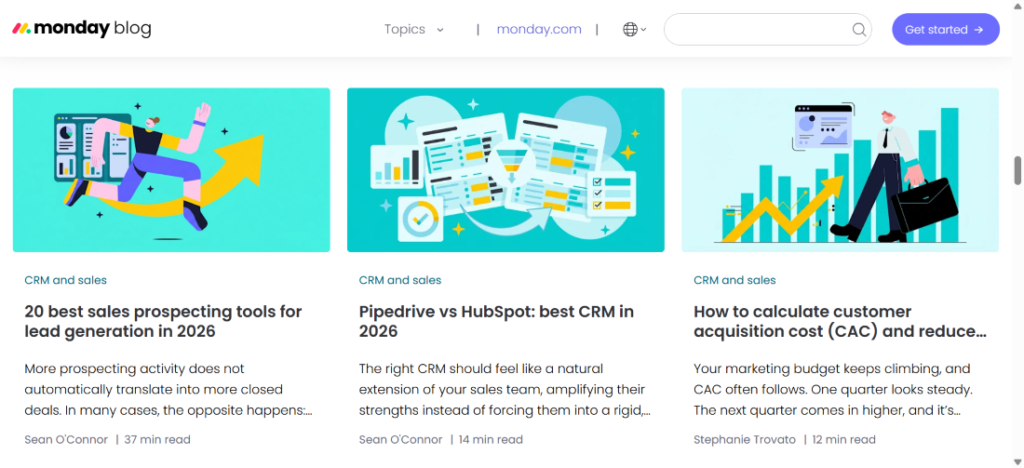
This is another reason why customer education pieces and Knowledge Bases are wildly popular in SaaS marketing. SaaS is mostly for B2B buyers that require thorough education and case studies before they’ll consider investing in a SaaS agreement. That’s why uSERP wrote over 700 educational blog articles for monday.com — which led to its unicorn status!
The SaaS market might be shooting up, but competition is fierce. Just run a search on software review company Capterra and you’ll find hundreds of results for “CMS.”
To stand out, you’ll need a kickass SaaS marketing strategy that works for your brand and product.
Here’s what I recommend:
Compelling content is the most important element in your digital marketing strategy, especially when it comes to marketing for B2B SaaS companies.
SaaS buyers need to trust you before they’ll sign up for a subscription, and content marketing is one of the most effective ways to build that trust.
In fact …
According to Statista’s 2025 Content Marketing Trend Study, B2B marketers say the top three benefits of B2B content marketing include:
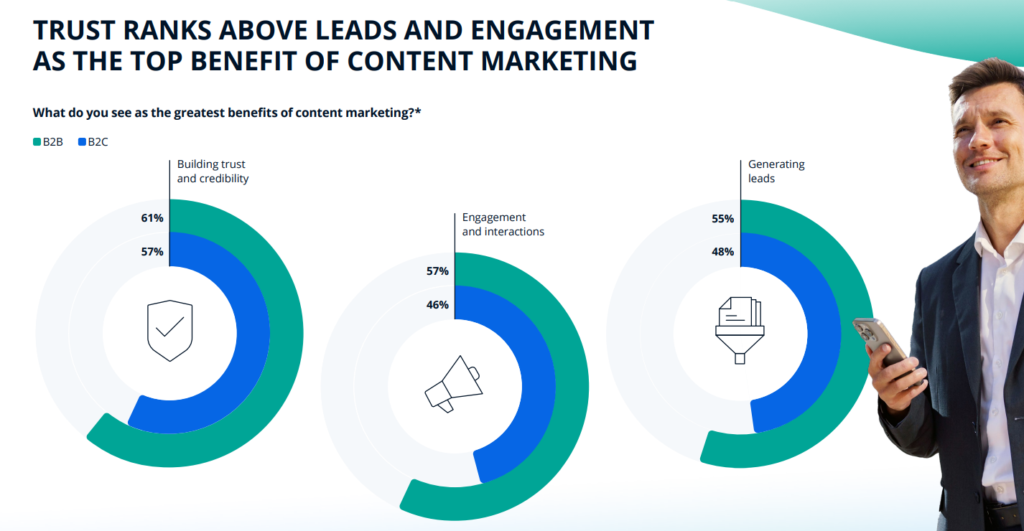
To capitalize on this, share helpful and relevant content that’s designed to attract and engage your target audience.
You need a legit keyword strategy for this to work. 👇
Start with in-depth target audience research: Pull their top questions, pain points, and searches from Google and AI search. Use these to create an Ideal Customer Profile. Target the terms with low-competition in your marketing content.
Map out a topical content plan: Create topic clusters that serve the way SaaS buyers make decisions. You need top-of-the-funnel content (“What is a CRM?”), middle-of-the-funnel content (“Top CRMS for real estate agencies in 2026”), and bottom-of-the-funnel content, like case studies. Interlink these strategically.
Have a content distribution plan: Build relationships with authoritative publishers that can backlink to your content or allow you to guest post on their sites. This helps you earn high-quality backlinks that increase your authority, rankings, and trust. Find ways to repurpose your best assets across other channels, as well. (LinkedIn, X, YouTube, etc.)
Before doing any of this, partner with a trusted SaaS website design agency. They’ll help you improve your product design and optimize your UX/UI.
Why?
Without a strong website, even the best content can get lost. If pages load slowly, are confusing, or hard to navigate, visitors won’t stick around long enough to see the value you’re offering.
Think influencer marketing and SaaS sales don’t really go together? Think again.
Influencer marketing for a SaaS isn’t as sexy as, say, modeling clothes on Instagram. But many brands are increasingly embracing it as a main way to build trust with their audiences.
And that’s because influencers have strong bonds with their followers. If they recommend your solution, their audiences will listen.
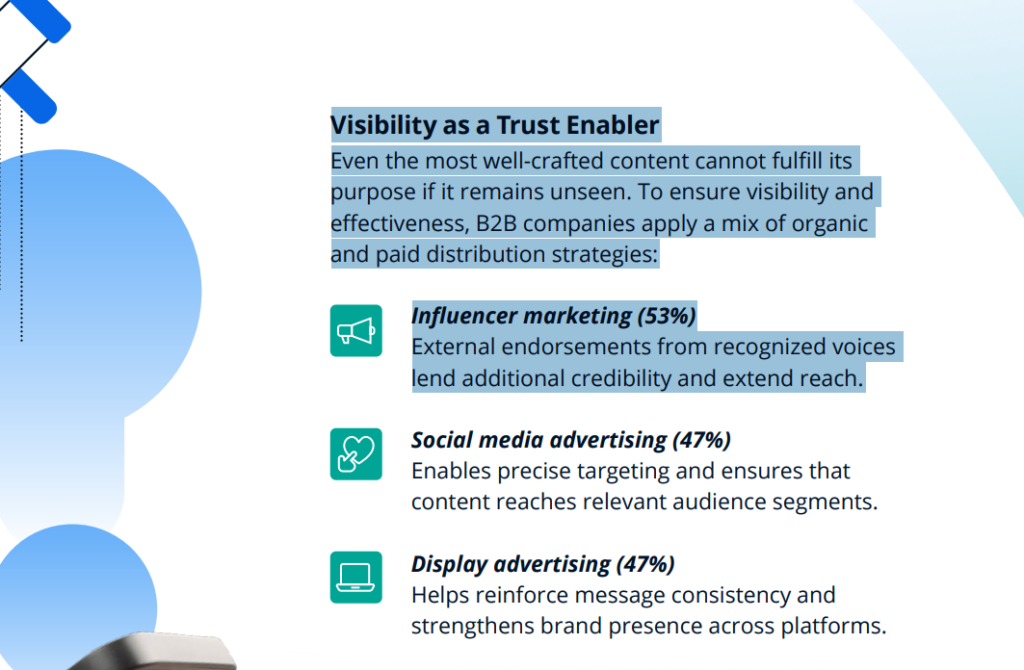
According to Statista’s content marketing report, 53% of B2B companies are using influencer marketing to lend additional credibility and extend reach.
You’re probably thinking … isn’t this going to blow my marketing budget?
For influencer marketing to work, you don’t need a celebrity. You could partner with a nano- or micro-influencer instead. (They have a smaller following but it’s very niched down and, again, their audiences are highly trusting.)
Use them to drive buzz around a new feature, launch, or simply increase visibility through targeted social posts. Try a mix of content assets like videos, blogs, and LinkedIn features.
You can also link arms with affiliate marketers in your niche. Look for ones that have experience writing about other SaaS products like yours. They also need to have strong, authoritative websites and a content writing style that aligns with your brand voice.
Here’s an example written by affiliate writer Shane Barker:
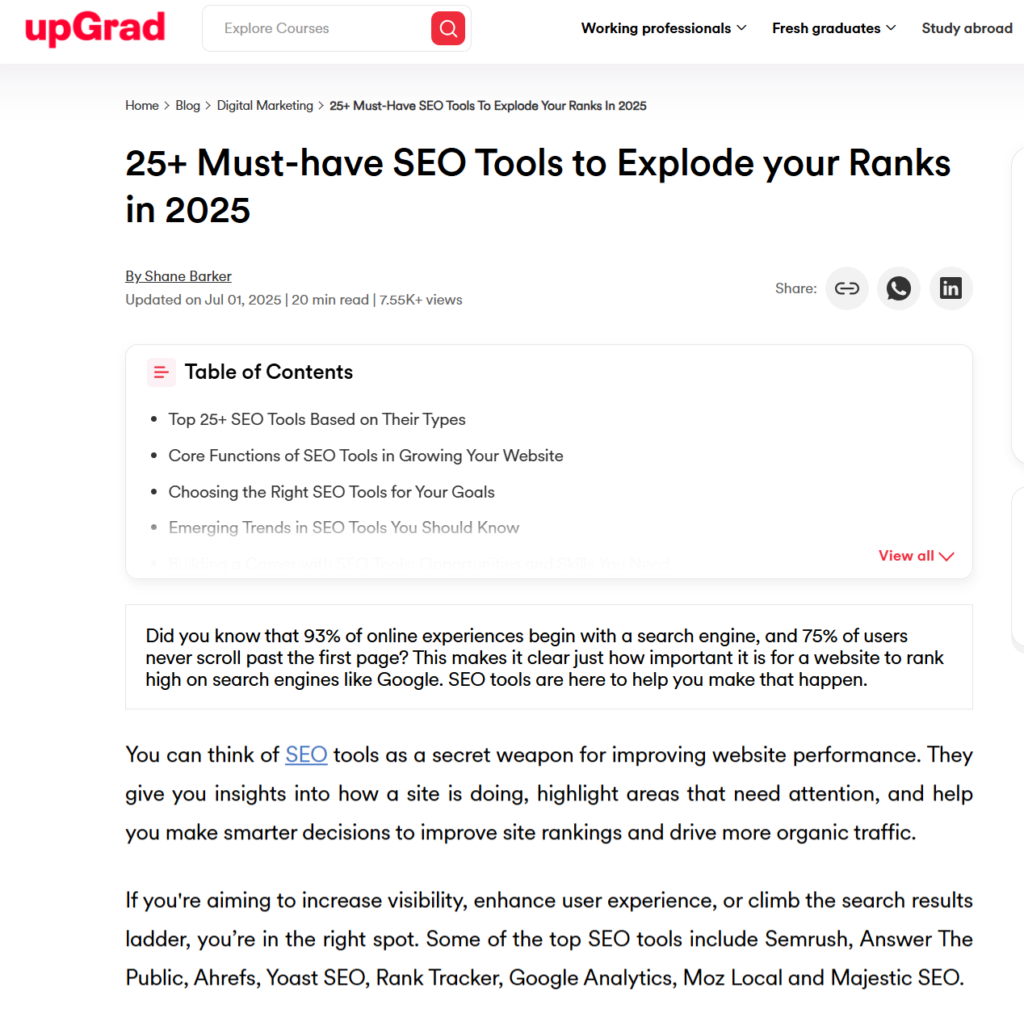
Have affiliates review your SaaS, include it in listicles, and create comparison guides. This is also a great way to build backlinks. Plus, you only have to pay commission when your affiliate program links get you leads or customers.
For a SaaS company, keeping customers is just as important as gaining new ones. And email marketing is one of the best tools to help you minimize your churn rate.
Regular, targeted emails keep your product top of mind, show real value, and make it easier for users to stay engaged and loyal.
When leads and users hear from you often, they remember you.
➜ They think about your project dashboards when planning their next workflow.
➜ They recall your analytics tools when reviewing their team performance.
And they turn to your platform first when a problem arises.
But don’t overwhelm your customers with generic promotions. Segment your audience into distinct customer groups and send them highly personalized emails that provide real value. 👇
Address their pain points, teach them something new, and show them how your product can prevent or solve business challenges. Embed customer feedback and real examples whenever possible, too.
Start with these three emails to guide and support your new users:
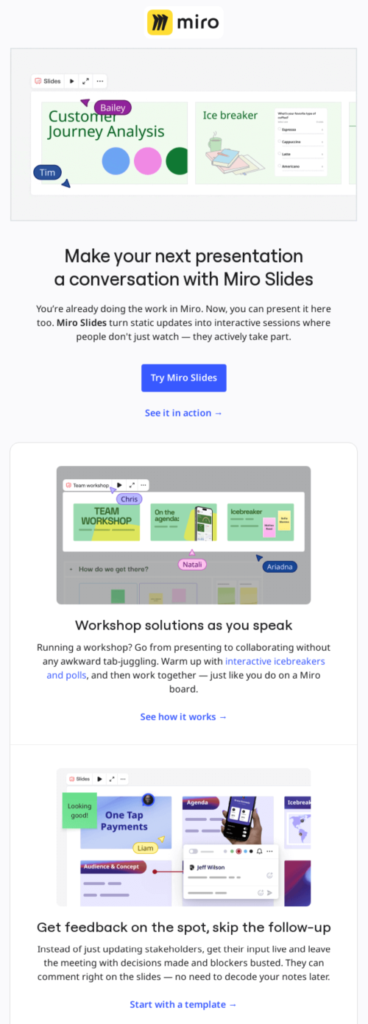
Then, send on-going emails personalized to each customer segment. (E.g., your startup clients will get different emails from your enterprise clients. And your HR manager clients will get different emails from your project management clients.)
Here are some great ongoing email examples:
Your top goal for this strategy is to send emails that are worth opening, reading, and acting on. Use A/B testing to pinpoint what works.
When you don’t have a physical product, it can be hard to think of ways to humanize your brand. But many SaaS companies are using social media to cultivate a brand personality and establish thought leadership.
Grammarly’s Instagram account does this well by sharing a mix of funny quotes, writing tips, and inspirational posts that target their user audience. They also encourage their audience to engage by creating hashtag campaigns. (A great way to drum up user-generated content and branded mentions for social proof.)
In this post, they ask their audience to share their workspaces for a chance to be featured:

(They keep their content lively and socially relevant even if the posts don’t directly promote their product, which is a digital editing tool.)
Some ways you can use social media platforms to market your SaaS and serve your audience include:
Social media ad campaigns put your SaaS product in front of a wide audience, helping more potential users see it. This increases awareness, attracts people who might not find you otherwise, and drives them to try or learn more about your product.
Try LinkedIn ads, Meta ads, and YouTube ads to start. Getting these channels to actually produce pipeline not just impressions takes constant testing, and most in-house teams lack the bandwidth for it. If that sounds familiar, a paid social media agency that works specifically with B2B SaaS can take the testing load off your team and get you to a working ad set faster. (If relevant to your audience, you can also experiment with TikTok and Instagram ads.) Make sure to also experiment with Google ads.
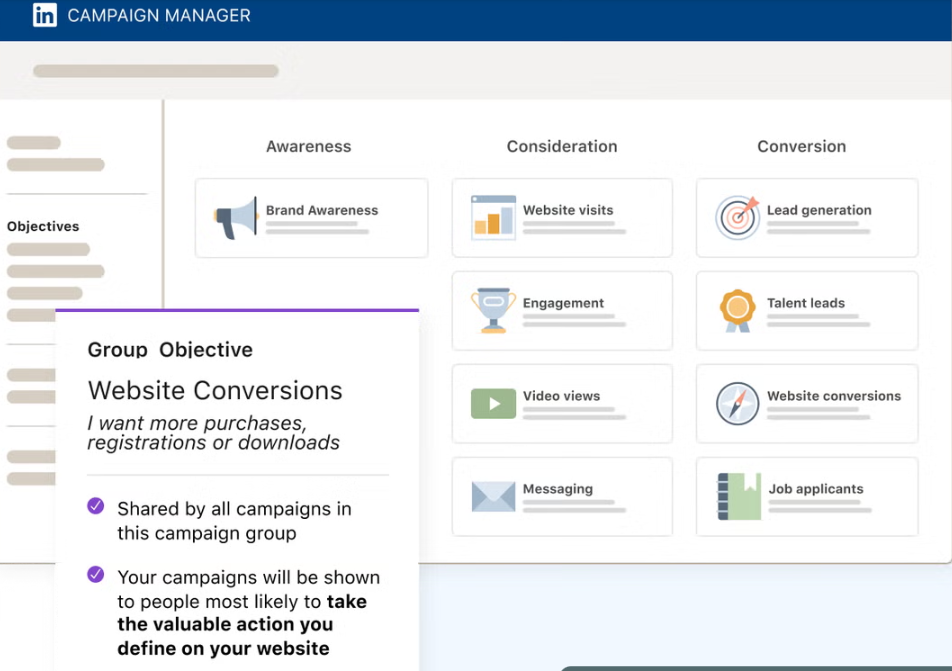
Here are a few important tips to keep in mind:
Search is officially happening everywhere. Users ask questions about SaaS tools in Reddit threads, AI search, Google search, and niche social media communities.
This means you need a multi-channel SEO strategy that helps you get mentions, citations, and rankings across every area users search.
This is a feat, though.
You’ll need:
Pull topics and questions from real Reddit threads where your target audience is active. Target these in your website and blog content so it mirrors how people naturally search.
You also need to find strategic ways to answer your audience’s questions in Reddit threads. You’ll get banned from Reddit groups if you’re too promotional. Offer genuine value and never push your solution. The rest takes care of itself. (AI will naturally cite these discussions in time.)
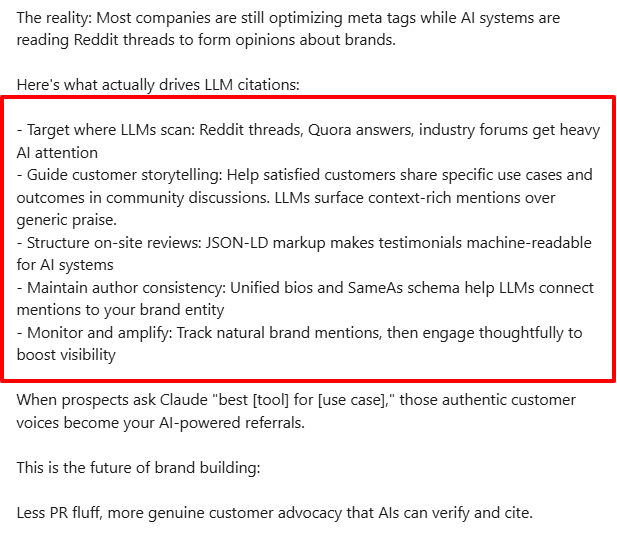
Focus on making your content easy for AI systems to read, understand, and reference.
Here are a few tips to keep in mind:
Jeremy Moser’s LinkedIn posts are packed with insights about this, so definitely give him a follow.
Need help? Reach out to uSERP for an AI SEO audit.
Build a strong SEO foundation for your website.
For on-page SEO: Map each page to a clear search intent. Write concise but thorough answers, and optimize headings, internal links, and CTAs to guide both users and crawlers.
For off-page SEO: Earn high-quality backlinks and brand mentions from trusted, relevant publications to strengthen your authority and credibility.
For technical SEO: Fix crawl and index issues, improve site speed, and ensure mobile usability. Maintain a clean site architecture for search engine optimization. This helps traditional search engines and AI systems access, understand, and trust your content.
Use social media platforms to support search and demand.
You’re now well on your way to creating a successful SaaS marketing plan.
Remember to focus on:
A/B test your ad campaigns and track organic content marketing metrics to see how your plan is working out. Double-down on your most successful tactics (these are ones that lower your CAC, increase your conversion rate, and generate quality leads).
So … which one of these will you implement first?
Psst: Writing SaaS content? Let us help you save hours of time. Find out how.
What is SaaS marketing?
SaaS marketing is how you promote subscription software and get people to sign up, stay, and upgrade. Make sure you have a lead management tool, like a CRM, to track your SaaS marketing efforts.
How do you market a SaaS product?
To market a SaaS product, publish helpful content, let the product sell itself (with product marketing), personalize messages, and guide users step by step.
What are the best channels for SaaS marketing?
SEO, ads, email, social media, webinars, and partners.
How do you measure SaaS marketing success?
You track how much it costs to get customers, how many stay, how much they’re worth, and monthly recurring revenue.
What is product-led growth?
Product-led growth means the product attracts users, helps them get started, and encourages upgrades on its own.
Why is customer retention important?
Retaining customers keeps revenue steadier and reduces customer churn. It also increases your customer lifetime value, or CLTV. Customer lifetime value measures the total profit you earn from a customer over the entire time they stay with your business.
What role does content play?
Content supports the entire customer journey. It teaches buyers, builds trust, and supports decisions at every stage.
What is account-based marketing (ABM)?
Account-based marketing (ABM) is marketing tailored to specific high-value companies.
How important is data in SaaS marketing?
Data in SaaS marketing is very important. It helps you personalize, improve campaigns, and connect marketing to real product use.