


Hiring writers for your agency or website and need help onboarding?
You’re in luck. This is one of my specialties.
BUT I’m going to be honest with you. Your process needs to be pristine, especially if you have ambitious content goals or need to hire at scale. Otherwise, you’ll be in the weeds managing relentless questions, disorganized documents, and unclear expectations that slow everyone down.
Use this eight-step framework as the starting point for your new-writer onboarding SOP, then adapt the details as your process evolves.
K, let’s take a closer look at how to create an efficient content team onboarding process. 👇
Highlights
According to BambooHR’s 2025 workforce research, 44% of HR managers reported having a new hire quit within their first month last year. The study doesn’t pin this entirely on onboarding, but it’s a clear signal: new hires need a smooth, well-organized start if you want them to stick around.
Speed is one immediate benefit. An efficient content team onboarding process helps writers move from new hire to published writer faster.
And if you do it right, you can also teach them how to write faster AND better.
Other benefits of having an efficient content team onboarding process include:
Clear onboarding removes needless guesswork during the first week.
Instead of getting lost in folders or wondering what to do next, writers can focus on starting their first piece.
Efficient onboarding sets communication expectations. Writers know who to contact, what each person in the workplace is responsible for, and how to get help when they need it.
When your writers have a clear roadmap, they can move forward with confidence.
Instead of constantly asking for directions (pun intended 😆), they can focus on learning your process and doing their best work.
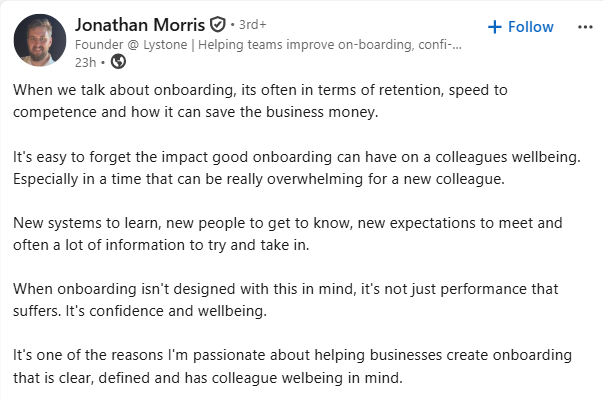
I love what onboarding specialist Jonathan Morris recently said:
“When we talk about onboarding, it’s often in terms of retention, speed to competence and how it can save the business money.
It’s easy to forget the impact good onboarding can have on a colleague’s wellbeing. Especially in a time that can be really overwhelming for a new colleague.
New systems to learn, new people to get to know, new expectations to meet, and often a lot of information to try and take in.
When onboarding isn’t designed with this in mind, it’s not just performance that suffers. It’s confidence and well-being.”
If you’re onboarding new writers soon, this is exactly how I’d do it.
Before implementing the steps below, I HIGHLY recommend taking the time to organize everything.
This should take priority.
➜ Know how to add team members to your tools before trying to onboard them. Have your SOPs, contracts, and training materials ready before you offer the role.
Consider pairing each new writer with an onboarding buddy. BambooHR’s 2024 onboarding research found that 86% of new hires appreciate having that kind of support. It gives writers someone specific to go to when process questions come up, instead of guessing or staying stuck.
This matters even more for remote marketing teams. New hires and freelancer writers cannot walk over to someone’s desk for quick clarification, so they depend on clear documentation, a designated point of contact, and consistent processes.
With that foundation in place, you can move into the onboarding steps. 👇
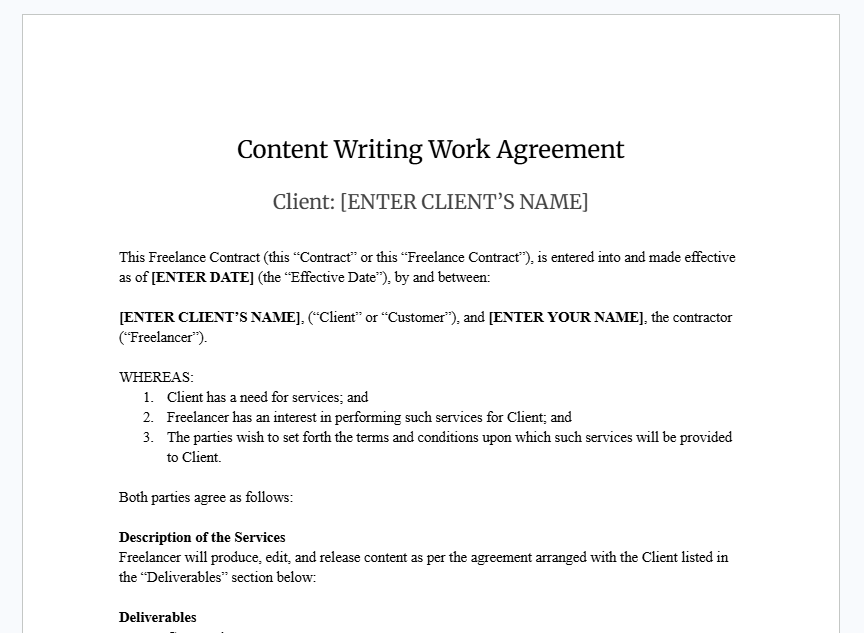
Before the writer’s start date, complete the required paperwork and obtain all necessary signatures.
Send over a writing contract (a Statement of Work agreement) and a Non-Disclosure Agreement (NDA), along with any other required legal documents. Ask qualified legal counsel which documents apply.
(Screenshot provided by Ioana)
I recommend having all your contract templates reviewed by a legal team before filling them out and asking writers to sign them, just in case.
After contract signing, keep up the momentum. Immediately send over an official “Welcome to the Team” email.
In the email, explain EVERYTHING they need to know before heading anywhere else.
Tell them this email is their go-to onboarding doc, in case they get lost at any point.
Be sure to include:
They also need a point-of-contact (POC) list. Include names and contact info in a Google Doc so writers know who can answer their questions.
In the POC doc, say something like:
“Below you’ll find our team member list. Please contact HR reps for benefits questions, project managers for deadline extensions, and editors for content questions.”
➜ Tell them to expect follow-up emails asking them to join your workspaces, password manager, SEO tools, and training platforms.
If you get this one email right, you can shave days off of onboarding. Yes, really!
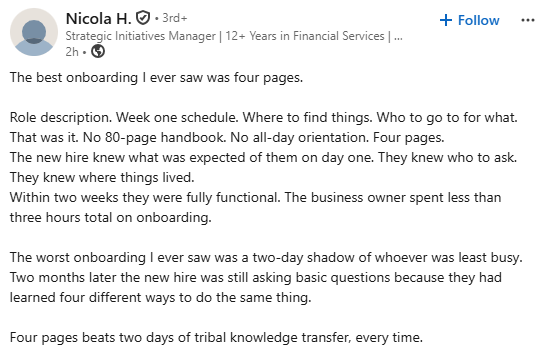
In fact, Strategic Initiatives Manager Nicola H. recently said:
“The best onboarding I ever saw was four pages.
Role description. Week one schedule. Where to find things. Who to go to for what.
That was it. No 80-page handbook. No all-day orientation. Four pages.
The new hire knew what was expected of them on day one. They knew who to ask. They knew where things lived.
Within two weeks, they were fully functional. The business owner spent less than three hours total on onboarding.
The worst onboarding I ever saw was a two-day shadow of whoever was least busy. Two months later, the new hire was still asking basic questions because they had learned four different ways to do the same thing.
Four pages beat two days of tribal knowledge transfer, every time.”
Golden wisdom right there. ✨
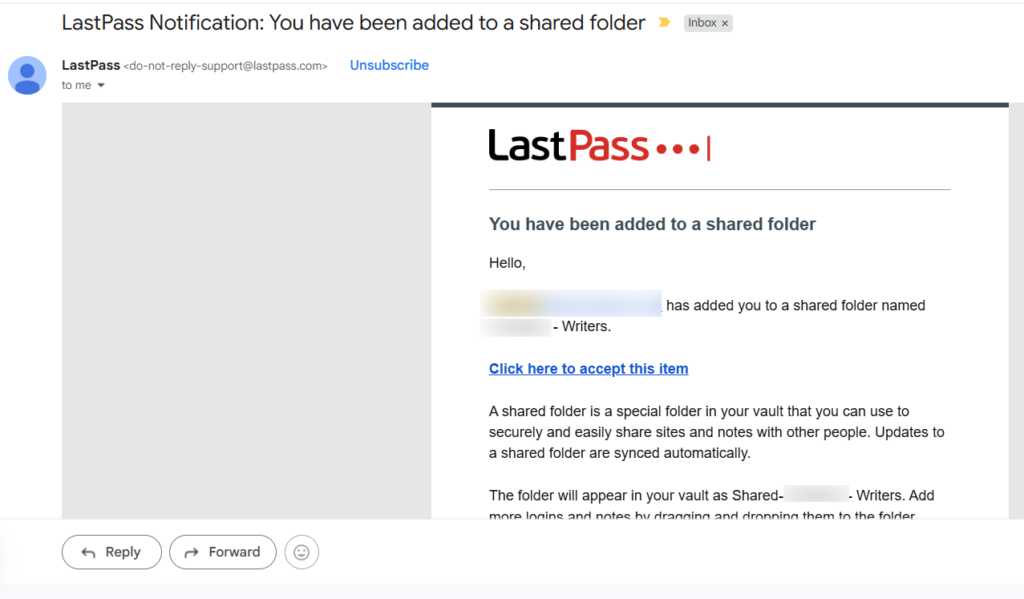
Add your new writers to the content writing tools you need them to use.
Then send out a request (by email) for them to set up logins or accept the invitation to use your tools.
(Screenshot provided by Ioana)
Most marketing teams need writers to have access to the following tools by their start date:
Set up check-ins to make sure each writer is set up with their logins and tools properly before their first assignment.
By the end of week one, provide access to any required videos, written training materials, or training platforms.
Explain what’s expected during training in a welcome module or intro video.
For example:
“Watch these videos and take the quizzes at the end.
You must score 80% or higher to pass. Retake each quiz as needed, up to a maximum of three attempts.”
Training introduces the workflow, but writers also need a reference they can return to once assignments begin.
After training, send over the SOPs for every process the writer will follow.
These are your Standard Operating Procedures. Training teaches them what to do. These docs are their blueprints for success as they ramp up assignments during their new job.
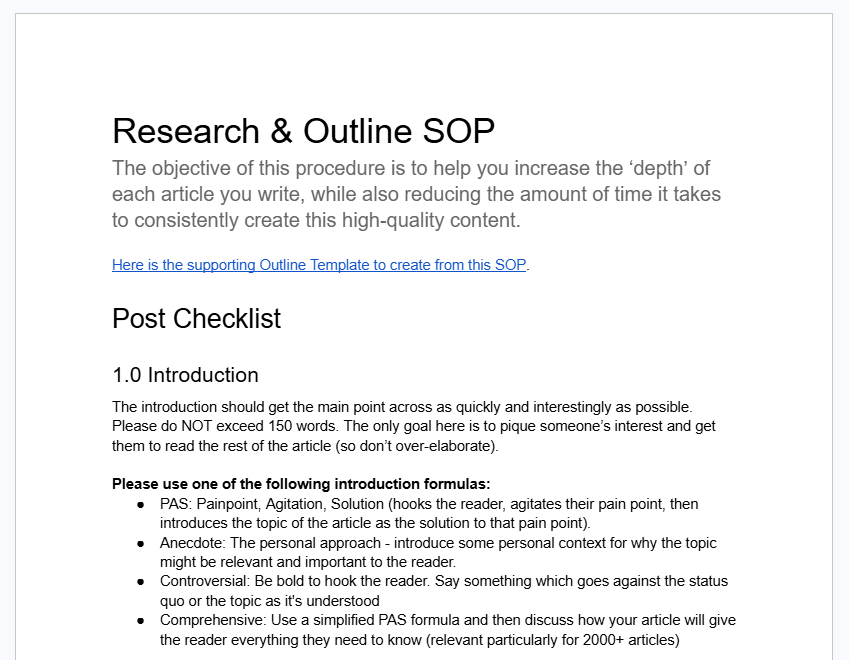
(Screenshot provided by Ioana)
Again, make sure they know where to access your SOPs so they can re-read them as needed.
(Save them in your Work OS or in Google Drive.)
*Pro-Tip: Provide a checklist new writers can check off and submit to you when they’re finished reading.
Ask your new writers about their capacity, schedule, and niches.
You need clarity around:
Here’s an email I send out:
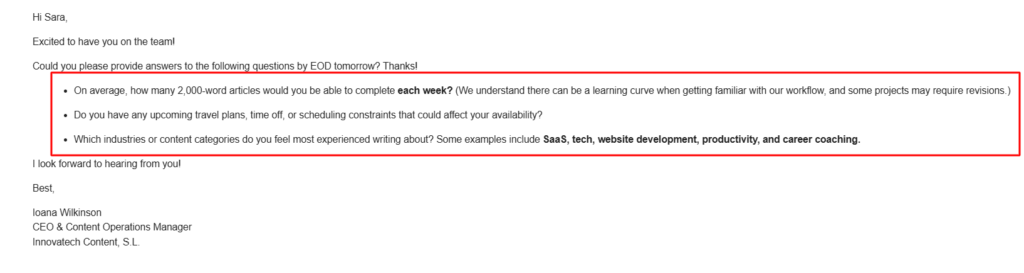
(Screenshot provided by Ioana)
Hard to read the text? Grab it in the next section.
Feel free to copy my text below and use it when emailing your writers:
“Hi <NEW WRITER NAME>,
Excited to have you on the team!
Could you please answer the following questions by EOD tomorrow? Thanks!
On average, how many 2,000-word articles would you be able to complete each week? (We understand there can be a learning curve when getting familiar with our workflow, and some projects may require revisions.)
Do you have any upcoming travel plans, time off, or scheduling constraints that could affect your availability?
Which industries or content categories do you feel most experienced writing about? Some examples include SaaS, tech, website development, productivity, and career coaching.
I look forward to hearing from you!
Best,
<YOUR NAME>
<YOUR TITLE>
<YOUR COMPANY NAME>
It’s officially time for your new writer to start writing!
For this step in the onboarding process, make sure to provide everything they need to succeed.
Feel free to use my first assignment checklist below. 👇
Send the following to every new writer when assigning their first project. The most important item on this list is the brief, so don’t skip it. Check out this piece on how to write a brief if you need help.
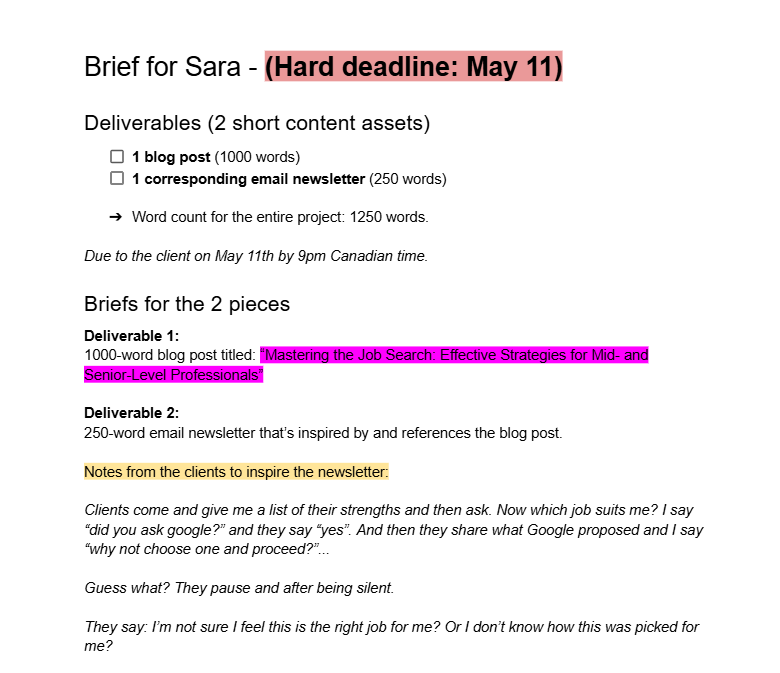
(Screenshot provided by Ioana)
Provide feedback as soon as possible after the first assignment. You want your writers to correct their mistakes before they become habits.
If you have extensive notes you want them to keep in mind for next time, send over a Loom video.
Loom is a screen-sharing tool that lets you record your screen. It’s a much faster option than getting caught up in long email threads.
Here’s one I recorded to give you an idea. Ignore the poofy, unkempt hair. 😂
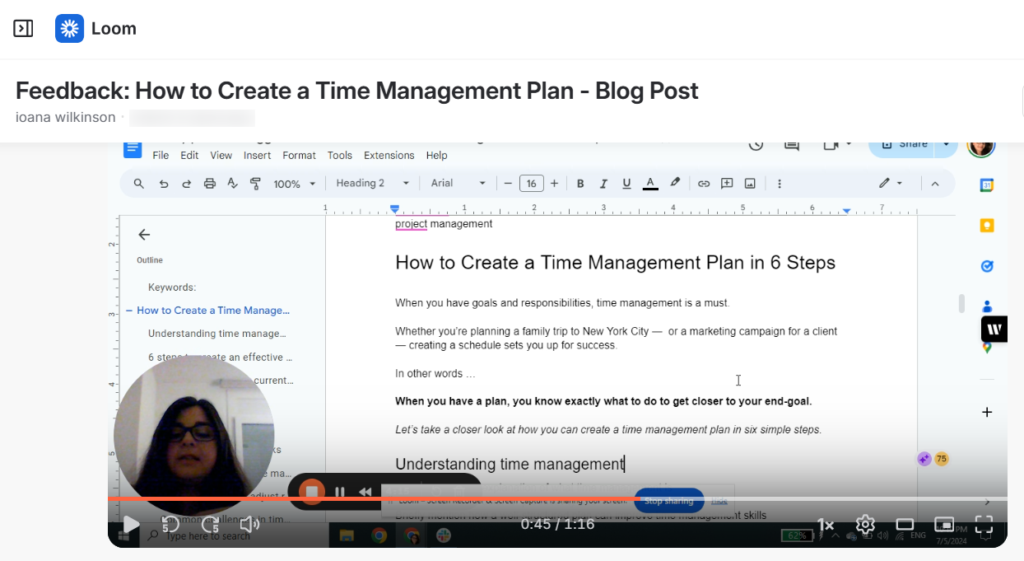
(Screenshot provided by Ioana)
During the recording, show up on camera so the writer can put a face to a name. Pull up their submitted draft, and walk them through your notes.
Be intentional about what you focus on during your review.
Start with the highest-impact patterns, then explain what worked, what needs to change, and what the writer should apply to their next assignment.
Could you set up 1-1s or virtual coffee chats to go through every correction live? Yeah.
But if you have a bunch of writers to provide feedback for, get ready for a major time suck.
And don’t skip the feedback part. Ask new writers how it’s actually going: are they feeling supported, what’s still confusing, what would help them do better work? Then use that to tighten up the process, not just for them, but for whoever comes next.
Keep an eye on the first assignment especially. If you’re fielding the same questions from multiple people, or seeing the same mistakes pop up, that’s not bad luck. It means something in your brief or training needs a second look. Fix the system, not just the symptom.
K, it’s time to onboard your writers!
Whether you’re starting a new content team or scaling your current one, these eight steps will help you create a smoother onboarding process and get your new writers publishing faster.
And if you want to get them publishing even faster, you’ll love Wordable!
What’s Wordable, you ask? A super cool tool that uploads your content from Google Docs to WordPress in just one click! If you publish at scale, you’ll be thanking the stars you came across this article. 💫
Curious to see how it works? TRY WORDABLE NOW.
Most content teams can onboard a new writer by the first or second week after sending the offer.
The exact timeline depends on your training requirements and standardized processes.
For example, do you expect them to attend an SEO conference first? Or join a 10-day workshop? All of these timelines stack up.
At a minimum, provide:
New writers should know exactly where to find information and who to contact when they have questions.
Create a centralized onboarding hub that contains everything new writers need.
This includes training videos, SOPs, tool logins, communication channels, and assignment workflows. Clear documentation is especially important for remote teams because there are fewer opportunities for spontaneous questions.
Many managers rely on scattered documents and verbal instructions instead of creating a repeatable process. This isn’t a good idea if you’re looking to (you know) actually retain your writers.
This leads to confusion and constant interruptions as new hires search for answers. By day two of onboarding, your writers should already know what’s expected of them.
Yes.
A small paid test assignment can help you evaluate writing quality and any skills gaps. It also gives the writer a chance to learn your process before taking on larger workloads.
Stay collaborative here. Give them a writing prompt and a simple content brief to help guide their first sample.