


Your customer has an amazing success story. But why should future customers care about another company?
Because they’re trying to decide whether they could become your next success story.
After writing and analyzing countless customer case studies, I’ve realized the strongest ones all follow the same storytelling formula.
They help buyers picture themselves achieving the same success while answering the questions that stop them from buying.
Here are 10 customer case study examples to help you do the same.
Highlights
You’re comparing two software providers. On the surface, they look equally convincing.
Both have customer case studies, promise impressive results, and feature recognizable logos and glowing testimonials.
But one holds your attention.
What’s the difference?
Strong customer stories:
Let’s explore some of the best customer story examples below.
Each example takes a different approach. But each one tells the whole story to win over the right buyers. 👇
Growth case studies connect your product to business outcomes buyers care about.
Lead with the result you delivered, so buyers see right away why they should care.
Shopify nails this with its BRUNT Workwear case study.
Here’s the title …
“How BRUNT Workwear scaled from zero to $300M across DTC, wholesale, Shop, and POS on Shopify.”
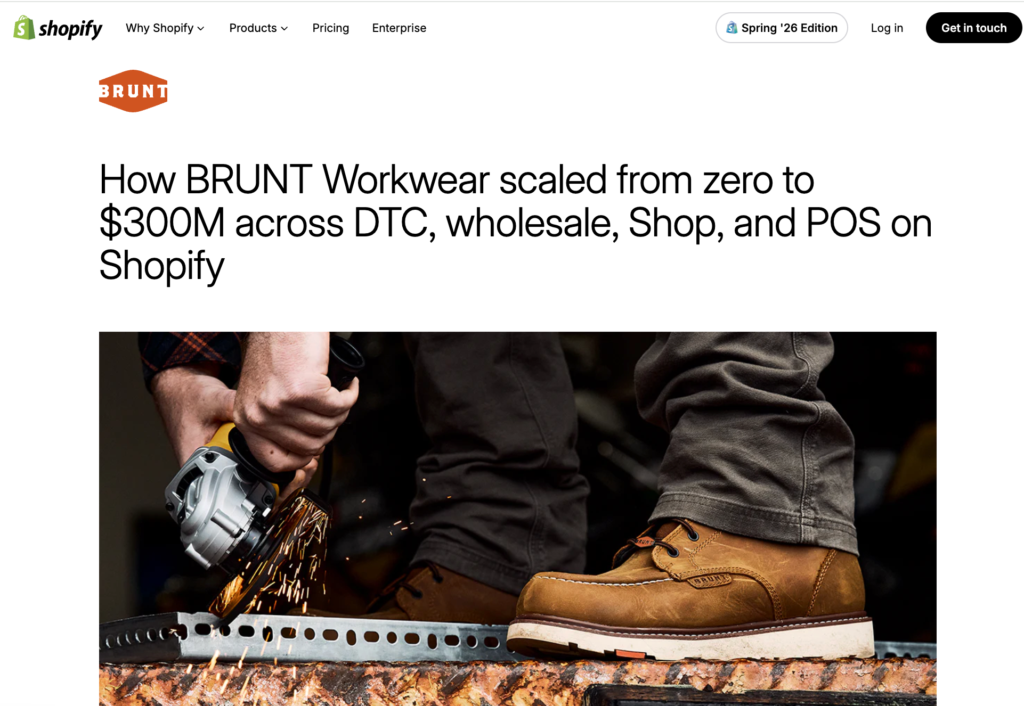
In one sentence, you discover three key things:
If you’re running an ecommerce business yourself, you’re probably clicking.
But the title is only the hook.
When you open the case study, Shopify backs up that promise with a snapshot of BRUNT’s biggest achievements first. Before diving into the story, it highlights $300 million in annual revenue, expansion to 2,000 stores, and the launch of its first physical shop.
Now you know what success looks like, it goes into detail about how BRUNT got there.
That’s exactly what a great case study title should do. It should tell buyers, “This story is relevant to your business, and here’s how you could achieve the same result.”
Show what changed for the customer’s business, not just what changed in your dashboard.
HubSpot does this brilliantly in its Kelly Services case study.
It could have just listed the stats. Instead, it explains how Kelly Services moved from scattered, one-off campaigns to a personal, customer-first strategy.
As you read, every statistic ties back to a real business improvement.
“With Content Hub, Kelly Services’ marketers can easily produce social posts, landing pages, newsletters, and even explore launching a podcast.”
Now the proof lands.
“This streamlined content strategy has led to a 60% increase in conversions.” Not impressions. Not traffic. Conversions.
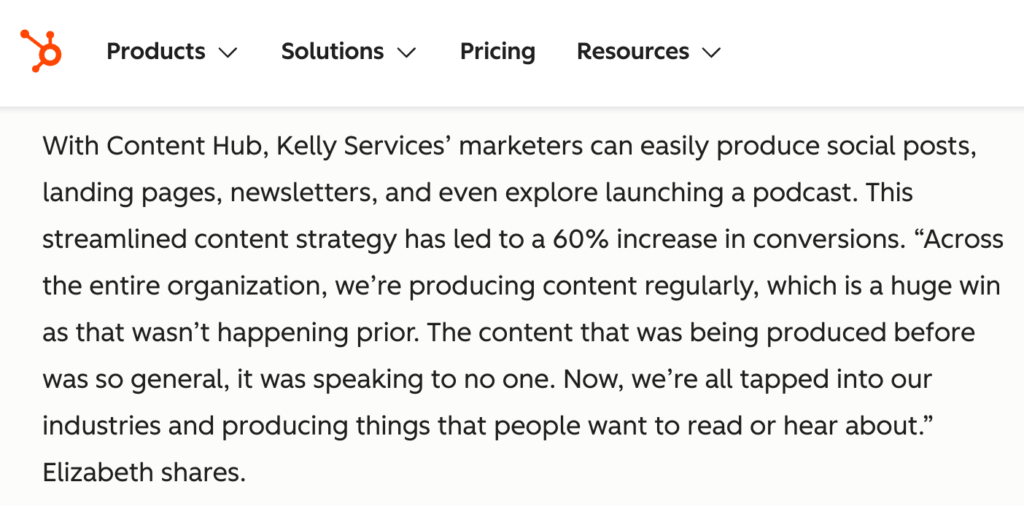
That’s the difference between a vanity metric and a meaningful outcome. Vanity metrics show more activity. Meaningful outcomes show what that activity did for the business.
Every case study acts as a filter, attracting the customers you want more of.
These examples show how to impress the people you want to work with.
Choose customers that reflect the businesses you want to win next.
Webflow does this beautifully with its Greenhouse customer story.
Greenhouse is a hiring platform used by 7,000+ companies. So the story speaks straight to serious enterprise SaaS buyers.
It shows how Greenhouse moved from a CMS that needed developers to a growth engine its marketers own.
It backs this up with numbers: 40% higher conversion, 50% faster event page creation, and 1,000+ pages migrated.
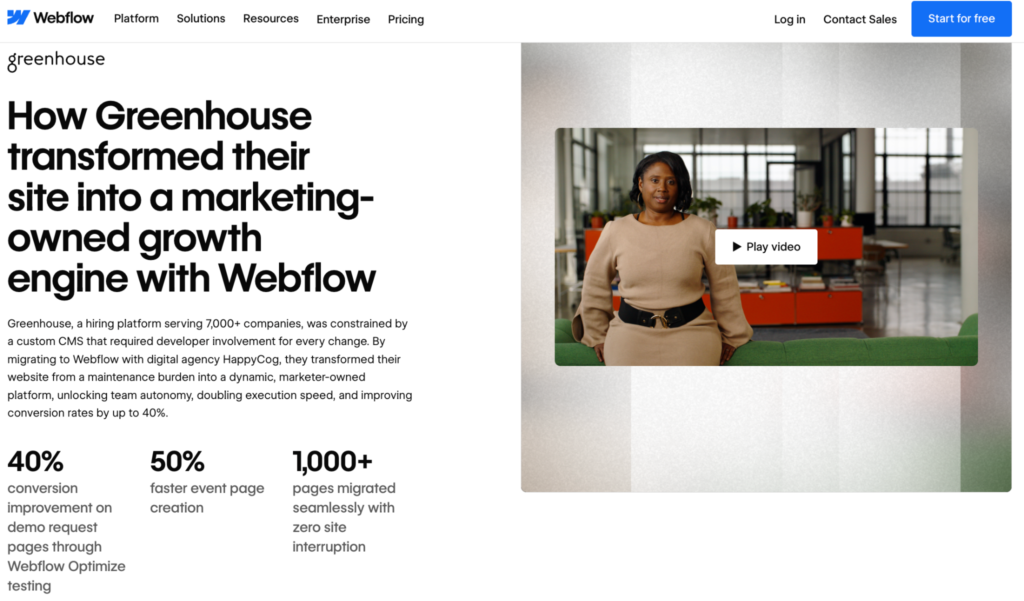
If you’re another SaaS company reading this, it’s hard not to think, “Yep, this is built for teams like ours.”
Every customer story shows future buyers who your product is really for. Use your examples as magnets for the customers you want.
Go beyond the numerical result to show buyers what that result unlocked.
Notion’s Heidi customer story is a masterclass in making big numbers feel real.
It starts with an eye-catching result in the headline: 260+ hours saved every month.
Then it explains where those hours were being lost. As Heidi grew across more than 150 countries, new hires took weeks to train. Teams wasted hours hunting for answers.
Next, Notion walks you through the changes Heidi made. Then it shows what those hours unlocked.
Faster knowledge, quicker onboarding, and a knowledge base that gets stronger as the company grows.
Now those 260 hours actually mean something. They show how Notion gave Heidi a whole new way to run the business.
Great operational case studies show the messy processes first. Then they show how a better system made work simpler, faster, and less frustrating.
Make buyers feel the frustration before you introduce the solution.
monday.com’s CASETiFY case study earns its transformation by taking its time with the problem.
Before the platform appears, you’re dropped into a business drowning in project requests. Hundreds arrive through spreadsheets, emails, and messages.
The case study shows how:
Only then does monday.com enter the story.
By the time you reach the solution, you’re rooting for it because you know exactly what’s at stake.
Walk buyers through the rollout, so they can picture how they’ll get from A to B.
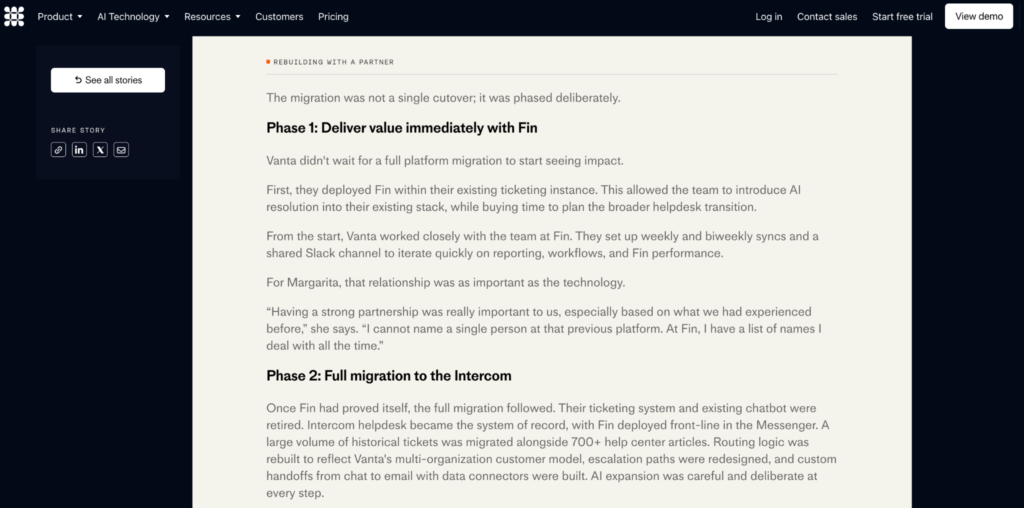
Fin’s Vanta case study doesn’t rush to the results.
Instead, it treats the implementation as part of the story.
It explains why Vanta had outgrown its old support setup. Then it walks you through the rollout step by step …
By the time you reach the results, the rollout feels logical. That removes the fear that change will hurt more than staying put.
Think about the last case study that genuinely convinced you.
Chances are, it didn’t rely on bold claims.
It explained why the customer chose that solution, let them tell the story, and gave you enough proof to trust the outcome.
Show buyers why your solution won.
When I’m writing case studies, I always make the buying decision part of the story.
This is one of the strongest parts of Sprout Social’s Moburst case study. It explains why Moburst switched before showing what happened next.
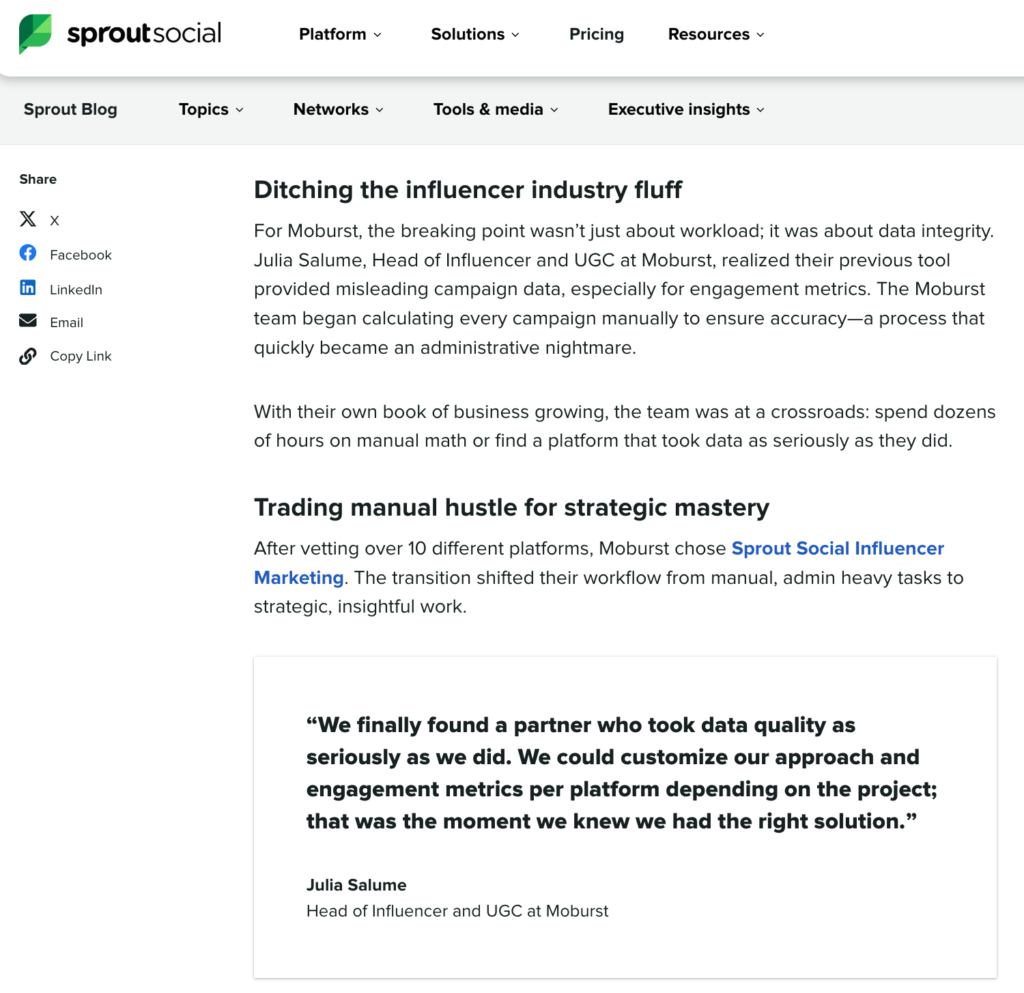
By the time you reach the results, the decision feels justified because you understand why Sprout Social beat the alternatives.
Show buyers the proof.
When I’m working on a case study, I always ask myself one question: How can I show this instead of just saying it?
Videos are gold for this.
As Content Marketing Institute’s 2025 B2B Content Marketing report shows, B2B marketers say video delivers the best results. Case studies closely follow.
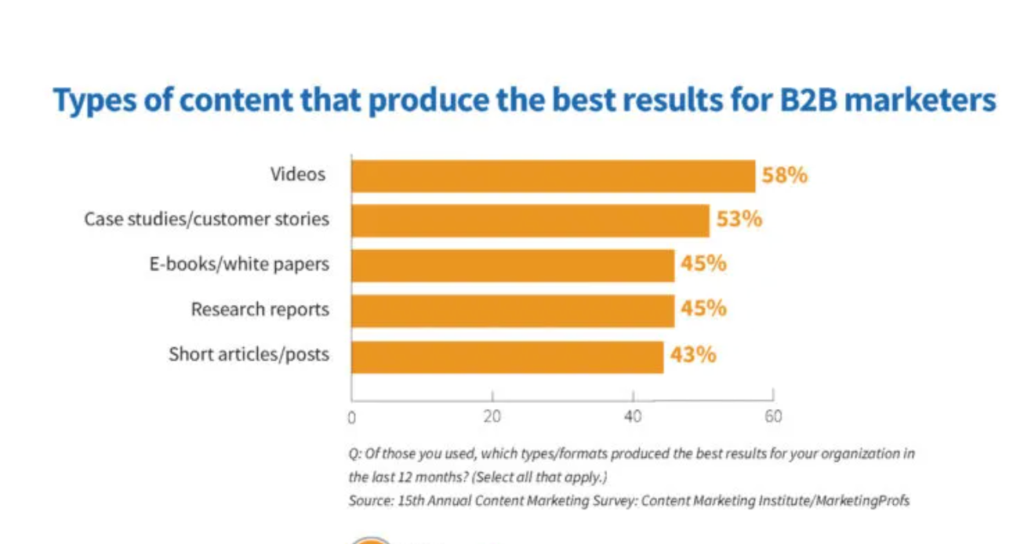
Together, they’re one of B2B’s most persuasive content combinations.
Snowflake’s Luminate case study does this right.
Alongside the written story, a video shows customer interviews, product demos, dashboard screenshots, and the team using the platform.
Luminate explains the challenges it faced and how Snowflake helps it process 334% more data and develop new analytics products faster. Along the way, you see the technology and the people behind the change.
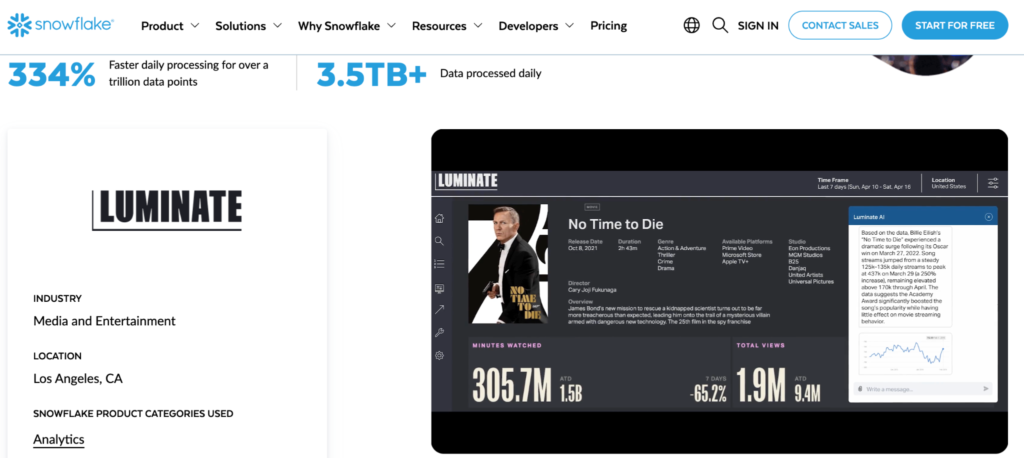
Every shot backs up the copy, so buyers see the product in action as they learn its value.
The more proof buyers can see, the more confidence they’ll have in you.
Case studies go beyond marketing. Make them a tool that helps sales show buyers you already know how to solve their problems.
Make it easy for every stakeholder to find the story that’s relevant to them.
You’re rarely selling to one person anymore. According to Wynter and Noble’s 2025 State of Social Proof in B2B Buying report, the average B2B buying decision now involves 11 stakeholders.
And the Head of Sales, Engineering Manager, CFO, and Marketing Director are all looking for different proof.
Slack gets this.
It publishes a range of customer stories. Buyers can filter them by department, industry, business size, and region.
Each stakeholder can jump straight to the challenges, solutions, and results that matter to them.
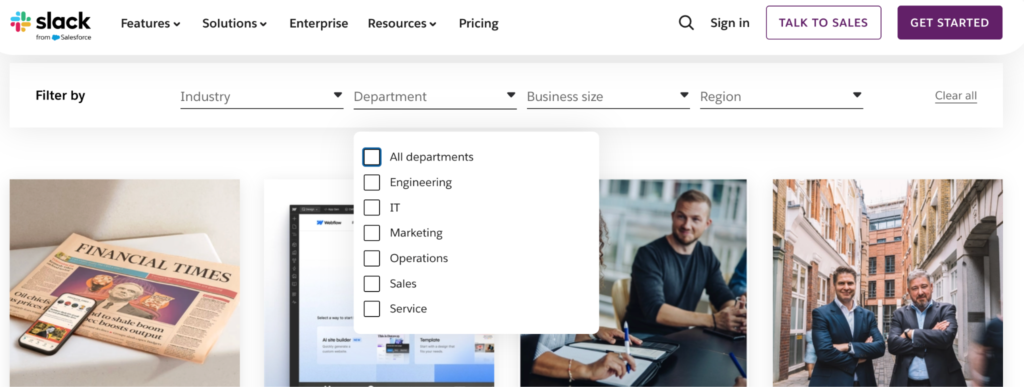
For example, an engineering leader can read how Slack built Slackbot for Salesforce. This story focuses on developer workflows, teamwork, and making engineers’ lives easier.
A sales leader can head straight to the Financial Times story. This case study shows how Slack improves sales productivity, alignment, and revenue outcomes.
Same product. Completely different stakeholder priorities.
The best case studies answer objections before they appear.
Before I start writing, I make a list of every question I’d ask if I were buying the product:
Zoovu structures its MAPAL case study around those exact questions.
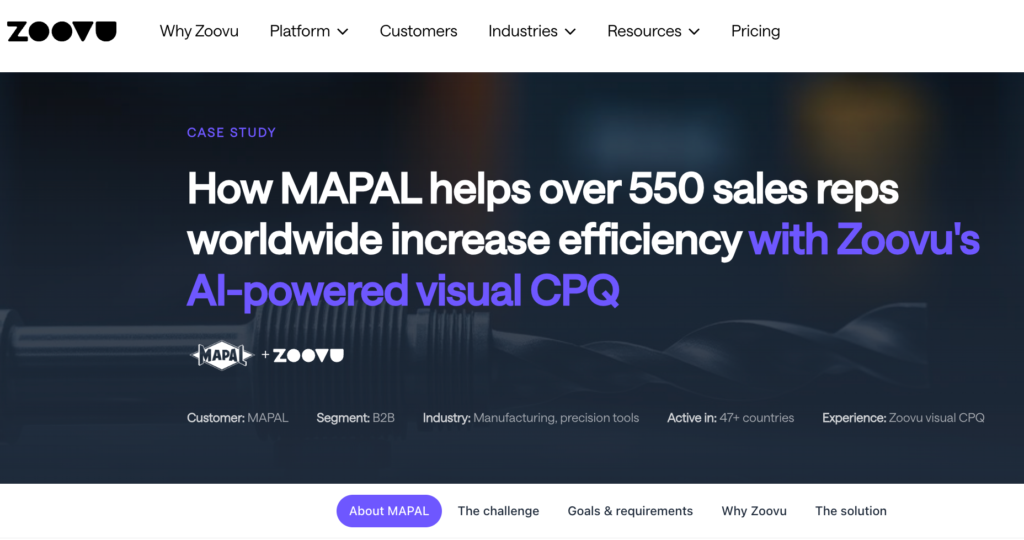
It walks the reader through:
By the time you reach the solution, most of your questions have already been answered.
This leaves very little standing between interest and a sale.
Every great customer case study helps buyers picture themselves achieving the same success.
Before you publish your next one, ask yourself:
One final thought: build a library, not a single case study. That way, every prospect can find a story that feels like it was written just for them.
There’s no perfect length. A simple customer success story might only need 500 words, while a detailed enterprise case study could run to 2,000. Focus less on word count. Instead, explain the problem, why the customer chose you, how the rollout went, and what changed afterwards.
Absolutely. Buyers often care more about relatable problems than headline-grabbing numbers. Saving a client five hours a week, reducing onboarding friction, or simplifying a complicated process can be just as persuasive as doubling revenue.
Making the company the main character. The customer should always lead the story. Show the challenges they faced, the decisions they made, and the outcomes they achieved. Your role is to explain how you helped them get there, with enough evidence to prove it.