


When most marketers hear “competitive intelligence,” they think of sales teams. Those teams track rivals, prices, product launches, and market moves. That view makes sense. But it only tells part of the story. Content marketers need competitive intelligence, too. They just use it in a different way.
Content teams don’t use it to prep for sales calls. They use competitor research to:
The goal isn’t to copy what another company publishes. It’s to understand the market before you decide what to create next.
That makes competitive intelligence one of the best ways to base your content strategy on real evidence. It helps you spend more time on content your audience wants to read.
In this guide, you’ll learn what competitive intelligence means for content marketers. We’ll discuss how to:
Highlights
For content marketers, competitive intelligence means studying the market before planning what to publish. It’s more than watching competitors. It looks at:
This helps you find openings.
Sales teams use competitive intelligence differently. They often track pricing, product launches, and competitor moves. Content marketers use the same mindset, but with a different goal. They want to know what audiences need and where current content falls short.
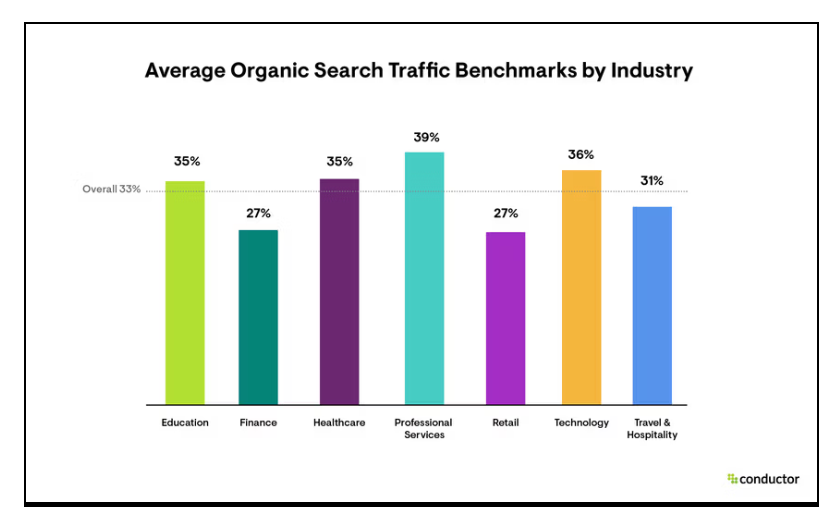
This matters even more when search drives a large share of traffic. Conductor’s 2024 Organic SEO Industry Benchmarks report found that organic search generated 33% of overall website traffic across seven industries in 2024. So how visible your competitors are in search is a useful benchmark.
Here are the organic search traffic benchmarks by industry:
Don’t copy competitors. Use those insights to find what they missed.
Competitor content analysis looks at individual pages, guides, or blog posts. For example, you might review a competitor’s buying guide to see which questions it answers.
Competitive intelligence turns those findings into long-term content choices. It looks for patterns across competitors, audiences, search, and messaging. Then it uses those insights to set future content priorities.
| Competitor content analysis | Competitive intelligence |
| Reviews existing pages | Tracks broader market patterns |
| One-time exercise | Continuous process |
| Focuses on content | Includes audience, positioning, SEO, messaging, and trends |
| Finds weaknesses | Prioritizes opportunities |
Many content strategies start with good intentions but weak direction. Teams pick topics based on guesses, internal opinions, or requests from stakeholders. Or they use a list of keywords pulled from an SEO tool. Those ideas can produce content. But they don’t always reflect what the market needs.
Competitive intelligence checks your ideas against the market before you spend time writing. It helps you see:
That view matters more as search keeps changing.
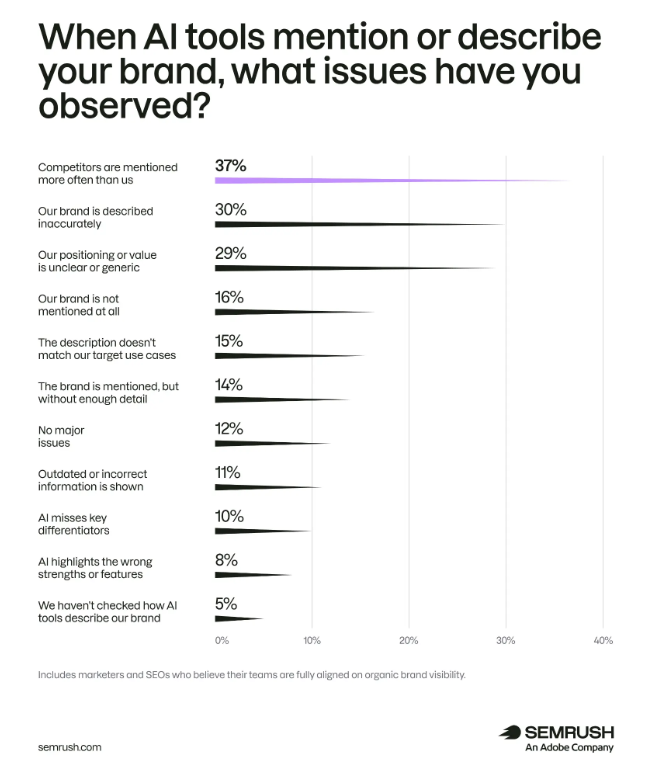
A Semrush study reports that 37% of marketers say competitors appear more often than their brand in AI-generated answers. Tracking visibility now goes beyond classic search rankings. It plays a key role in modern competitive intelligence.
Instead of asking, “What should we publish next?” you can ask better questions backed by market evidence. Which ideas fit your business? Which topics deserve your attention first?
Those answers help you build a stronger content strategy. They also set up content-gap analysis, where missed openings are much easier to spot.
Content gaps go beyond missing keywords. They show where audiences still need better answers or different formats. They also show where readers lack support at each stage of the buying journey.
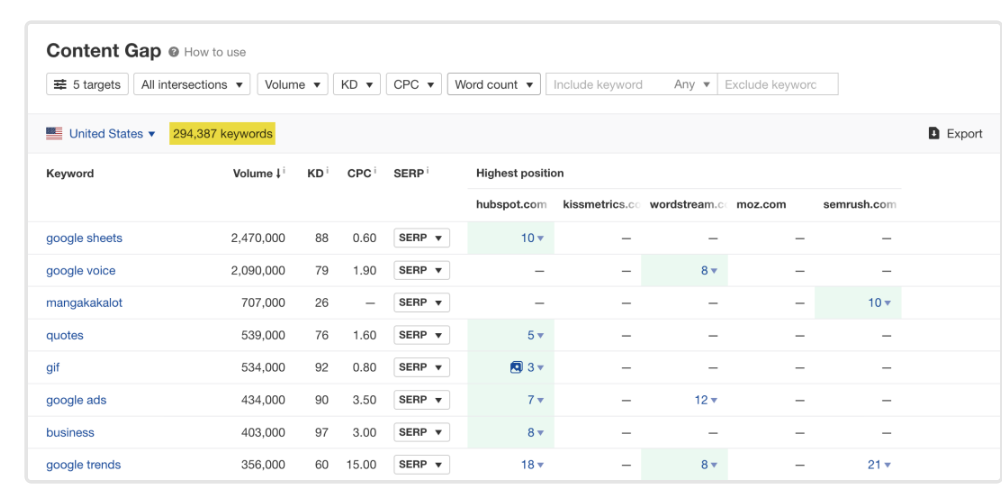
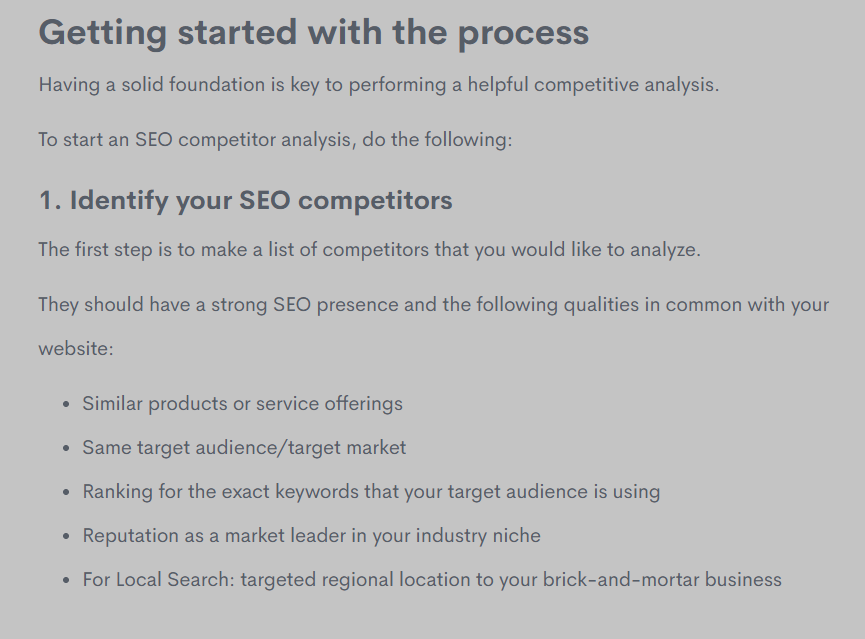
Some gaps are easy to spot. Others take more research. Informational gaps appear when competitors skip common customer questions. For example, several articles may explain what SEO competitor analysis is. But they never explain how to conduct it.
Other opportunities include:
For example, a competitor may publish advanced SEO guides but offer nothing for beginners. Another may compare products but skip articles that explain the problem. Readers often need that before they weigh solutions.
Looking across these areas helps you find openings that keywords alone may miss.
Not every gap deserves a place on your editorial calendar.
Start by asking which ideas support your business goals and draw the audience you want. Then review search demand, competition, conversion potential, and your current topical authority. Only then set priorities.
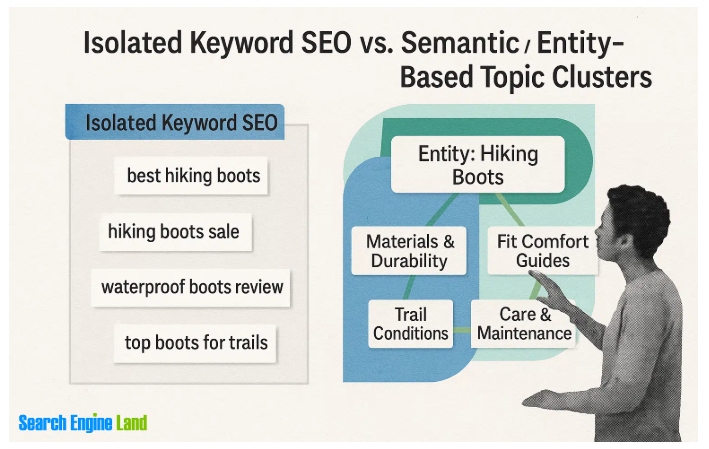
Say two topics have similar search demand. But one fits your expertise and supports a key service. That topic deserves attention first. As your list grows, group related topics into clusters so each new article strengthens the others. This gives you a roadmap, not a pile of unrelated posts.
An editorial calendar works best when it reflects market opportunities. Competitive intelligence gives you a repeatable way to move from research to a content plan.
Each step builds on the last. It helps you rank ideas, so you don’t fill a calendar with random topics.
Here’s a simple process for planning content:
Start by listing your direct business rivals. Then add the websites that compete for the same search queries. They often overlap, but not always.
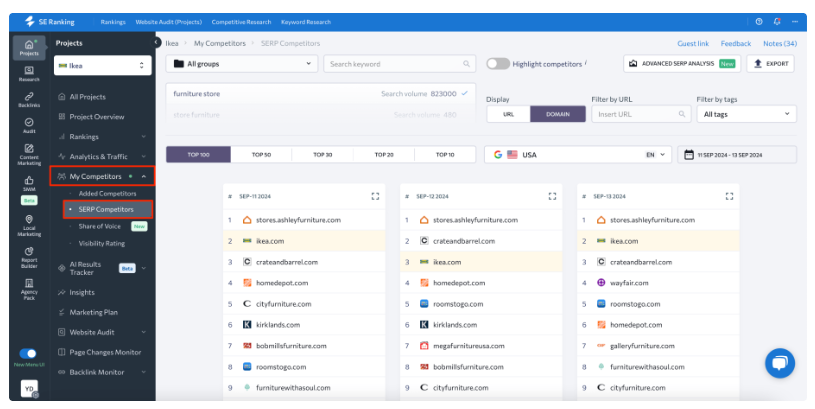
Review topic coverage, search intent, messaging, content formats, and freshness. Look past keyword rankings to see how competitors serve their audience.
Look for:
Rate each topic on:
Focus on ideas that support both your audience and business goals.
Decide what works for each topic, such as:
Sort content by priority, publishing pace, season, campaigns, and topic clusters. This gives you a balanced schedule, so you don’t post unrelated articles.
Track results, watch competitor updates, and find new openings. Then update your editorial calendar as the market changes.
Psst! If you’re looking to organize your content marketing efforts, our editorial calendar tools post compares the top 7 options for your team.
AI can speed up competitive intelligence, mainly in the research stage. It can:
Those tasks take far less time when AI handles the first pass.
The next step still belongs to people. AI can’t decide which ideas deserve attention first. It also can’t decide how your brand should stand apart from competitors.
Marketers still choose priorities, positioning, editorial direction, and brand voice. They also pick the ideas that support business goals.
Think of AI as a research assistant, not a content strategist. It helps sort information. But people turn those findings into decisions. That’s what turns competitor research into a content strategy. And that strategy reflects your audience, your expertise, and your publishing goals.
Competitive intelligence works best when it guides decisions. Many teams gather lots of research. But they struggle to turn it into better content.
Avoid these common mistakes.
Competitive intelligence is much more than keeping an eye on competitors. It’s an ongoing planning system. It helps you:
The best content strategies don’t start with brainstorming. They begin with knowing the market and what your audience still needs. They also look for openings competitors haven’t covered. That way, every new piece has a clear purpose before writing starts.
Once you’ve built that strategy, the next challenge is getting it done. Wordable helps you publish content from Google Docs to WordPress faster. Your team spends less time on formatting and more time on content that moves your strategy forward.
Try Wordable and turn your competitive intelligence into published content with less manual work.
Competitive intelligence works best as an ongoing process, not a one-time project. Do a deeper review every quarter to check competitors and market changes.
Between those reviews, do quick monthly check-ins. Track new content, search visibility, and new openings.
Focus on metrics that support better content decisions. Review keyword coverage, topical authority, search intent, backlinks, and business relevance.
Looking at these signals together gives you a clearer picture of where competitors perform well and where opportunities still exist.
No. Competitive intelligence helps you understand the market, not copy another company’s work. The goal is to identify gaps, learn what audiences expect, and create content that offers more value or a different perspective.
This approach helps your brand stand out so you don’t publish another version of the same article.
SEO platforms can help you review:
AI tools can summarize research and organize findings. The best results come from using these tools to support your analysis, not replace strategic decisions.
Keyword research focuses on search terms and demand. Competitive intelligence uses those insights alongside competitor content, search intent, messaging, audience needs, and market trends. It gives you the context you need to prioritize topics so you don’t build a strategy around keywords alone.