


Content still attracts prospects and wins customers. However, the gap between brands that produce “stuff” and those that publish strategically gets wider every year.
As companies scale their marketing efforts, content production often becomes chaotic. Teams juggle multiple tools, unclear responsibilities, and inconsistent editorial standards. Without a defined content production process, even strong content ideas struggle to turn into consistent results.
A strong content production process turns random content pieces into a reliable system. It helps save time and reduce handoffs. It ensures every piece has a purpose that resonates with your target audience.
That’s why businesses are investing in content marketing with a process in place. However, according to DemandSage statistics, nearly half of content marketers (48%) call scaling content production a common challenge.
Fret not. This page covers the entire content production process. As a digital marketer, learn effective tactics to boost your engagement and conversions. Keep reading so you won’t miss out on the strategies this year.
Your content production process is an assembly line for ideas. It’s the repeatable path that turns a spark into something polished and published. The core building blocks usually look like this:
In many organizations, each stage of the content production process has a clear owner. Content strategists define goals and topics, SEO specialists handle keyword research, writers produce the draft, editors refine structure and clarity, and marketing teams manage distribution. Assigning ownership prevents bottlenecks and keeps the workflow moving efficiently.
Each stage has a job.
When the process is clear and consistent, you get two things. Quality goes up, while stress goes down. You prevent those endless Slack threads asking who’s doing what. Ultimately, simple SOPs turn best intentions into muscle memory.
That’s why you need to implement some tactics for your content workflow in 2026. Here’s how:
A scalable process starts with a clear strategy.
Before you build a content production workflow, you need to define goals and share direction. You also have to establish strong content collaboration across teams. This is where content operations turn scattered ideas into a scalable system.
For strategy planning and development:

For example:
If you’re promoting an Electrical contractor in St. Louis, MO, chances are your goal is: To generate 15 qualified service inquiries per month, not just more traffic. You want more and more clients relying on your team of electricians.
To start, research local homeowner concerns to shape the blog’s angle and messaging. Then, schedule it strategically. Lastly, optimize for local SEO with a clear CTA. The ultimate goal is to turn readers into real leads.
Effective research is the engine behind a scalable content production process.
Before creating, validate demand and clarify intent to strengthen your workflow. Done right, research fuels smarter content operations. It supports a scalable content system built on real audience insight.
Here are some practical research techniques:

For example:
Before writing a new article, a team uses Google Keyword Planner and Semrush. The goal? To confirm there’s real demand and clear search intent behind the topic. They also review competitor content to spot gaps.
Then, they check BuzzSumo and AnswerThePublic to see what questions people are actually asking. With that insight, they create a focused piece that directly addresses audience needs.
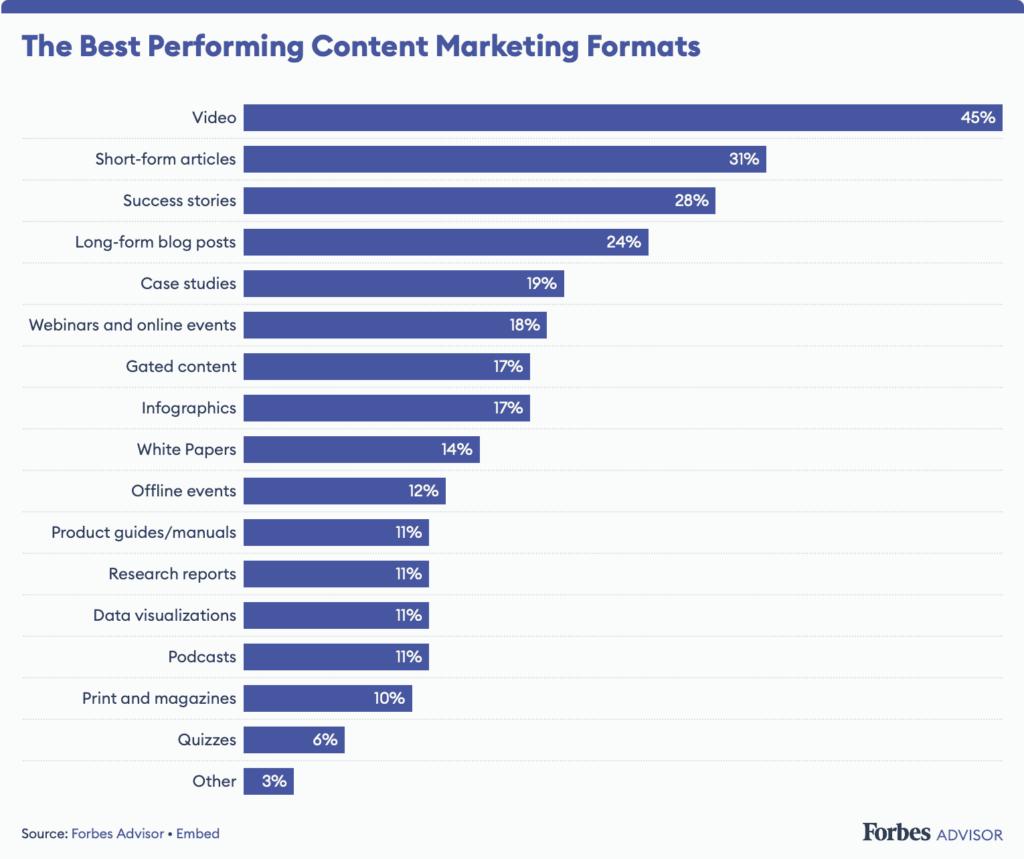
High-quality content is where strategy meets execution in your content production process. Forbes Advisor listed the high-performing content marketing types: Video (45%), short-form articles (31%), success stories (28%), and long-form blog posts (24%).
However, factor in content formats that work in the age of AI. Ultimately, crafting strong content means balancing between clarity and creativity.
Heed our advice:
The real magic happens when you infuse every piece with personality and expertise. Meanwhile, you keep it accessible and engaging.
Yoast SEO can help flag on-page basics. Meanwhile, Hemingway Editor highlights complex sentences and passive voice.
For example:
Suppose you’re targeting the keyword TRT online. In that case, create a long-form blog post with FAQs.
The blog post should answer common questions about the eligibility, requirements, safety, and costs of testosterone replacement therapy.
Additionally, structure it for readability. Use short paragraphs and strong subtopics. Finally, repurpose it into a short educational video. Using a text to video tool will help match high-performing formats.
As part of your content production workflow, the goal is:
Craft content that not only delights your audience but also boosts SEO.
Extensive editing and thorough proofreading help turn good ideas into polished pieces.
So, take note:
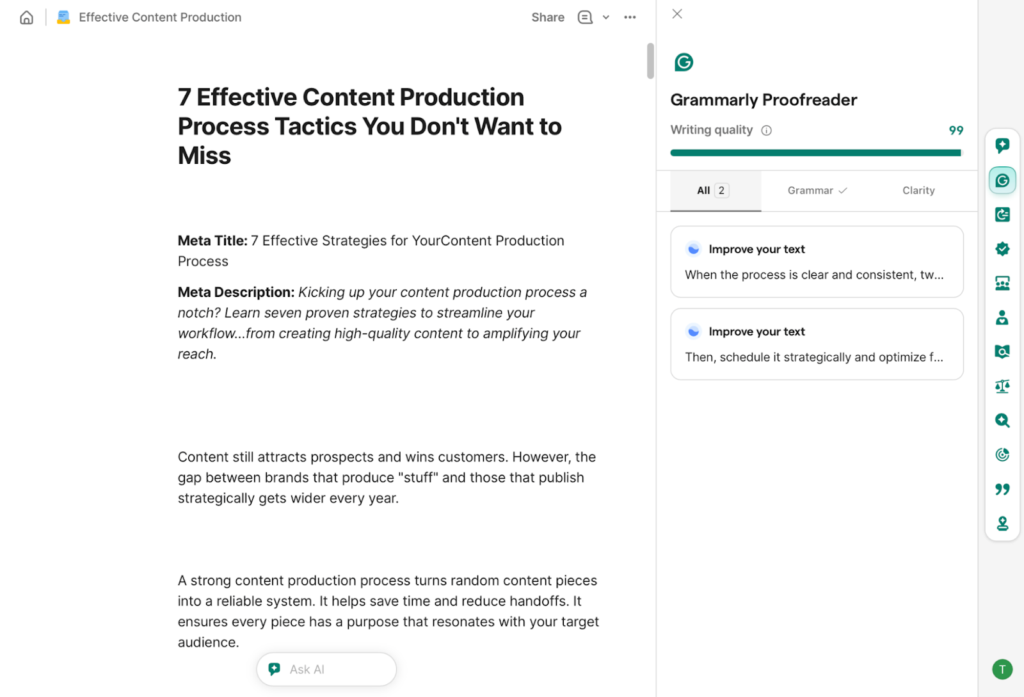
For example, a SaaS marketing team may use a structured editorial review process before publishing. A writer submits the draft, an editor checks clarity and flow, and an SEO specialist verifies keyword placement, internal links, and search intent alignment. This layered review process reduces errors and ensures each article meets both editorial and SEO standards.
Publishing and distributing content effectively is just as important as creating it. With a clear content production workflow and the right tools, you can leverage content automation for publishing and distribution.
The first place to publish your content is on your website, particularly your blog. The goal is to establish a canonical source and maximize long-term SEO value. However, there’s more to this channel than you might think:

If you cross-post, use canonical tags to consolidate SEO signals back to your original URL. Also, integrating tools like contract management software can help streamline approvals and workflows. This works for teams managing multiple content channels.
Don’t overthink “perfect” timing. Use benchmarks from sources like Sprout Social as starting points. Then, optimize based on your data. Regular scheduling ensures your content reaches readers reliably and efficiently.
For example:
A B2B digital marketing agency publishes a detailed guide on its website first. Its marketing team uses content automation for publishing and distribution.
The team then shares adapted versions on LinkedIn and Medium. They add canonical tags to improve SEO and streamline approval processes.
They stick to a consistent weekly schedule and adjust timing based on analytics. Ultimately, all these steadily grow qualified traffic.
While publishing focuses on getting content live, promotion focuses on getting it seen. Distribution ensures the article exists on the right platforms, while amplification drives traffic and engagement through marketing channels.
Great content only works if people see it. That’s where promotion and amplification come in!
Smart promotion and amplification turn one content piece into multiple touchpoints. They drive instant engagements and successful conversions.
To begin, employ content syndication. Use social channels, email, and influencer networks to get your work in front of the right audience. Here’s how:
Each platform has its own behaviors and preferences. So, success depends on your social media content creation. For instance:
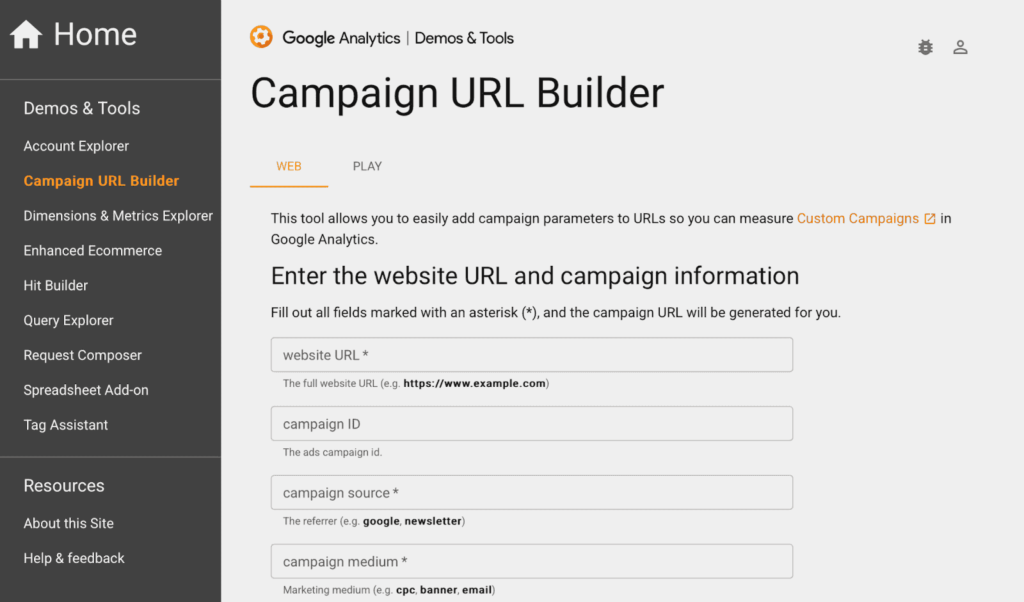
Track performance with UTM parameters to double down on result-driven channels.
Segment by interest or lifecycle stage. Likewise, leverage email newsletter templates to simplify creation and maintain consistency.
Co-create content they’re proud to share. Think expert roundups, data deep-dives, even field reports. And don’t forget compliance: Follow the FTC’s endorsement guidelines. For teams working with multiple contributors or partners, clear workflows for approvals help keep collaborations smooth and prevent delays after publication.
For example:
Let’s say you’re promoting a blank t-shirt collection for your e-commerce business. You can repurpose a single blog post into social assets:
Also, send a targeted email using email newsletter templates to showcase special offers. Then, collaborate with micro-influencers. They can share the collection with their audiences.
Lastly, content syndication ensures the collection reaches as many potential buyers as possible.
Defining success before publishing is essential for high-performance content strategies.
Start with clear goals and measurable outcomes. They help track what works and refine your approach. That way, you can turn insights into actionable improvements.
The final step in your content production process includes:
Monitoring consistently ensures everyone stays aligned. This allows you to spot trends and opportunities early.

Iterating systematically ensures your content production workflow remains efficient and scalable.
For example:
Before publishing a blog post, the team decides success means higher engagement and more demo sign-ups.
After it goes live, they check Google Analytics 4 and Search Console. Then, they review their Looker Studio dashboard to see what’s working.
Finally, they add internal links and sharpen the CTA. All these small changes lead to steady gains.
A content production process doesn’t kill creativity. It actually gives protection. It sets:
With all these in place, your team can ship work that actually works.
Pick some of the tactics above to implement this month. Likewise, review what changed. Then keep what helped and drop what didn’t. Ultimately, these strategies will help kick your business and marketing up a notch!
Now, time to scale your content production process…from planning and creation to publishing and promotion. Looking to publish your content pieces from Google Docs to WordPress in just a single click? Get started with Wordable today!