


The services industry is a tough place to live. One month you’re swimming in projects, and the next you’re wondering where the next lead will come from. It’s the classic feast-or-famine cycle that keeps marketing directors awake at night.
For most, the struggle boils down to billable hours. You sell your time, so your cash flow is directly tied to your physical capacity. If you stop working, the money stops flowing. This business model is exhausting and very hard to scale.
Marketing leaders now want to move away from one-off projects and toward systems that generate recurring income.
In this guide, we explore how content becomes a scalable engine for predictable revenue, helping teams transition from manual tasks to automated systems that support long-term contracts and strong customer retention.
When we talk about recurring income, we mean money that hits your bank account every month without restarting the sales process. In marketing and SaaS, this usually means setting up systems that deliver value continuously rather than in one-off bursts.
It’s easy to confuse recurring revenue with passive income. Dividend stocks, index funds, or rental properties work well for retirement savings. But businesses need something different. They need recurring revenue that scales with effort and demand. Not income that sits still.
Recurring income takes different forms. Some companies charge a flat monthly fee. Others bill based on usage. Some build paid communities or turn expertise into a productized service with a clear scope and price. The structure matters less than the consistency it creates.
Tracking recurring revenue lets you know what’s coming in before it arrives. That makes financial forecasting easier and decisions less stressful.
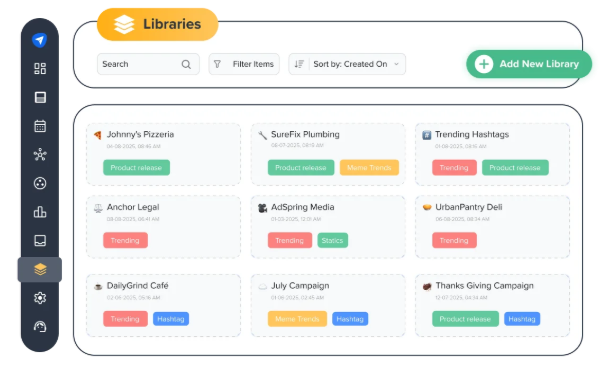
Content isn’t just a blog post or part of a social media strategy. It’s a system that keeps working after you hit publish. When you build a strong content library, it continues to attract leads around the clock.
Content lowers customer acquisition cost over time. Instead of paying for every click, people find you on their own. They arrive already informed. Trust starts forming before the first conversation, which is why customer retention is much easier to maintain.
Valuable content also shapes habits. When customers rely on your articles, guides, or product tutorial videos, they come back again for more. This makes it easier to move them into higher subscription tiers. It also reduces the chances they’ll cancel when things get busy.
Additionally, your educational resources keep customer bases engaged and informed. Content is one of the few assets that supports market stability while staying affordable. When done well, content keeps your brand top of mind without constant spending.
Most companies treat content like a one-off project. To build recurring income, it has to work as a system. Ideas turn into assets, and those assets keep providing value long after they’re published.
A content engine can be beneficial in this case. Marketing teams can use customer data to understand what the audience actually needs. The goal is to create useful content that supports revenue. When marketing plans align with revenue recognition, every piece has a clear purpose.
Scaling also means letting go of the billable hours mindset. Writing one article for one client keeps you small. Creating resources that serve thousands changes the math. You create something once, and it continues to sell over time.
This is where the magic happens.
Instead of selling time or one-off advice, you turn your existing knowledge into something repeatable. What used to be a consultation becomes a productized service with a clear scope and pricing.
For workshops, turn a single session into a membership that delivers ongoing value.
For freemium models, let users see results early. Then create a natural path to deeper engagement over time.
Content-powered products often include:
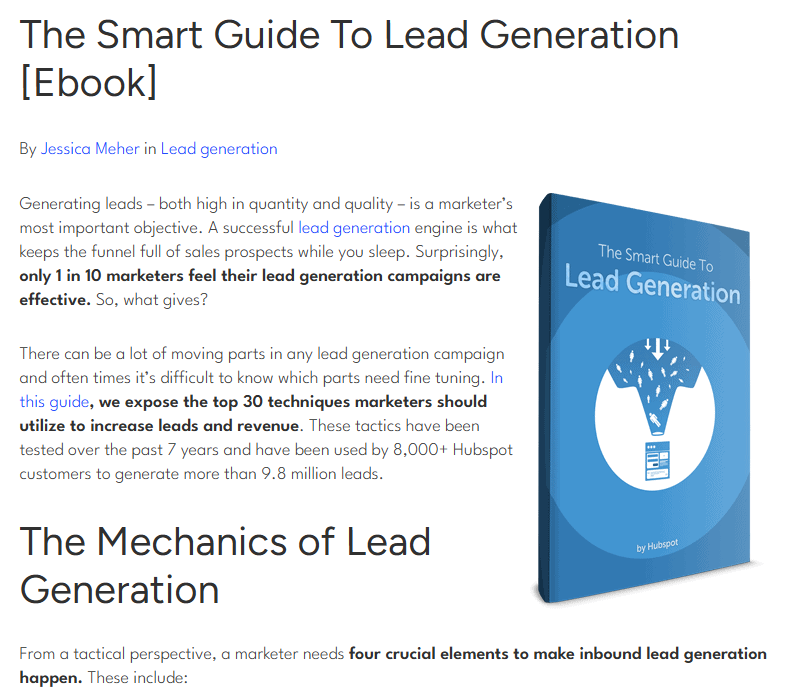
By doing this, you create a product ecosystem. Your blog drives traffic to your newsletter. In turn, this drives your subscription-based model. Each piece supports the other. This creates a much more stable business model than relying on referrals.
The most effective way to transition from a “manual service” to a “revenue system” is to identify a core narrative and build a multidimensional ecosystem around it. Beaches of Normandy Tours offers a masterclass in this with their coverage of Vincent Speranza’s Airborne Beer legend.
They use the story of paratrooper Vincent Speranza as an anchor. Instead of traditional advertising, they tell the story of the man who famously distributed beer to his wounded comrades using his M1 helmet during the Siege of Bastogne. This story generates consistent authority and trust.
They leverage the physical product of Airborne Beer, a local brew served in helmet-shaped ceramic mugs. This drives high-intent traffic back to the story and, ultimately, to their domain name. By pairing a powerful story with a tangible product, the brand has built a self-sustaining engine that qualifies leads and generates interest year-round.

In SaaS, content does more than attract attention. It teaches people how to use what they’ve already paid for. Most products fail not because they’re bad, but because users never reach the moment where value clicks. Content shortens that gap and keeps users moving forward. (In fact, we’ve got an article on how to keep your audience engaged with good content, if interested.
This is why education plays such a big role in churn management. When users feel stuck, they leave. When answers show up before frustration does, they stay. Customer success teams rely on content to guide users through setup and feature use without adding pressure or support costs.
Content also supports freemium models. Free users learn through guides, tutorials, and examples. Over time, they see what’s possible with deeper access. It’ll also be easier for them to upgrade their subscription (which won’t feel like a sales pitch).

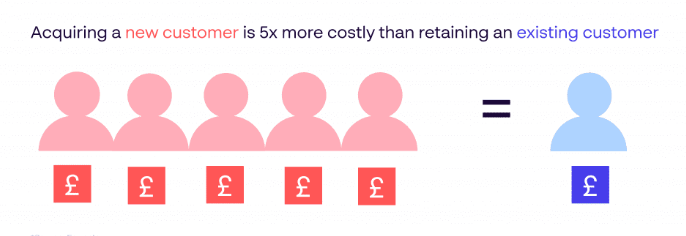
In fact, research from Simon-Kucher shows that retaining existing customers costs 5x less than acquiring new ones, making content a smart retention investment.
If you’re shifting to a recurring income model, you need to track different numbers. Billable hours no longer matter. Instead, you need to focus on the health of your subscription revenue. This requires a deep dive into your customer data.
The most important KPIs include:
You should also look at customer engagement metrics. Are people actually reading your content? Are they clicking through to your subscription plans? These create revenue visibility and make financial forecasting far more accurate for the months ahead.
Once subscription demand exists, operational infrastructure must support it.
Recurring revenue changes how a business runs behind the scenes. What worked for one-off projects quickly starts to crack under subscriptions. Manual tracking creates errors. And small delays turn into bigger problems. That’s why you need robust operational systems to keep payments, billing, and reporting steady so you can easily manage your growth.
Subscription management software handles the complexity of recurring payments. Tools like Stripe Billing manage usage-based billing, renewals, and multiple payment methods. Without this layer, recurring revenue quickly turns into manual work and unnecessary errors.
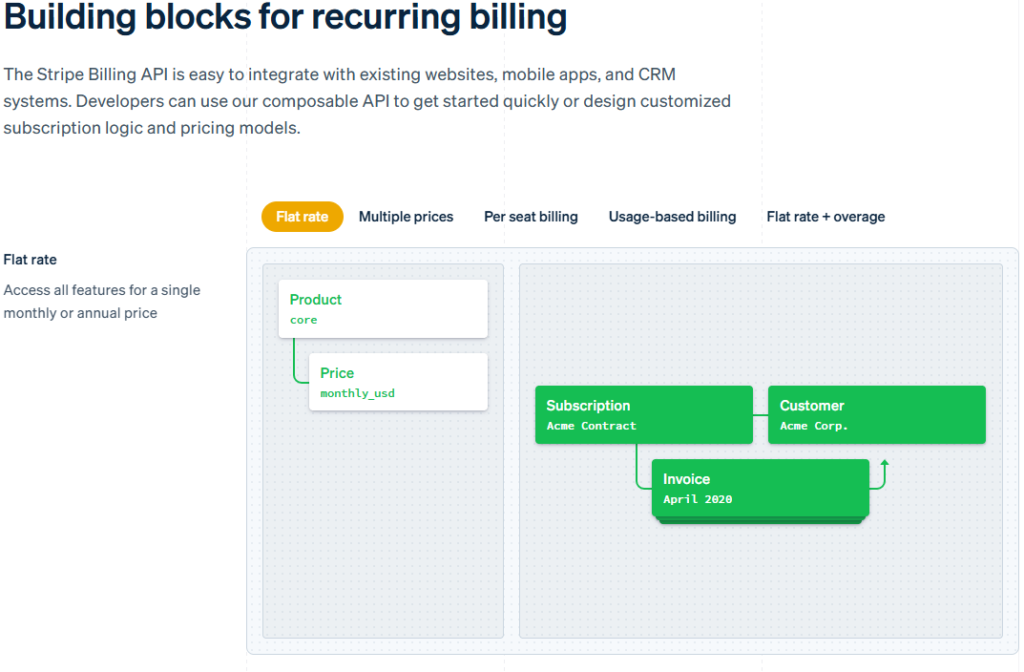
An automated invoicing system shifts how teams work. When invoices are issued on schedule, revenue becomes predictable. Teams stop planning around individual projects and start planning around recurring cycles. The use of AP automation benefits forecasting, staffing, and growth decisions.
Revenue recognition matters more than most teams expect. It affects reporting, compliance, and how healthy the business really looks. For auto-renewing subscriptions, income must be recorded correctly over time. Doing this right matters for compliance, reporting, and credibility with bodies like the Internal Revenue Service.
Even a local business can benefit from this setup. Moving beyond a booking system built for one-off appointments creates steadier income. When the structuring of operations supports recurring cycles, the business feels more stable and is far easier to manage.
Field service businesses, HVAC companies, plumbing contractors, and electrical teams face this exact challenge. They run on job-by-job billing, which makes revenue unpredictable and hard to scale. Tools like field service management platforms help these businesses shift toward recurring service agreements and maintenance contracts by centralizing work orders, scheduling, and invoicing in one system. When field operations run on a structured platform, recurring service models become much easier to manage
Let’s look at how this works in the real world. Many teams are already making the leap. They’re finding that core earnings feel far more stable when revenue isn’t tied to the next project or the next client email.
A content agency stops selling individual articles. Instead, they sell a content growth system. Writing becomes part of a broader offer that includes strategy and ongoing support. The result is that revenue starts coming from long-term contracts, not one-off wins tied to a single client site.
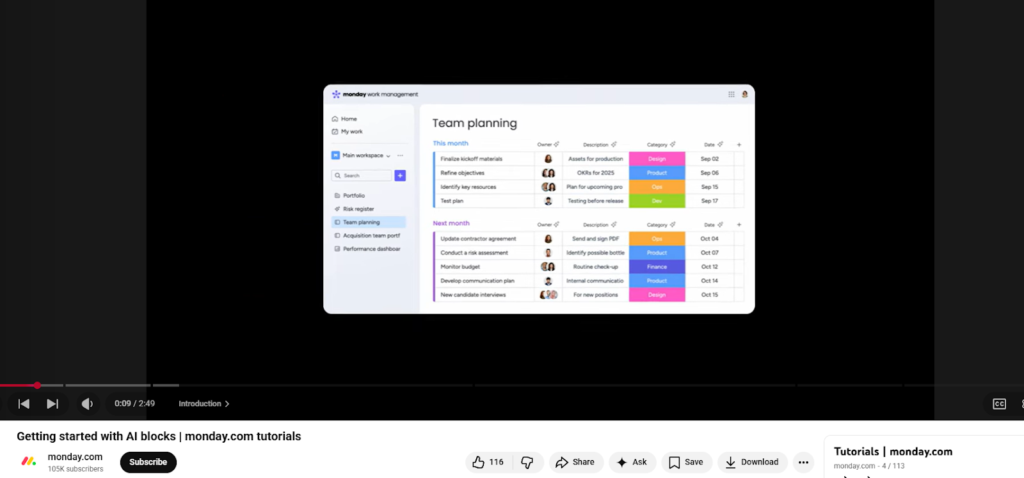
This is where YouTube SEO comes in. A SaaS company uses a freemium model to attract users. They use their YouTube channel, where they post videos to teach customers how to succeed with their product. This helps reduce their churn rate and increase customer lifetime value without relying on a large sales team.
(Keep in mind that even a 5% monthly churn rate can compound quickly. And according to Churnkey, that means losing roughly 46% of customers over a year.)
A consultant stops trading hours for income. They launch an online course, add helpful resources, and open a gated community. They use Stripe Billing to manage subscription tiers. It allows them to reach a global audience.
Across all three scenarios, the pattern is clear. All teams found ways to create their own online store around the expertise they already had. They focused on building a product ecosystem in which recurring revenue didn’t depend on a single project or short-term effort.
Recurring income brings stability. But there are also risks to watch out for. Here’s what marketing leaders tend to underestimate at first.
Start with what you already have. Look at the tasks your team does every day. That’s where scalable recurring revenue usually hides. You don’t need a full overhaul. You just need to stop planning campaigns in isolation and start thinking in systems.
Then bring the team along and set the foundation. Customer success teams should focus on retention, not quick wins. Show how revenue visibility creates stability. Support that shift with subscription management software and a scalable invoicing system. With the right systems in place, growth becomes easier to manage and less draining day-to-day.
Moving from services to systems changes how revenue behaves. You’re not chasing projects. But you’re building recurring income that shows up consistently.
Content is what makes that possible. When it’s designed to educate, support, and convert, it keeps delivering value long after publication. You’re no longer thinking in campaigns, but in systems that last.
To go deeper, explore more practical insights on Wordable’s blog and see how content can power scalable growth.