


Link earning has changed significantly over the last few years.
There was a time when businesses could publish a short guest post, add an exact-match anchor text link, and expect rankings to improve quickly. That approach no longer works the same way, especially for SaaS companies, agencies, and startups operating in highly competitive search markets.
Search engines have become better at identifying manipulative links and low-quality outreach campaigns. At the same time, competition in SaaS SEO has increased significantly.
This is where link earning becomes important.
Instead of forcing backlinks through mass outreach, link earning focuses on creating value strong enough that people naturally want to reference, cite, and link to your content.
For startups with smaller budgets, agencies building authority, and SaaS brands competing against established companies, earned links often deliver stronger long-term SEO value.
In this guide, we’ll break down what actually works for link earning in 2026, which strategies drive the best results, and how SaaS companies, agencies, and startups can build authority without relying on outdated tactics.
Highlights
Link earning is the process of gaining backlinks naturally because people find your content, tools, research, or brand valuable enough to reference.
Unlike traditional link building, where outreach can be heavily transactional, link earning focuses on becoming a trusted industry source. That usually means publishing useful resources and original research, offering unique insights, generating media mentions, and gradually building brand authority.
For example, if a SaaS company publishes a detailed report about AI adoption trends in customer support software and dozens of blogs reference it, those backlinks are earned links.
Similarly, when a founder shares unique industry insights on LinkedIn, and journalists reference those ideas in articles, that also becomes earned media coverage.
The biggest advantage is that earned links often appear in relevant editorial contexts rather than manufactured placements.
They often come from relevant websites, contextual mentions, and pages with real traffic, which you can identify with a website SEO audit tool.
Backlinks remain one of the strongest ranking signals in SEO.
A Backlinko study analyzing millions of search results found that pages ranking in the top positions typically have significantly more referring domains than lower-ranking pages.
But for SaaS companies and startups, the challenge is bigger.
Many industries are already crowded with competitors investing heavily in SEO.
Project management SaaS companies may compete against established brands, agencies operate in saturated local and global SERPs, and early-stage startups often begin with limited domain authority.
This means relying only on on-page SEO is rarely enough.
Strong earned backlinks help with:
According to a 2025 survey by Authority Hacker, link acquisition remains among the top three SEO priorities for most professional marketers.
Not all backlinks carry the same value. Some earned links can significantly improve authority, while others may barely impact rankings.
The strongest earned links usually come from:
Editors or writers naturally add these links because they genuinely support the content. An example of an editorial link is when a cybersecurity SaaS platform publishes a breach statistics report that tech publications cite.
Many websites maintain curated resource pages. If your content solves a specific problem, it may get added naturally.
Digital PR campaigns can generate links from media publications. These often carry strong authority.
Founders appearing on podcasts often receive backlinks from episode pages.
Free tools and calculators attract links over time if people find them useful.
The link type alone does not determine its value. An editorial mention, resource-page link, or podcast backlink can all be useful when the referring source is relevant, credible, and contextually connected to your business.
A backlink becomes more valuable when it checks several quality signals.
These include:
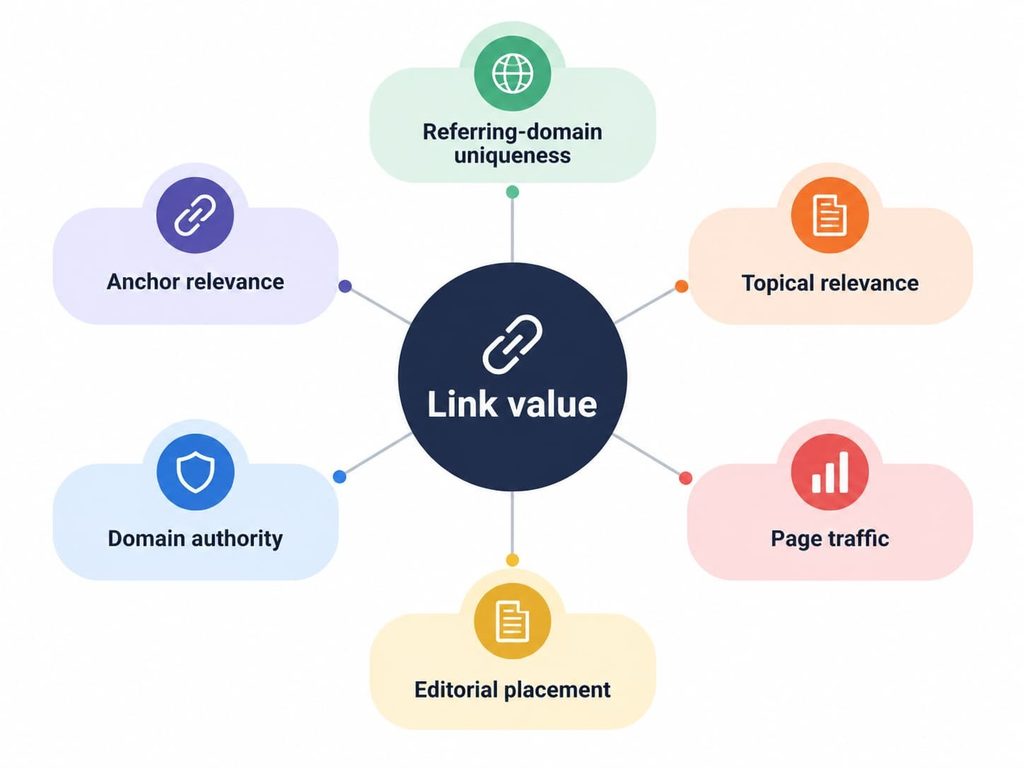
Image created by the author
For example, a contextual backlink from a respected SaaS marketing blog often carries more SEO value than a random directory link.
Use these signals together rather than treating domain authority as a standalone pass-or-fail metric. Start with topical relevance and editorial context, then use page traffic and domain-level metrics as supporting evidence.
Google also continues to prioritize relevance.
A fintech startup getting links from finance publications typically sends stronger topical signals than unrelated backlinks.
Many companies still chase backlinks using outdated methods. A better approach is to create systems that naturally attract mentions and citations.
Here are some of the most effective strategies working in 2026.
Content remains one of the strongest drivers of earned links but generic blog posts rarely attract backlinks anymore.
Content needs depth, originality, or usefulness.
Link-worthy formats often include benchmark studies, original surveys, industry reports, statistics pages, detailed tutorials, comparison pages, data visualizations, free templates, and calculators.
For example, many SaaS brands now publish annual benchmark reports.
These reports often attract backlinks because journalists and bloggers constantly need fresh statistics.
According to Content Marketing Institute research, original research content generates significantly more backlinks than standard blog articles.
Imagine a CRM startup publishing a report that analyzes email response times across thousands of sales conversations.
A report like this could attract links from:
One strong piece of data-driven content can continue earning links long after publication.
Digital PR has become one of the strongest link earning channels for SaaS brands.
Instead of asking for links directly, companies create stories journalists want to cover.
Potential angles include industry insights, startup growth stories, expert commentary, market predictions, survey findings, and timely trend reports.
A good digital PR campaign combines timing with relevance.
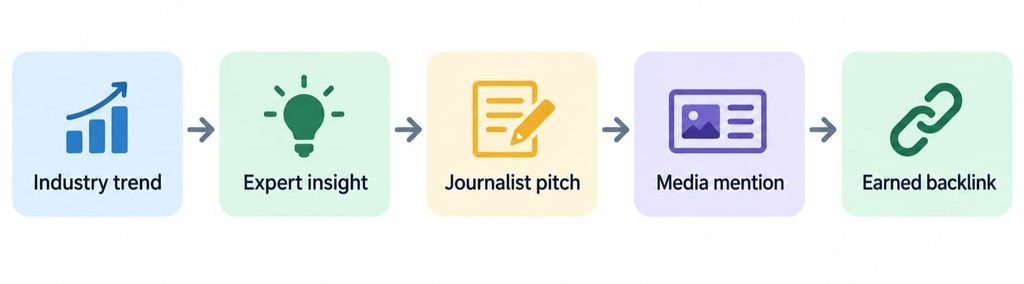
Image created by the author
For example, if AI regulation becomes a trending topic, a SaaS founder offering expert insights may receive mentions from news publications.
Many SEO teams now combine digital PR with SEO campaigns because media mentions often lead to high-authority backlinks.
Statistics pages continue to attract consistent backlinks.
Writers frequently search for updated statistics when creating articles. This creates an opportunity.
Companies that compile accurate, up-to-date statistics often attract natural citations.
Depending on the industry, this could include SaaS churn benchmarks, marketing automation trends, remote work statistics, cybersecurity reports, or AI adoption data.
To improve link earning potential:
Well-maintained statistics pages can continue attracting backlinks as writers look for current figures to cite.
Guest posting still has value but relying only on guest posts creates limitations.
Many websites now reject low-quality contributions.
Search engines also pay closer attention to manipulative guest posting patterns. Earned links usually provide stronger long-term value because they happen naturally.
Guest posting can still support brand visibility, while earned links build authority and digital PR expands media exposure. Used together, the three channels can support different parts of the same authority-building strategy.
A linkable asset is something valuable enough that people naturally want to reference it. They can include interactive resources, original research, industry reports, visual guides, calculators, templates, and free tools.
Visual content tools can also become strong linkable assets when they help businesses create shareable marketing materials. For example, platforms like Venngage’s AI Brochure Generator let SaaS companies, agencies, and startups generate professional brochures, campaign assets, sales collateral, and branded marketing materials without advanced design skills.
These types of visual resources often improve content distribution, social sharing, and the chances of earning natural backlinks from blogs, newsletters, and industry publications.
Some SaaS companies build free tools purely to earn links.
For SaaS companies, that might mean building a website grader, AI prompt generator, headline analyzer, ROI calculator, or SEO audit tool.
These tools attract backlinks because they provide ongoing utility.
If you want to build a strong linkable asset:
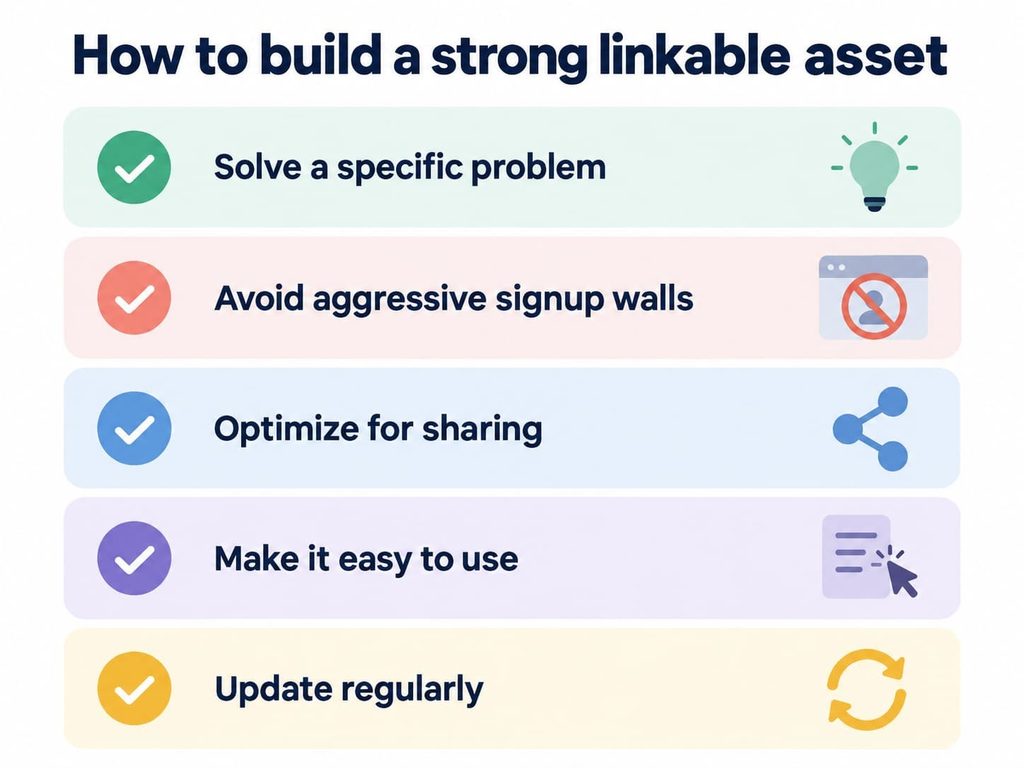
Image created by the author
Although HARO has changed ownership and workflows in recent years, journalist request platforms remain useful for earning authoritative backlinks.
Common options in 2026 include Help a B2B Writer, SourceBottle, Featured, and Qwoted. These platforms connect journalists with expert sources.
If founders or marketers provide useful quotes quickly, they can earn mentions from high-authority publications.
The key is speed and relevance. Generic responses rarely work.
Strong responses usually:
Founder visibility can support link earning when journalists, bloggers, and industry publishers begin recognizing a founder as a credible source. That recognition can lead to more opportunities for expert quotes, interviews, and editorial references.
Founder visibility can grow through newsletter collaborations, conference appearances, podcast interviews, LinkedIn content, expert quotes, and webinars.
When founders build visibility, journalists and bloggers become more likely to reference them.
This creates natural link opportunities.
A founder consistently sharing strong insights can indirectly improve the company’s backlink profile.
Partnership-driven content can generate strong backlinks. This strategy works especially well for SaaS brands.
Common formats include integration announcements, collaborative research reports, shared case studies, co-authored guides, and joint webinars.
When two companies collaborate, both audiences amplify the content. This often leads to more visibility and additional backlinks.
For agencies, strategic partnerships with software companies can also create recurring link opportunities.
Many businesses struggle because they focus on quantity over quality.
Some common mistakes include:
Different tools support different stages of link earning. Backlink platforms can help uncover competitor opportunities and content gaps, audience-research tools can show where relevant communities spend time, and outreach tools can help identify the right contacts.
Which tool matters most depends on where the campaign currently has a gap.
Useful for:
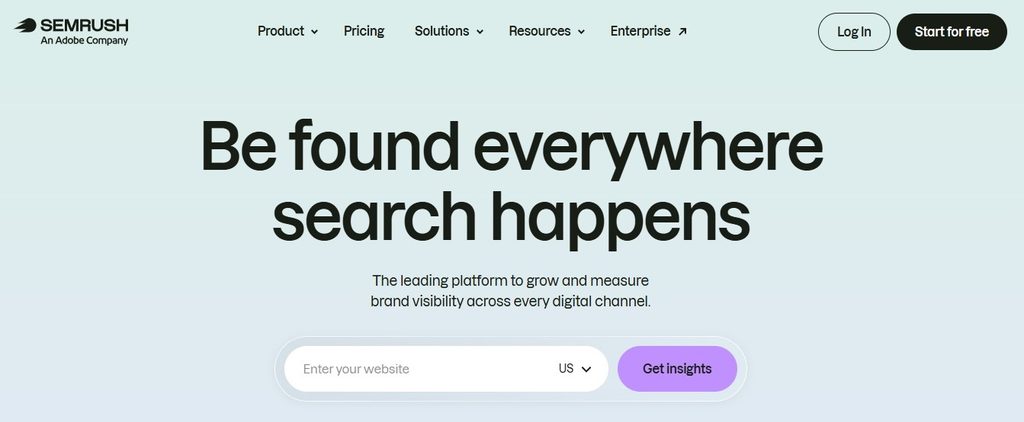
Helpful for:
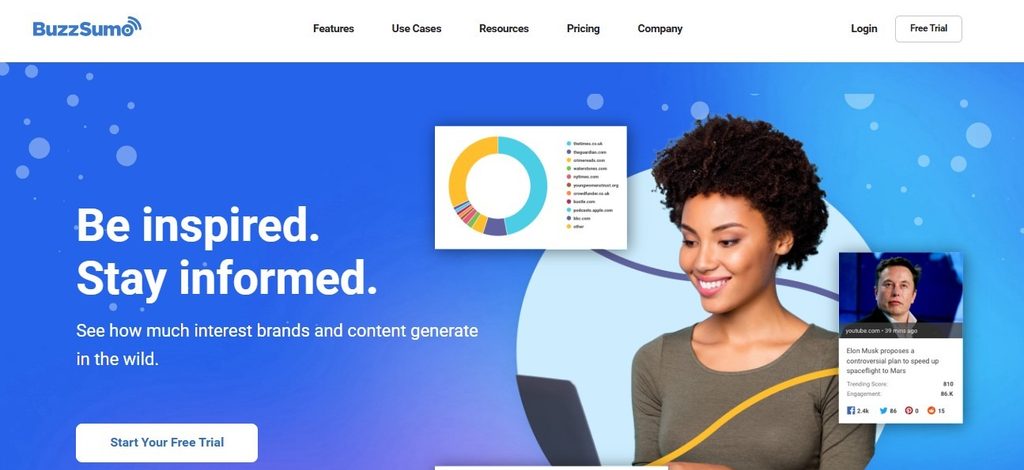
Useful for identifying content attracting strong engagement and backlinks.
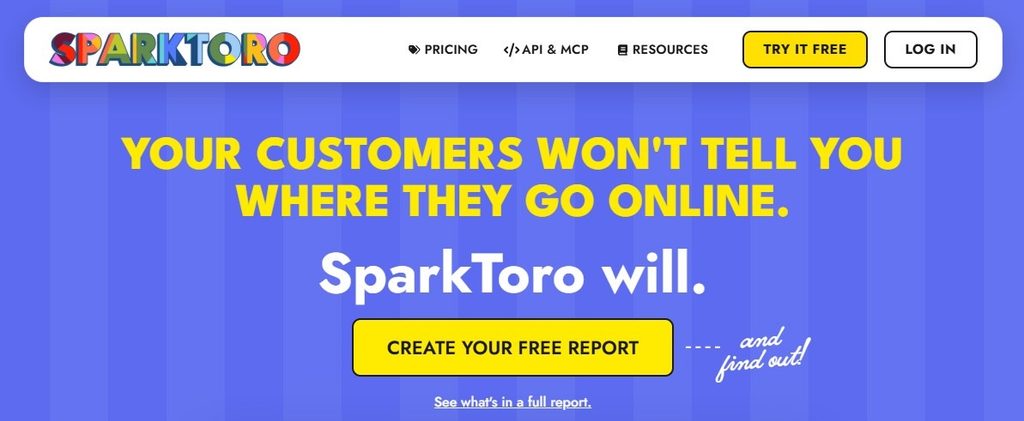
Helpful for audience research and finding where target audiences spend time online.
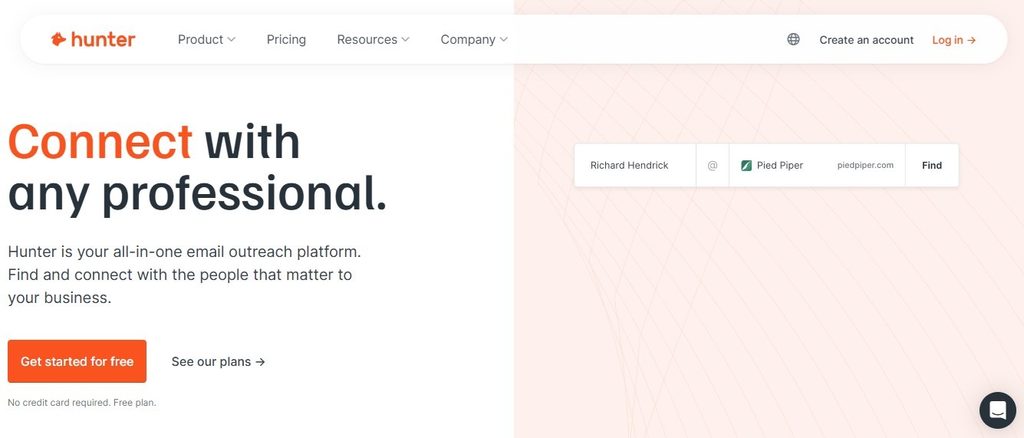
Useful for outreach and contact discovery.
Many companies measure success incorrectly. Getting backlinks alone is not enough.
You should also track:
Separate leading indicators from downstream outcomes. Referring-domain growth and media mentions show whether distribution is working, while ranking, traffic, and assisted-conversion changes show whether those links are contributing to broader search and business performance.
Tools like Google Search Console, Ahrefs, and Semrush can help you track progress more accurately.
Several trends are shaping link earning strategies this year.
Search engines continue rewarding trusted brands. Brand mentions for SEO can increase visibility and create opportunities for future citations and editorial links.
More SEO teams are investing in PR-style campaigns instead of mass outreach.
Calculators, tools, and interactive resources continue attracting strong engagement.
Writers and journalists increasingly prefer quoting real experts over generic content sources.
Taken together, these trends point in the same direction: content becomes more link-worthy when it gives publishers something difficult to replicate, whether that is original data, genuine expertise, an interactive resource, or a timely point of view. Producing more content alone does not create that advantage.
Beyond the metrics you track directly, look for behavioral signs that other publishers are beginning to recognize your brand without prompting.
Here are some positive indicators:
These signals suggest that link earning is becoming less dependent on individual outreach campaigns. When publishers begin finding, citing, or approaching the brand independently, each new asset starts with a stronger base of awareness than the last.
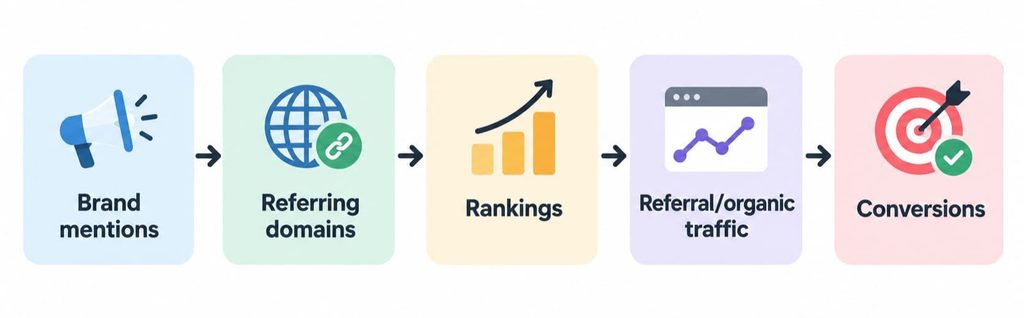
Image created by the author
Before launching campaigns, review this checklist.
One mistake many startups make is treating link earning like a one-time campaign. However, the companies seeing the best results build successful systems they can repurpose again and again.
A repeatable system might combine founder interviews, ongoing digital PR, quarterly research, monthly expert roundups, annual industry surveys, and regularly updated statistics pages.
Repeating these activities consistently gives publishers more opportunities to encounter and reference the brand. Over time, that recognition can make future outreach and link acquisition easier.
Many SaaS SEO teams now follow workflows like this:
This increases the lifespan of a single campaign.
Instead of publishing content once and forgetting it, successful teams continuously improve and redistribute it.
Agencies have additional opportunities that many overlook. Because agencies work with multiple clients, they often have access to unique data and case studies. These can become powerful linkable assets.
That data can support paid advertising studies, conversion rate optimization reports, email marketing benchmarks, local SEO reports, and SEO case studies. When agencies anonymize the data properly, these studies can attract strong backlinks from industry publications.
Agencies can also earn links by contributing expert commentary to publications. For example, many marketing websites regularly quote agency founders in trend articles. This helps both branding and SEO visibility.
Early-stage startups often assume they cannot compete with larger brands. But smaller companies sometimes move faster.
They can focus on highly specific resources larger competitors may overlook, including startup transparency posts, community-driven resources, founder-led opinion pieces, calculators, and niche comparison pages.
Smaller brands also tend to sound more authentic. That authenticity often performs well on social platforms and niche communities.
A startup founder openly sharing lessons from scaling a SaaS product may attract backlinks from entrepreneurial blogs and newsletters.
Across all three business types, the strongest opportunity comes from the asset each team can produce repeatedly: SaaS brands can build around proprietary data, agencies can use anonymized client insights, and startups can lean on founder expertise and highly focused resources.
The strategic advantage comes from turning that strength into a repeatable publishing and distribution system rather than running disconnected campaigns.
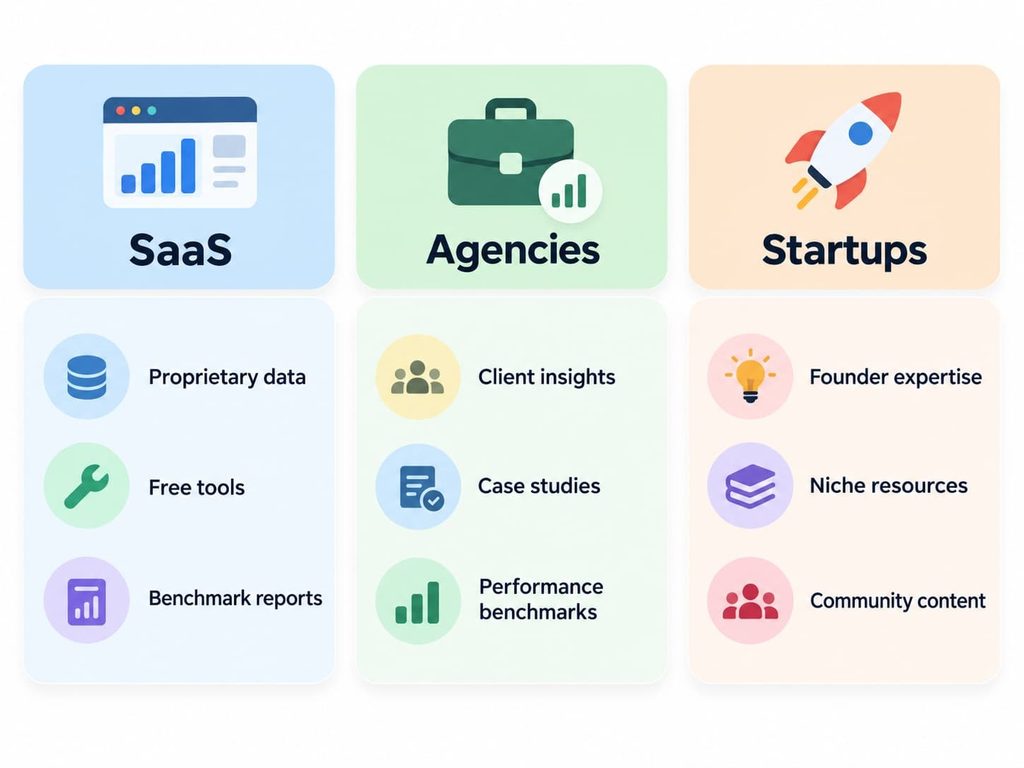
Image created by the author
AI has made generic content much easier to produce, making firsthand experience, real case studies, proprietary data, original research, and expert insights more valuable differentiators. This creates opportunities for brands willing to invest in quality.
AI still earns its keep during research and content planning. Many SEO teams use Perplexity for research summaries, Surfer SEO for content structure, Clearscope for optimization, and ChatGPT for ideation.
But human expertise and oversight remains critical when creating content worth citing.
Imagine a project management SaaS startup targeting remote teams.
Instead of publishing another generic productivity article, the company creates:
The company could then distribute the research through remote-work communities, social graphics, newsletters, LinkedIn, and targeted journalist outreach.
Over time, that distribution could generate blogger citations, newsletter references, editorial backlinks, podcast mentions, and social shares.
That single campaign may outperform dozens of low-quality outreach links.
The advantage comes from giving different audiences multiple reasons to reference the same underlying asset: journalists can cite the survey, communities can discuss the findings, and other publishers can point readers to the calculator or benchmark report.
Link earning takes more effort than traditional low-quality link building but the long-term benefits are stronger.
For SaaS companies, agencies, and startups, earned links can help build authority in competitive markets where trust matters. The strongest campaigns combine original research and useful tools with founder expertise, strategic partnerships, and digital PR.
Instead of chasing hundreds of weak backlinks, focus on creating assets people genuinely want to reference. That approach tends to produce stronger SEO results over time.
As search engines continue evolving, authentic authority will likely matter even more.
Once your link-worthy content is ready, Wordable can streamline the publishing step by moving Google Docs into WordPress without rebuilding the formatting manually. Try Wordable to spend less time on uploads and more time on promotion.
Link building often involves manually acquiring backlinks through outreach or placements. Link earning focuses on gaining backlinks naturally because people find the content valuable enough to reference.
Earned links are often stronger because they tend to come from relevant and editorially placed sources. These links usually appear more natural to search engines.
Results vary depending on content quality and your promotion strategy. Some campaigns attract links within weeks, while others build momentum over several months.
Original research, statistics pages, free tools, industry reports, and detailed guides often attract strong backlinks.
Yes. Startups can compete by publishing highly focused niche content, creating unique data studies, and building founder visibility in their industry.