


If your brand’s online presence is its storefront, then social media content creation is the voice that greets every visitor.
Your posts, captions, and visuals communicate what your business stands for and invite people to learn more.
This guide explains how to build an effective content creation strategy that leads to meaningful results. You’ll learn how to organize ideas, streamline workflows, use tools to save time, and maintain quality as you scale.
A strong social media strategy builds trust and brand awareness.
According to Sprout’s 2025 Impact of Social Media Marketing Report, 60% of marketing leaders say social media drives customer acquisition, 58% say it strengthens customer loyalty, and 56% link it directly to revenue.
That means social media content creation is a measurable part of how brands grow.
Social media marketing success always starts with a solid foundation.
A consistent approach to planning ensures that every post ties back to your broader marketing strategy.
By defining goals, understanding your target audience, and establishing a clear voice, you create a system that keeps content on-brand and on-purpose, regardless of the platform.
The first step in any strategy is a goal. Decide what you want your content to achieve before you hit publish. Are you focused on awareness, engagement, or conversions?
Each objective requires different tactics and metrics. For example, posts aimed at building brand recognition might emphasize reach and impressions, while customer-acquisition content focuses on tracking click-through rates and conversions.
Treat your key performance indicators (KPIs) as guideposts. They help you evaluate performance, justify resources, and refine strategy without losing sight of long-term goals.
You can’t build a connection with your target audience if you’re not familiar with their interests. The strongest content speaks directly to how people think, search, and share online.
Use platform analytics, surveys, and community engagement to uncover what resonates most.
Different social media platforms attract different behaviors.
Instagram users engage visually. LinkedIn users seek insight, and TikTok users value quick storytelling.
Tailoring messages to these preferences multiplies your reach without diluting your message.
Take a page from Airbnb’s social playbook. The brand creates community-led content that highlights real guest stories. By focusing on authentic user perspectives, Airbnb connects emotionally while reinforcing its value proposition.

Your brand voice is the personality behind every caption, image, and reply. It should sound like the same person speaking across all channels, whether you’re posting a product demo or responding to a comment.
Complement your voice with a cohesive visual identity. Fonts, color palettes, imagery, and even an emoji marketing strategy should tell the same story as your words. When style and tone align, your audience recognizes your brand instantly, even without a logo.
A clear content strategy ensures your posts serve a broader business goal rather than filling space in a feed.
Use themes that guide what you post. These are your content pillars. They’re the main topics that define your brand. For example, a fitness company might post about workouts, nutrition, and motivation.
Pillars help you stay focused and accelerate planning. Every idea should fit one of these categories to keep your message unified.
If your focus is visual storytelling, these pillars can also guide your Instagram growth strategy. That’s because they keep your posts consistent and easy to recognize.
A social media calendar keeps your schedule organized. It shows what to post, when to post, and where to post it. Plan your editorial calendar one to four weeks ahead so you have time for reviews and adjustments.
Use colors or tags to separate campaign types. These might include awareness, engagement, or conversion.
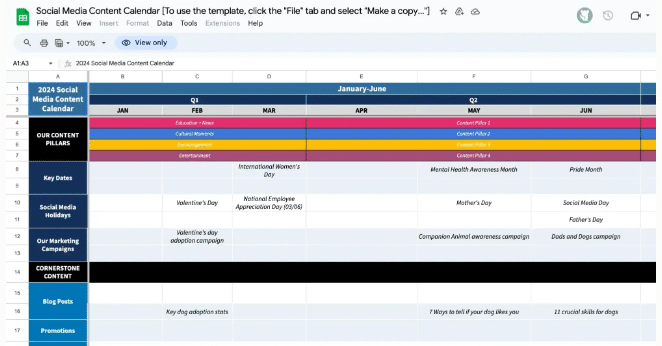
Add deadlines for writing, design, and approvals to keep everyone on track. A spreadsheet or a scheduling app works fine as long as you update it regularly.
A good workflow makes content production smoother. Outline every step from brainstorming to publishing.
For example:
Assign each step to a specific person or tool.
Keep tasks visible with project boards or collaboration software. Set reminders for review dates and final sign-offs.
This helps prevent missed deadlines and keeps your content consistent across teams and platforms.
Once your system is ready, focus on the content itself. Let’s look at some of the components of a strong content creation process.
Behind every compelling social media post is good writing.
Keep sentences short, direct, and human. Write as if you’re talking to one person. Use hooks that invite readers in and create calls to action (CTAs) that guide them forward.
This is what revenue marketing is all about. Using the right words creates sales opportunities.
Some examples of conversion-driven CTAs:
Don’t have the time or resources to hire a copywriting team? Consider using an AI writing tool.
Visuals make your message memorable. Bold design stands out in busy feeds. That doesn’t mean using loud, obnoxious colors. But make sure your color palette, typography, and layouts are consistent and aligned with your brand identity.
As for videos, keep them short. This works best on most platforms. Aim for clips under 30 seconds that highlight one clear idea.
Consider using AI-powered tools to brainstorm visuals, edit footage (using photo or video editors), or test layouts. These tools speed up production while helping you keep a unified look.
Accessible content reaches more people and shows that your brand values everyone.
If you need inspiration for improving accessibility, look to Microsoft. The brand includes captions on every product video and uses inclusive visuals in its campaigns.

You’re almost to the finish line. Publishing is one of the last steps in the social media content creation process.
But you’re not done just yet. You must ensure your posts are ready for the audience it aims to reach.
When and how often you publish can influence how far your message travels. Test different posting times and frequencies. Then, double down on what performs best.
Sprout Social’s 2025 Content Benchmarks Report found that brands published an average of 9.5 social media posts per day in 2024.
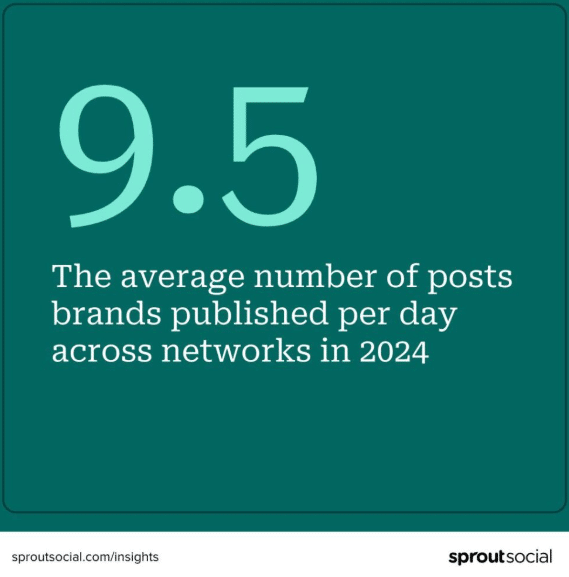
Do you have to post that many times a day to see success? No. But does your posting frequency need to be consistent? Yes.
Use a content scheduling tool or social media management platform to plan posts in advance. Schedule posts ahead to hit high-traffic hours and maintain steady visibility, even on slow days.
Combine your analytics data with platform insights to refine timing by region or audience type.
Each platform has its own pace, tone, and audience behavior. A post that performs well on LinkedIn may fall flat on TikTok. Tailor content for each feed.
Every post needs a purpose. Creating a strong CTA tells people what to do next, whether that’s to read, comment, share, or save.
Ask open-ended questions that spark thought or invite feedback. Instead of “Check out our site,” try “What’s one change that made your workflow smoother?” It feels personal and starts a dialogue.
Starbucks does this well. During seasonal launches, it asks followers to share their favorite drink orders. The replies turn into real conversations and give the brand insight into customer preferences. This blends marketing with genuine audience engagement.
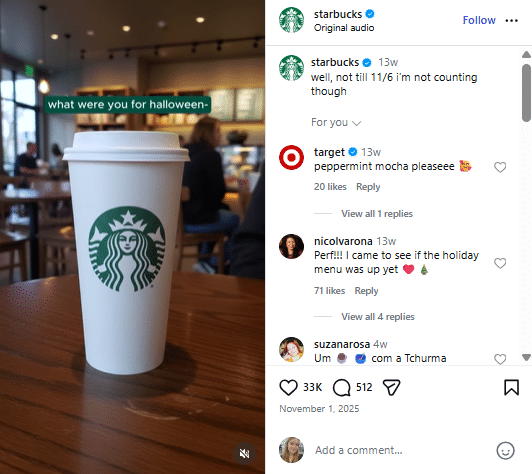
You can do something similar, but with your own spin. Then, watch the algorithms reward you. They’ll notice that your content is driving lots of engagement, which means even more people will see it. Plus, you’re building a community around your brand, which attracts even more viewers.
When you post on social media, you’ve got a lot of things working to your advantage. You’ve got the social media presence, the audience, and the engagement potential.
But you also get metrics. Every post leaves a trail of data, and those signals show what connects with your audience.
What metrics should you focus on? The main ones include engagement rate, reach, impressions, and conversions.
Use social media analytics tools to gather and compare data over time. Built-in dashboards on LinkedIn, Meta, and TikTok show post-level insights like saves, comments, and click-throughs.
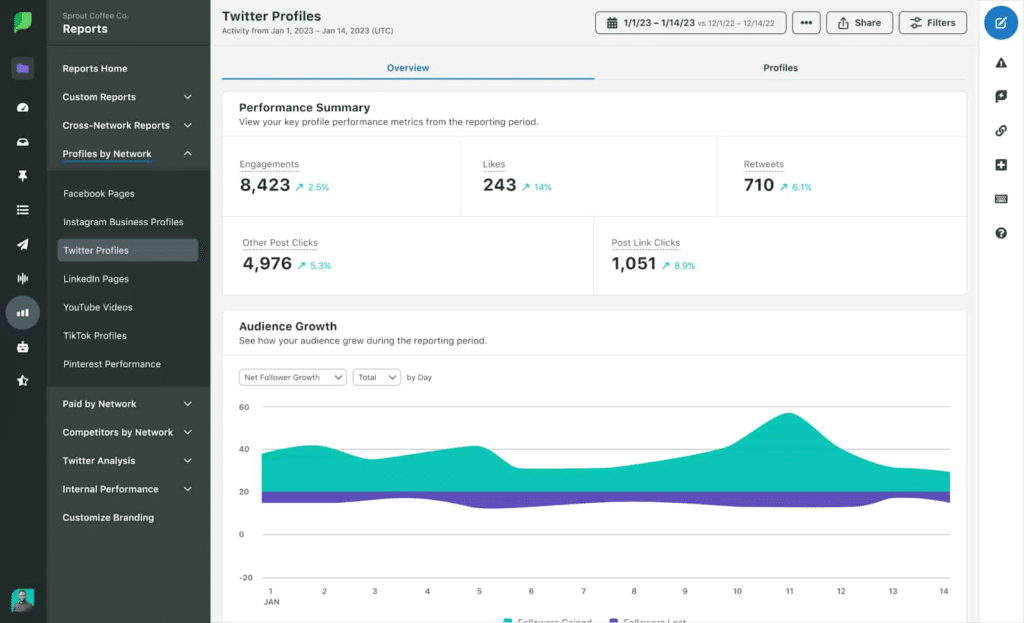
Pair them with third-party platforms for deeper analysis, such as tracking campaign performance across multiple channels.
Also, if you’re running partnerships or influencer campaigns, use a referral link to trace where new leads or sales come from.
Once you have the data, use it to adjust your marketing strategy. Drop content that underperforms and double down on the type of content that earns attention.
As your brand grows, staying consistent gets a bit more difficult.
A system for scaling helps maintain quality while saving time:
Repurposing extends the life of great ideas and helps you unify your message.
Turn a popular blog post into a short video, an infographic, or a carousel for social media. Reuse insights across formats without copying content word-for-word.
A content vault is a shared folder or database where your best assets live. Store photos, captions, and templates by topic or campaign, effectively creating an internal social media portfolio of your top-performing work. This makes it easier for your team to quickly grab approved materials and reference past successes.
This makes it easier for your team to quickly grab approval materials. Add notes for reuse, such as which hashtags worked or what time of day performed best.
Use automation tools to handle posting, reporting, and approvals. Collaboration platforms let multiple teams review and schedule content in one place. Combine social scheduling with email marketing workflows to connect every launch across channels.
Audit your social media content creation strategy regularly. Check analytics, update links, and refresh old posts that still perform well.
Update captions, reformat visuals, and reintroduce it to a new audience.
And that’s how you scale.
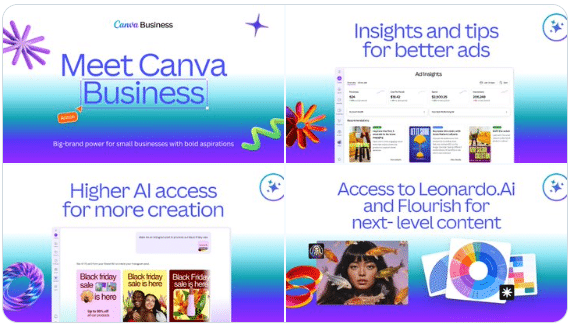
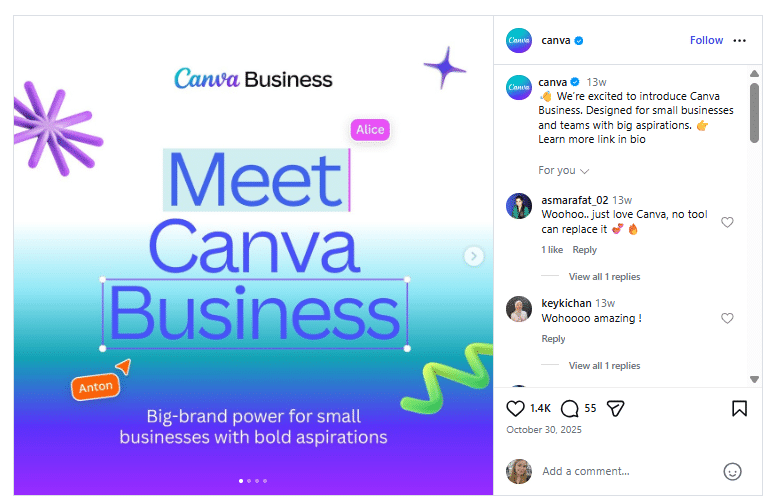
Canva is a good example of content scaling done right. The brand reuses its top design tips across blog posts, short videos, and social carousels.
Each version fits the platform’s format and audience but carries the same message: helping creators design with confidence.
The key to successful social media content creation is posting with purpose.
Your captions, videos, and images should align with your strategy and tell a story your audience cares about.
Start organizing your ideas, build a system, and measure your progress. Then, scale the tactics that bring results.
Keep testing, keep refining, and treat your content like a product… something you build, track, and improve over time.
Save hours on publishing with Wordable.
You do the hard work writing your content. Wordable automates the rest, exporting Google Docs to WordPress, HubSpot, or Medium in seconds.
Get started with Wordable today and free up more time for creating high-converting content.