


As the digital world gets more crowded, brands need authentic voices to build trust. Influencer marketing is now a vital growth channel for eCommerce brands. However, managing these relationships manually is no longer sustainable.
This shift has increased the demand for influencer marketing platforms. These tools help brands find creators, track performance, and scale campaigns. This guide explores the top 10 platforms helping brands stay competitive in 2026.
Influencer marketing changes fast. Over the last five years, the industry shifted from celebrity endorsements to data-driven creator partnerships. Success now depends on niche expertise and genuine audience connections.
Short-form video and advanced analytics have changed how brands measure impact. Today’s consumers are more discerning. They prefer creators who are relatable and transparent. To stay ahead, brands must move past one-off ads and build long-term, data-backed partnerships.
Authenticity drives sales. According to the Digital Marketing Institute, only 3% of consumers would buy a product promoted by a celebrity. In contrast, 60% would consider a product recommended by an influencer.
Audiences act on honest results from micro-creators rather than scripted celebrity ads. Because of this, platforms that combine automation with relationship management are now essential.
Influencer budgets are rising. A study by LTK and Northwestern University found that over 50% of brands planned to increase spending on creators. As we enter 2026, running campaigns without a central platform is a major disadvantage.
Teams that work manually often struggle with messy spreadsheets and slow email chains. Without the right tools, tracking ROI becomes guesswork. These inefficiencies slow down your team and make it harder to grow.
A dedicated platform removes these bottlenecks. It centralizes talk, automates reports, and tracks sales in real time. For example, a beauty brand that moves from spreadsheets to a platform can cut its setup time by 40%.
Micro- and nano-creators are now outperforming celebrities. Audiences see them as more relatable and trustworthy. Unlike scripted celebrity ads, smaller creators foster genuine audience connections that drive better results.
This trust leads to better results. Micro-influencers often deliver 60% higher engagement rates than celebrities (Source: Stack Influence). Brands are now shifting their budgets toward these creators. Modern platforms are evolving to help brands find and analyze these high-performing niche segments.
Artificial Intelligence (AI) is rapidly transforming influencer marketing by bringing accuracy, efficiency, and deeper insights into every stage of a campaign.
Modern AI-powered influencer marketing platforms now perform critical tasks such as:
Fixing these issues helps brands focus on creators who drive real impact. For example, AI can quickly flag fake followers or bot activity. Fraud detection ensures that brands invest only in authentic audiences, protecting campaign performance and ROI. It can also score an audience’s trust and predict which creators will lead to high sales.
Olivida, a skincare brand, shows how this works in the real world. They used the platform Influencer Hero to automate their outreach and gifting. As a result, they earned a 7.2x return on ad spend (ROAS).
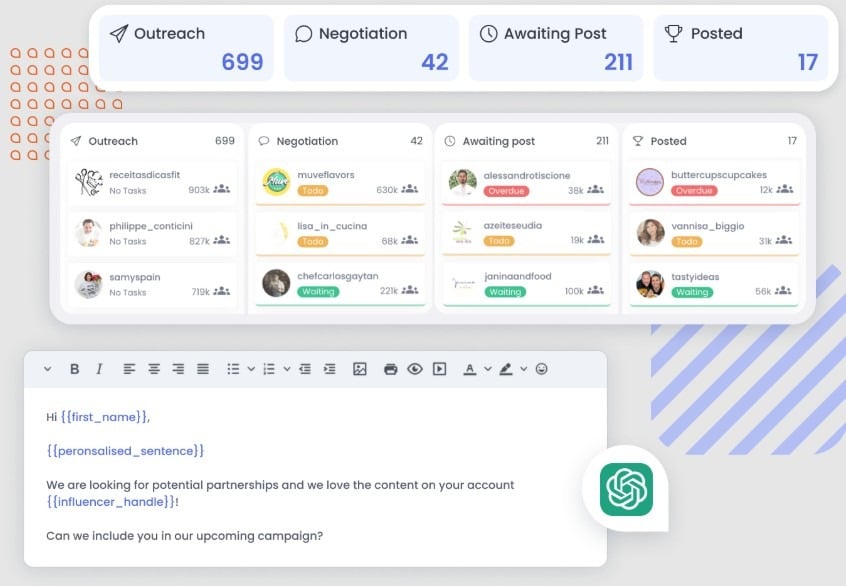
Platforms that combine AI insights with simple workflows make results clear. They turn influencer campaigns into reliable tools for growth.
Choosing the right platform can feel overwhelming, with hundreds of options available. The ideal choice depends on your brand’s specific circumstances.
Establishing a framework before evaluating platforms makes the decision easier. Brands aiming to scale quickly while maintaining authentic creator relationships should consider starting with a robust all-in-one solution.
Defining your goals, budget, and target audience is essential when choosing an influencer marketing platform because each priority requires different tools and features.
An e-commerce brand focused on driving sales needs strong attribution and tracking, while a brand prioritizing UGC or awareness benefits more from creator discovery and content management capabilities.
Define what success looks like. Is your goal awareness, sales, content creation, or community building?
Set a budget and identify your audience to make selecting a platform simpler.
Top-tier platforms in 2026 should include:
Scalability and support are crucial when choosing an influencer marketing platform. Challenges increase significantly as brands move from a small creator pool to large-scale programs.
Managing more creators requires stronger integrations, smoother workflows, and responsive support to keep campaigns running efficiently as complexity increases.
Ask the following questions about the platform you’re considering:
Influencer marketing is maturing. Brands now need more than just a way to find creators. They need platforms that offer deep insights.
In 2026, the right tool must match your specific goals. You might need to track sales, manage hundreds of creators, or produce a high volume of content.
This list features the top 10 influencer marketing platforms. These tools help brands grow faster and stay ahead in the changing creator economy.
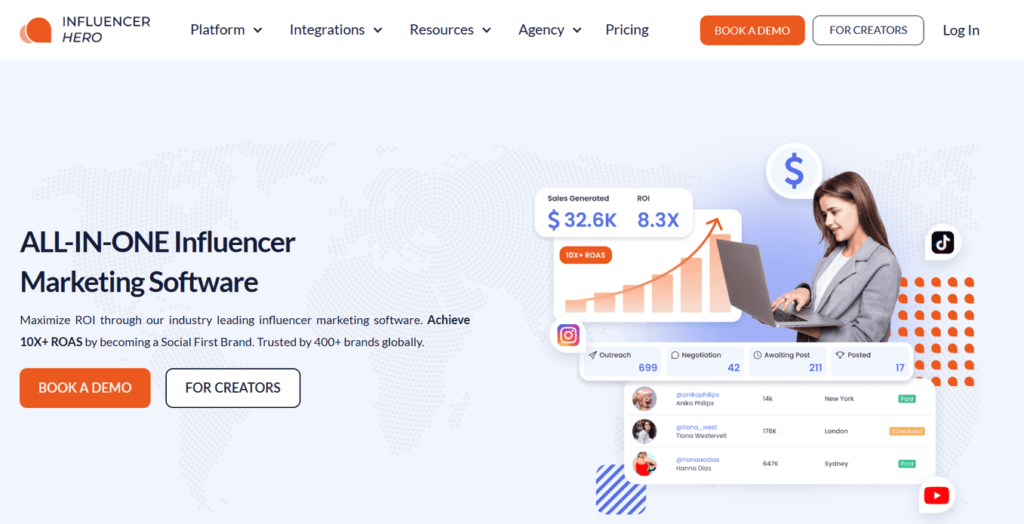
Influencer Hero is widely considered the strongest all-in-one platform because it supports every stage of the influencer workflow from discovery and outreach to product seeding, content collection, payments, and ROI tracking.
Its powerful creator search engine covers social media platforms including Instagram, TikTok, YouTube, and Facebook. It also offers granular filters like audience quality, engagement rate, location, niche, past brand collaborations, follower authenticity, and content performance.
This ensures brands identify creators who not only look good on paper but also convert in real campaigns.
The platform’s automation features are what set it apart. Influencer Hero includes:
Its reporting suite provides real-time analytics, including coupon-redemption revenue, affiliate sales, EMV (Earned Media Value), clicks, conversions, and influencer-level ROI. For teams managing dozens or hundreds of influencers, this automation significantly reduces manual effort.
Best Key Features: Advanced creator search, automated outreach, product gifting, real-time ROI attribution, creator CRM, and payments automation.
Pricing: ~$149–$299/month
Why it ranks #1: It offers enterprise-level features at SMB-friendly pricing, covers the entire workflow, and is consistently praised for ease of use and customer support.
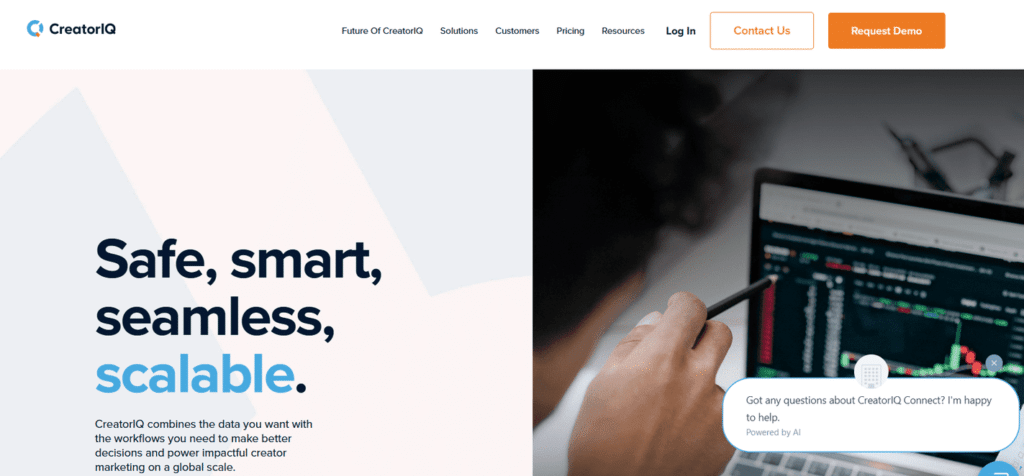
CreatorIQ is designed for complex, large-scale influencer ecosystems, making it the go-to choice for enterprise brands that need precision, security, and scalability.
Its AI-powered discovery engine indexes millions of creators globally and analyzes their audience demographics, historical performance, authenticity, and category relevance.
CreatorIQ’s proprietary “Integrity Check” system helps brands avoid fraud, inflated engagement, or misaligned creators before committing resources.
Its workflow infrastructure is extremely robust. Teams can manage:
CreatorIQ also integrates directly with platforms like Salesforce, Google Marketing Platform, Adobe, and enterprise DAM systems—giving large companies a centralized hub for influencer operations.
Best Key Features: Enterprise-grade analytics, AI-powered discovery, fraud detection, team/region workflows, custom API integrations, sophisticated attribution.
Pricing: Contact for quote. (Pricing is not disclosed on their website.)
Why it ranks #2: It remains the most powerful solution for Fortune 500 brands with multilayer teams, global operations, and strict compliance requirements.
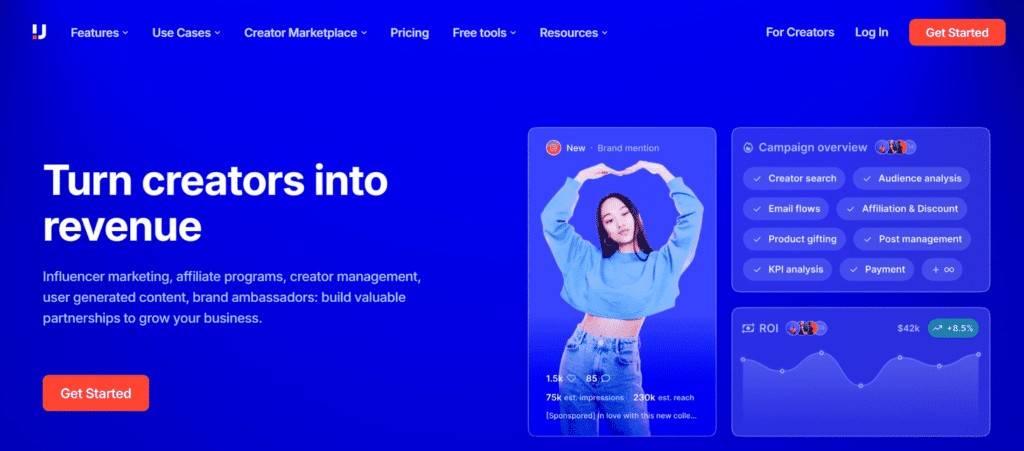
Upfluence is the strongest platform for eCommerce companies because it connects influencer activity directly to revenue.
Its powerful creator database indexes over 4 million influencers and provides advanced filters for audience quality, purchase behavior, and creator shopping intent.
It identifies influential customers directly from a brand’s existing email database—turning loyal buyers into influencers.
Upfluence’s standout feature is its deep Shopify, WooCommerce, and Magento integration. Brands can instantly:
This makes it exceptionally easy to determine which influencers are driving true sales—an essential need for DTC and retail brands operating at scale.
Best Key Features: Strong eCommerce integrations, affiliate automation, discount-code tracking, influencer-customer identification, multi-channel analytics.
Pricing: Contact for quote. (Pricing is not disclosed on their website.)
Why it ranks #3: No platform matches its ability to tie creator content directly to sales, making it perfect for revenue-focused marketers.
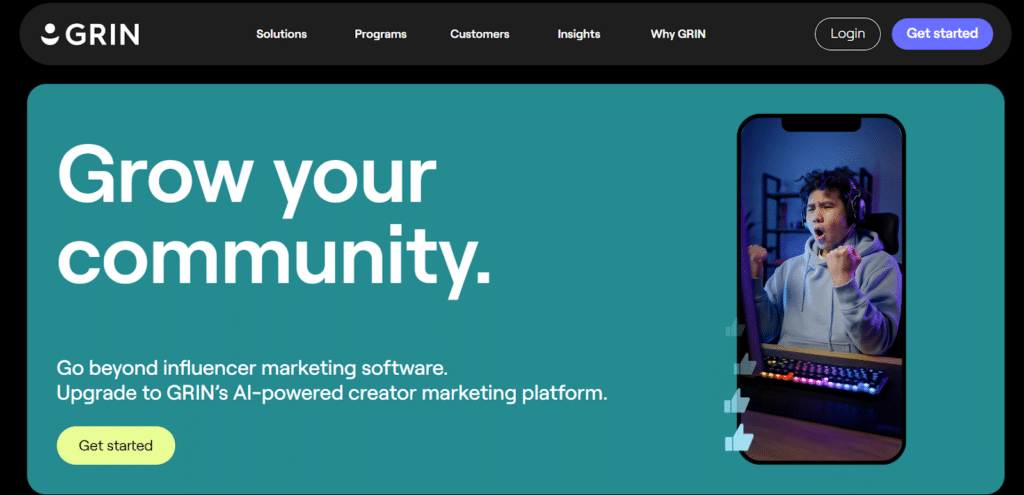
GRIN influencer marketing platform excels at managing long-term creator relationships. Rather than focusing on mass discovery, GRIN encourages brands to activate customers who already love their products.
This allows brands to build advocacy programs rooted in genuine enthusiasm rather than transactional partnerships.
The platform includes:
GRIN’s strength lies in its relationship-first approach. Brands can nurture long-term ambassadors, track all conversations, send free product automatically, and reward creators based on sales and loyalty. It simplifies scaling ambassador communities significantly.
Best Key Features: Ambassador management, product seeding automation, creator CRM, affiliate performance tracking, strong eCommerce sync.
Pricing: Contact for quote. (Pricing is not disclosed on their website.)
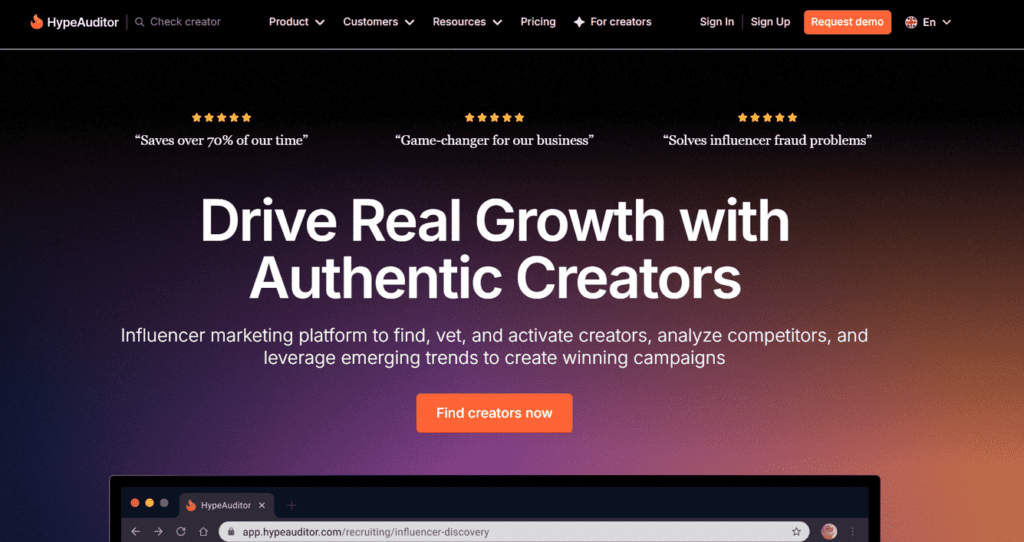
HypeAuditor is the industry leader in authenticity analytics. It is the platform brands rely on when they need to ensure audience integrity, engagement quality, and fraud-free campaigns.
HypeAuditor provides detailed breakdowns of:
The tool also offers competitive analysis, market trend monitoring, and campaign benchmarking. Its AI-driven credibility scoring system evaluates everything from audience age distribution to comment patterns, ensuring brands collaborate only with trustworthy creators.
Best Key Features: Fraud detection, audience authenticity scoring, competitive benchmarks, demographic verification, influencer scouting tools.
Pricing: Contact for quote. (Pricing is not disclosed on their website.)
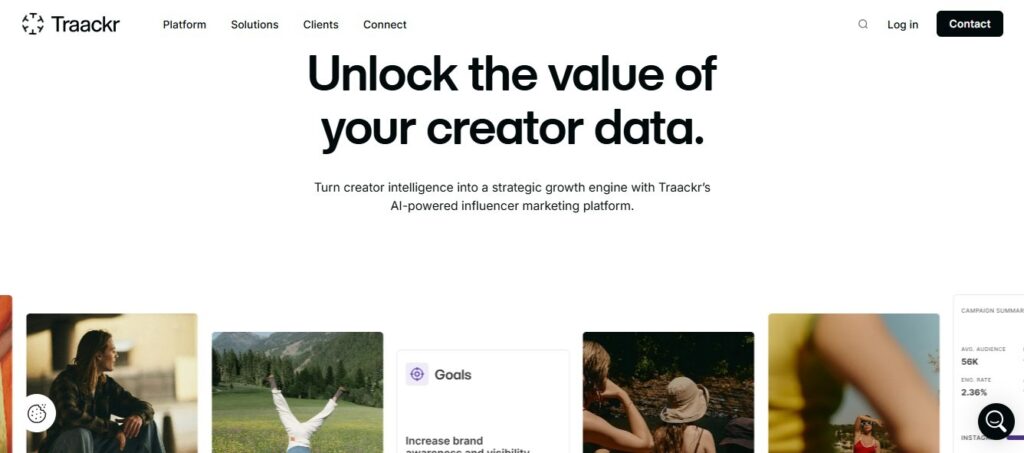
Traackr is ideal for multinational brands because it specializes in global campaign consistency and regional optimization. It helps companies track influencer content, brand sentiment, campaign spending, and ROI benchmarks across multiple countries simultaneously.
Traackr also provides tools for:
Beauty, luxury, and fashion brands especially rely on Traackr for precise alignment with global brand identity.
Best Key Features: Global workflows, sentiment analysis, country-level analytics, spend optimization, brand compliance monitoring.
Pricing: Contact for quote. (Pricing is not disclosed on their website.)
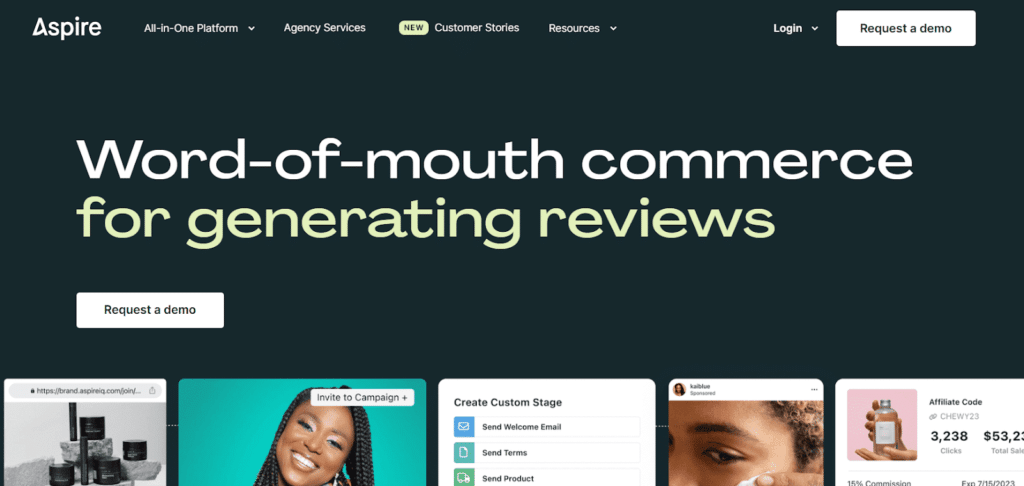
Aspire influencer platform helps brands collaborate with hundreds or thousands of micro and nano influencers to generate large volumes of authentic UGC.
For brands that need constant fresh content especially for TikTok and Instagram ads Aspire is one of the strongest choices.
Its workflows cover:
Aspire also supports influencer-generated whitelisting, enabling brands to run paid ads through creator handles to boost authenticity and reach.
Best Key Features: UGC scaling, micro/nano collaboration tools, gifting automation, creator marketplace, approval workflows.
Pricing: Request a demo and quote. (Pricing is not disclosed on their website.)
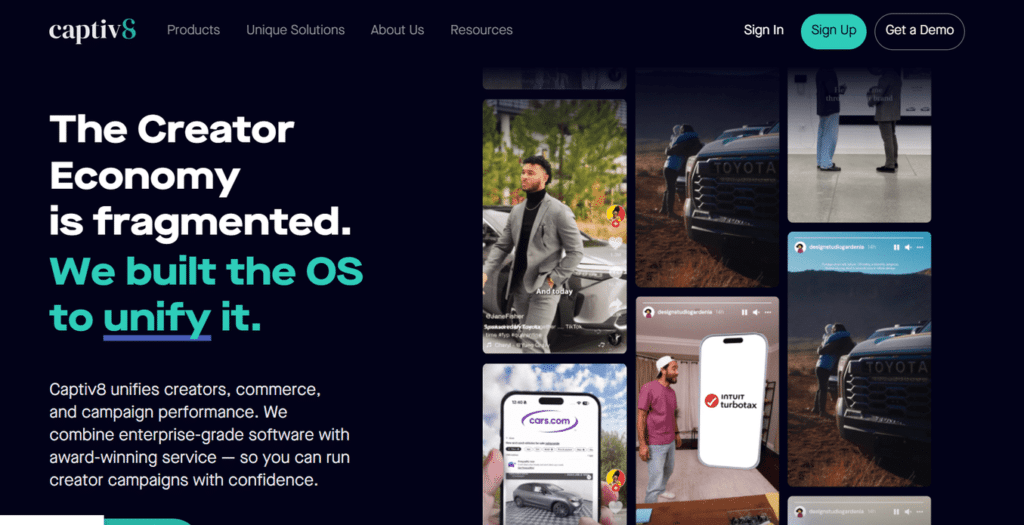
Captiv8 stands out for its predictive analytics capabilities. Using advanced AI models, it forecasts campaign reach, engagement, conversions, and cost efficiency before a campaign even launches.
This allows teams to allocate budgets more strategically and select creators based on expected future performance, not just past results.
Captiv8 also offers:
Its forecasting is especially valuable for data-heavy teams and those managing large budgets where accuracy matters.
Best Key Features: Predictive analytics, campaign forecasting, cross-platform insights, brand safety checks, performance modeling.
Pricing: Request a demo and quote. (Pricing is not disclosed on their website.)
Later is designed to activate influential customers and convert them into loyal brand advocates. By combining loyalty data, surveys, and influencer discovery, the platform identifies everyday customers with social influence who can create authentic UGC.
The platform also excels at:
This approach helps brands build strong emotional relationships while reducing dependency on paid influencers.
Best Key Features: Advocacy activation, community-building tools, customer identification, UGC libraries, reward automation.
Pricing: Request quote. (Pricing is not disclosed on their website.)
Kolsquare is tailored for brands targeting European audiences.
Its database includes over 3 million key opinion leaders, with detailed regional demographics for countries like France, Germany, Spain, Italy, and the UK.
It provides analytics on:
This focus on European compliance and accuracy makes Kolsquare ideal for brands expanding into international markets or running region-specific initiatives.
Best Key Features: European demographic precision, KOL database, regional analytics, cultural insights, and multi-market campaign tracking.
Pricing: Request a demo and quote. (Pricing is not disclosed on their website.)
As we move into the new year, let’s consider the elements of primary focus in the influencer marketing industry.
The synergy of human creativity and AI creates a powerful hybrid workflow. AI handles data processing, audience analysis, and creator predictions, while human teams focus on relationship-building and creative direction.
This balance ensures precise targeting, authentic partnerships, and campaigns that blend accuracy with emotional storytelling.
Embracing authenticity means following regulatory requirements like FTC disclosure guidelines in the U.S. and EU transparency rules, ensuring sponsored content is clearly labeled.
Ethical practices not only keep brands compliant but also strengthen long-term trust, foster genuine engagement, and build lasting credibility with both creators and audiences.
Navigating social commerce now includes emerging formats like AR try-ons, live shopping, and TikTok Shop, which drive interactive, purchase-ready experiences.
Influencer marketing platforms help brands adapt by tracking performance across these channels, managing creator content for new formats, and providing insights to optimize engagement and conversions.
Optimizing ROI involves continuous measurement and adaptation. Brands use analytics and customer data to monitor campaign performance in real time tracking metrics like engagement, conversions, and revenue per creator.
Insights allow teams to reallocate budgets to top-performing influencers mid-campaign and refine creator selection, content strategies, and targeting for future initiatives, maximizing efficiency and results.
Influencer marketing in 2026 is full of opportunities but increasingly complex. A dedicated platform is a strategic necessity.
This article detailed the current top 10 influencer marketing platforms. Somewhere above is a partner to help you charge into the new year to meet branding success and increased ROI.
Remember, audit your current efforts, set clear goals, shortlist platforms, schedule demos, and choose the influencer marketing platform that meets your brand’s needs.