


Content is what drives audience activity for brands online. It gives people something to watch, read, share, react, and respond to.
But with so many content types and channels, content production can strain internal marketing teams. Plus, you have to consistently put out good, helpful content. That, of course, requires strategy, planning, and sharp execution.
This is where outsourcing production becomes super helpful. Marketing teams can tap the top content production services to speed up work and improve quality.
This guide will help you understand:
By the end, you should have a clearer idea of how to find the right production partner for your brand and marketing needs.
Highlights
Content production services and agencies help brands plan, create, refine, and deliver the assets they use across marketing channels.
Depending on the service provider, this can include everything from strategy and pre-production to filming, design, editing, post-production, and final delivery.
Some providers handle a single part of the production process, while others offer end-to-end content production and ongoing support. Brands can use these services for one-off campaigns, product launches, or even always-on content for blogs or social media.
Content production teams can look very different depending on the types of content they produce and the brands they serve. They’re usually part of marketing agencies, some of which solely focus on content.
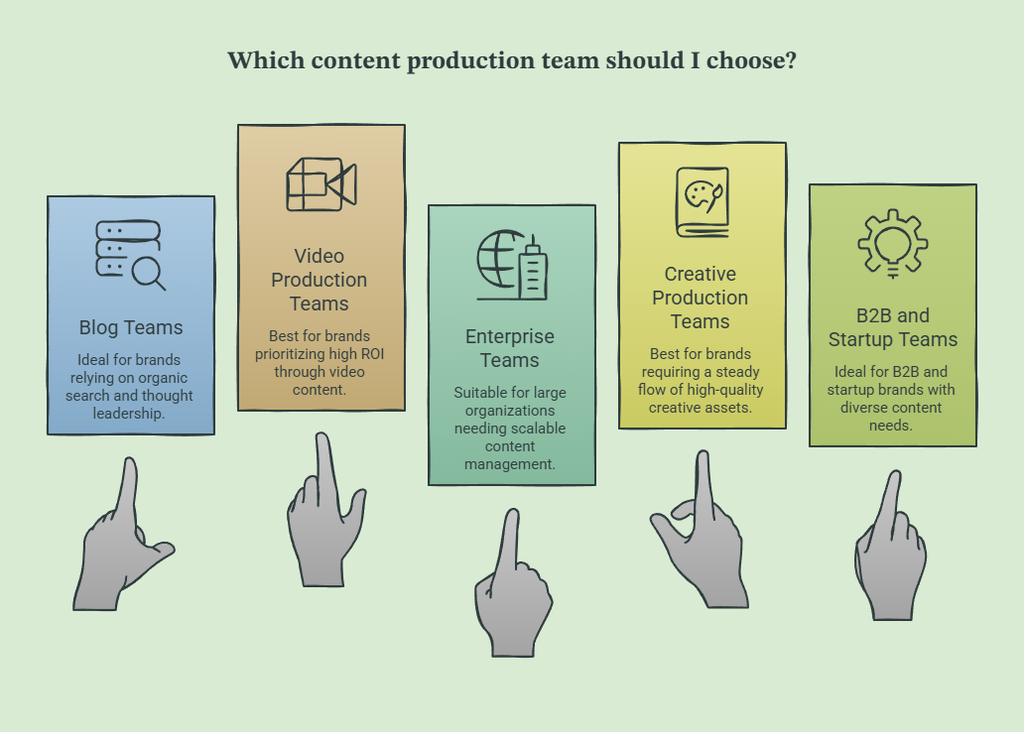
Image produced by author
Here are the different types of content teams you may want to work with:
Blog production teams focus on written content like articles, guides, landing pages, and case studies. They also tend to have expertise in search engine optimization (SEO) and generative engine optimization (GEO).
These teams include content strategists, writers, editors, SEO specialists, and sometimes graphic designers. They also use tools for keyword research, SEO/GEO, and publishing, such as Wordable, which automates WordPress publishing, or uSERP for link building.
These teams are a good fit for brands that rely heavily on organic search, thought leadership, or educational content.
Video production agencies specialize in formats like video, including:
Many content agencies offer video production alongside other services, while specialized video agencies focus exclusively on this format.
A full-service professional video production partner can handle pre-production, videography, filming, editing, visual effects, motion design, and post-production services.
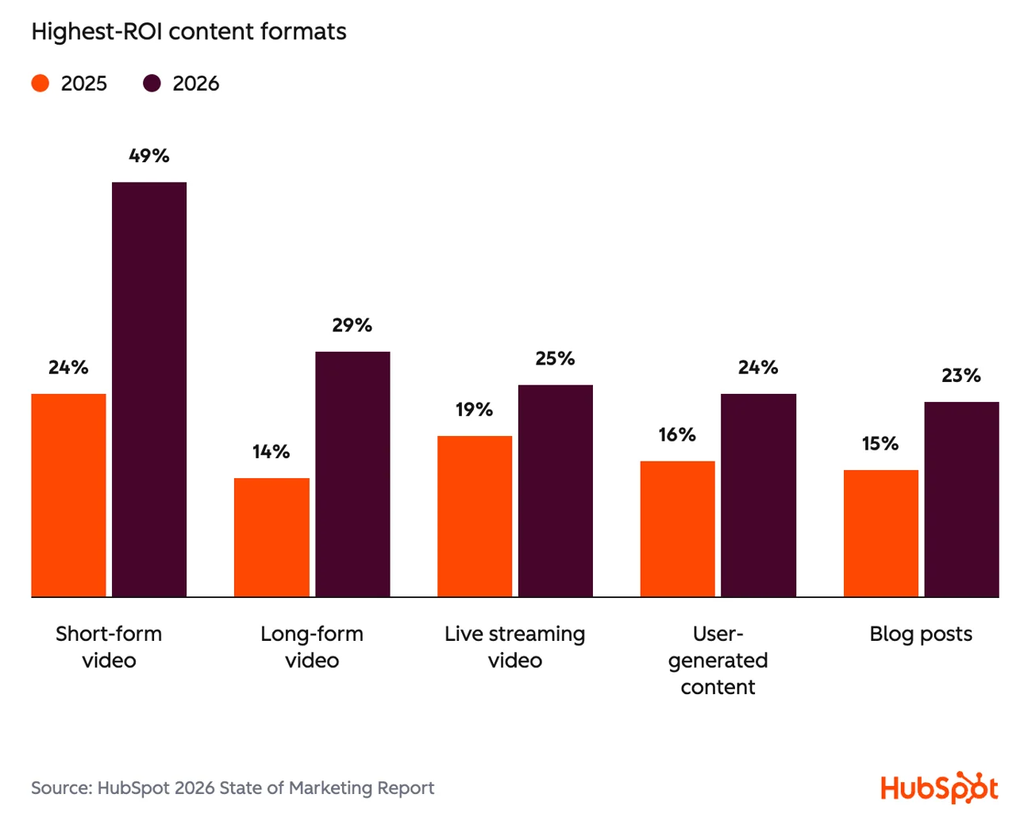
And video is incredibly important for most marketing teams today. According to HubSpot’s 2026 State of Marketing report, short-form, long-form, and live-streamed videos are the top three content formats for high ROI.
Enterprise content production teams are built for scale. They can manage large volumes of campaign content across different business units, markets, channels, and regions.
These teams provide content strategy, production management, quality control, localization, and production and delivery support. For instance, Fieldtrip, a full-service marketing agency, covers marketing strategies, design, creative production, and even content performance measurement through a network of sub-agencies.
Enterprise needs call for a well-connected team, with strong workflows, clear approval processes, and the production capabilities to work with large organizations.
Creative production teams cover a broader mix of visual and digital content. Their services include:
These teams are best for brands that need a steady flow of high-quality creative across several channels.
B2B and startup content teams are a category in their own right. They usually work across several formats. That includes:
Basically, they have tons of content needs for marketing and product use.
B2B content marketing agencies can be a great fit because they already know the target audience, the buyer journey, and the product. That experience helps them choose and produce content that supports different stages of the buying process.
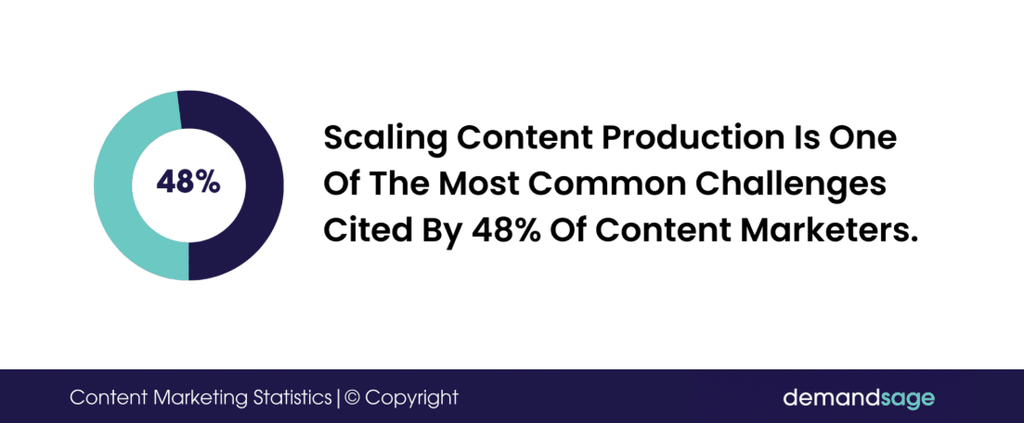
Outsourcing content production is best when your in-house team can’t handle the volume, speed, or specialist skills a project requires. In fact, scaling content is one of the most common challenges, according to 48% of marketers in a Demand Sage survey.
Besides more production capacity, it may make sense to hire a content agency or service when:
A strong portfolio matters, but it shouldn’t be the only factor when choosing content production services.
You should also consider whether the provider can understand your audience, handle your required volume, maintain quality, and work smoothly with your internal team.
To shortlist the most relevant content teams, look for experience with the formats you actually need.
Some agencies position themselves as capable across every format, but their expertise may be stronger in certain areas than others. For instance, an expert blog team may not be the best fit for a complex video project. That job should go to video production services.
Even within the same content category, review previous work to find the best fit. If you need social-first creator content, for example, look for a video or social agency with a track record of producing that specific format.
A production team should understand more than how to create an attractive asset. It should understand who the content is for and what that audience needs to hear.
McKinsey’s research on the ‘attention equation’ highlights the importance of attention quality alongside traditional measures of audience size and engagement. In other words, who your content reaches is more important than how many people it touches.
This is where industry knowledge and audience understanding come in. The content production team should:
For instance, a firm with SaaS marketing experience understands that it is creating content for business buyers and leaders. So, it can pivot the tone, imagery, and context to suit their needs. That helps content, regardless of format, resonate with the consumer.
Small businesses’ content needs differ from those of Fortune 500 companies. The latter may require content for different business units, brands, and platforms. Only a large team can support such content production demands.
Look at the firm’s employee count. For large companies, look for agencies with enough dedicated staff and production capacity to support multiple projects, formats, or business units at the same time.
Also, look at the businesses they’ve served or are currently working with. If they’re similar in size to your business, that can indicate the content team has experience supporting comparable production demands.
Generative AI has drastically increased marketers’ content production capacity. Many marketers use it daily in their workflows, including content creation.
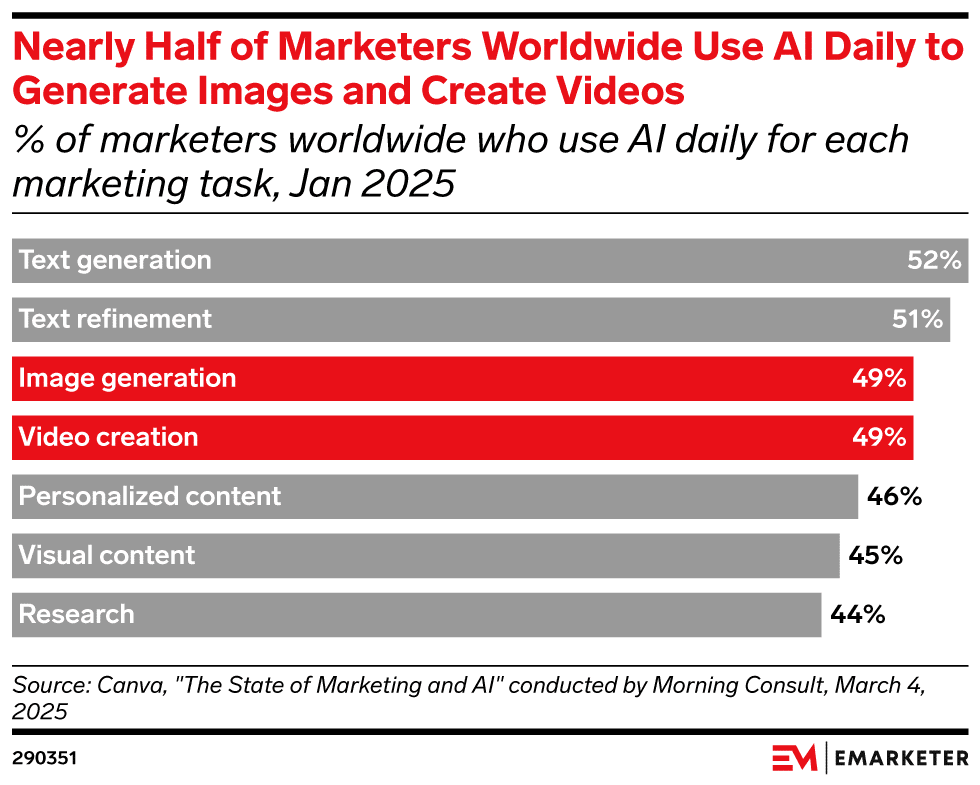
Get clarity on how the production agency uses AI to speed up work and whether it has key creative controls in place. You want AI for efficiency, not slop.
Ask how the agency maintains consistency across different projects, creators, editors, and channels. There should be a clear review process for things like brand messaging, factual accuracy, visual quality, audio, formatting, and technical specifications.
Consistency is a real challenge for brands, especially big ones. Contentful’s survey of executives found 81% struggle to keep content branding consistent across markets.
That’s why it’s important to find out whether the provider has dedicated editors, creative directors, or quality-control teams.
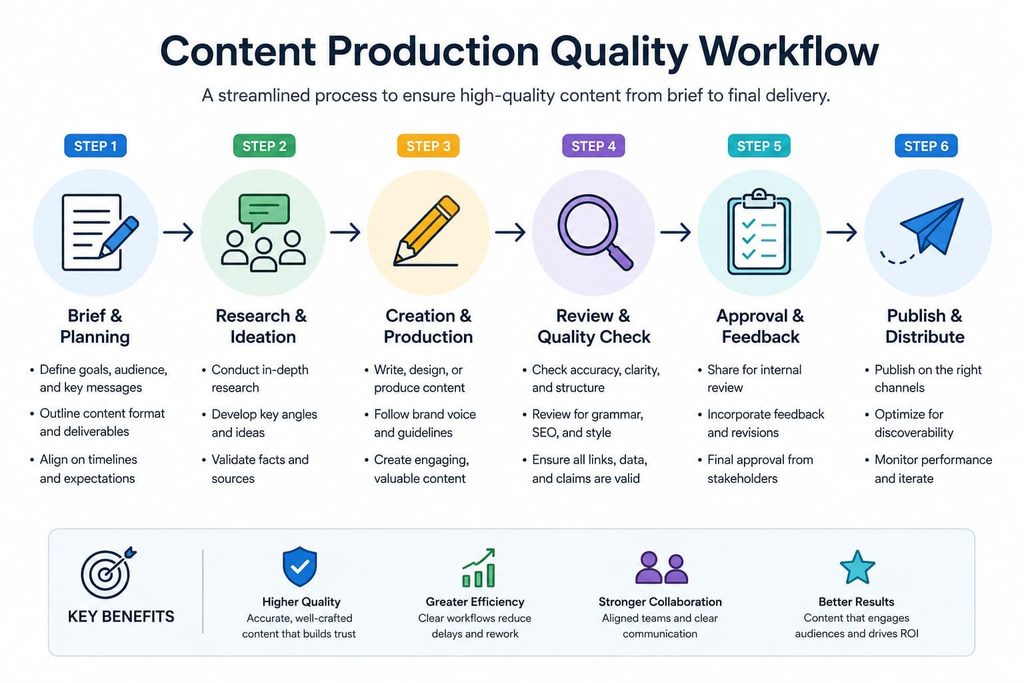
Image created by the author
Ask how long the typical production process takes and what can affect the schedule. A professional video project with pre-production, filming, editing, and post-production will naturally take longer than social graphics or short-form edits.
The agency should be able to provide a realistic production schedule.
The best approach is to separate delivery into milestones, like:
Also ask how it handles urgent requests and whether faster turnaround affects pricing.
Your production company will need to work closely with marketing, brand, product, sales, legal, and other internal stakeholders. That project collaboration is the key to good performance. Otherwise, there are too many back-and-forths, and delivery is late.
Ask:
For larger projects, clear production management can be just as important as creative talent.
Tip: Give the content production team a brand style guide to guide creative direction, language, and boundaries.
Ideally, a production investment should create more than one usable asset. That’s especially true for businesses that need content for different platforms and formats.
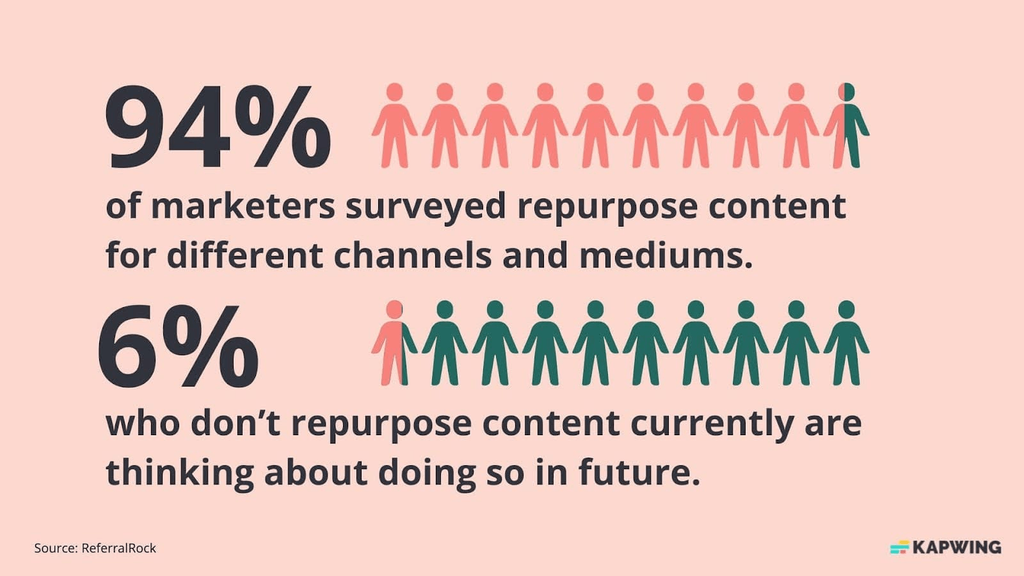
Repurposing is also cost-effective, and most marketers already do it.
For example, a single long-form brand video could also generate a range of marketing content, such as social video clips, paid ads, still images, and website assets. Teams without in-house video capacity often lean on platforms such as Higgsfield that offers an AI video generator to cut those variations from one master file. Similarly, a blog can become a quote post on LinkedIn or X, a newsletter section, or an infographic.
Ask how the provider approaches repurposing from the beginning of the project. Ideally, build repurposing requirements into the contract.
Providers that plan for repurposing during pre-production can get more value from each shoot, campaign, or piece of original content.
Look at the technology behind the service as well as the people.
Depending on your requirements, this might include design software, collaboration platforms, AI-assisted tools, and secure cloud storage.
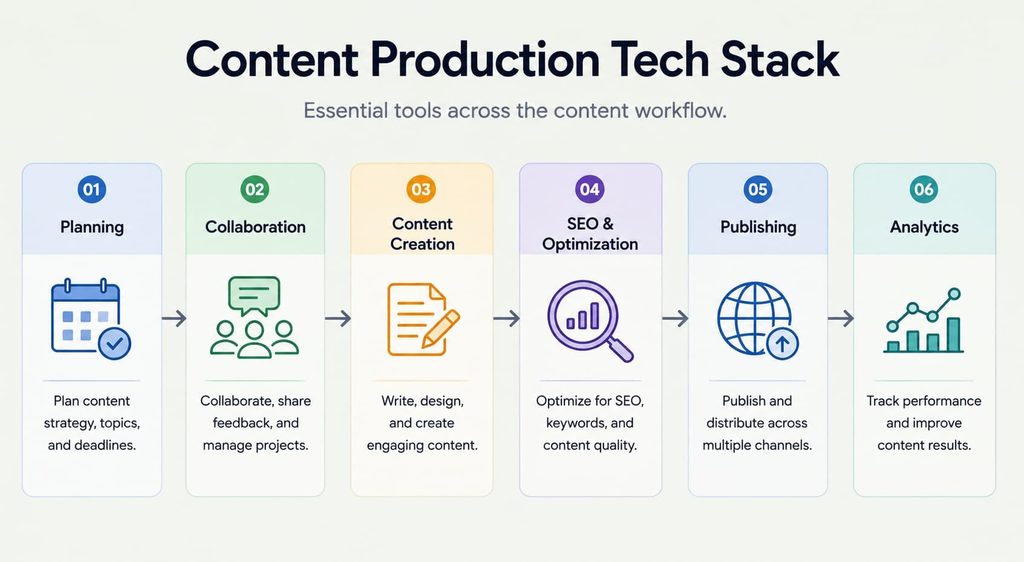
Image created by the author
Video production companies should have professional filming equipment, studio access, and editing software.
Ask whether important work is handled in-house or through freelancers and subcontractors. Neither model is automatically better, but you should understand who will actually work on your content and how quality is maintained.
If your brand operates across countries, look for a provider that can adapt content for different languages, cultures, channels, and regional requirements.
But keep in mind that localization goes beyond simply translating words. It may require new voiceovers, subtitles, graphics, examples, imagery, and even different versions of the creative. An AI tool like Lara Translate can translate the scripts and on-screen copy fast, so the team’s time goes into the parts that need a local eye.
Localization matters because audiences expect content to reflect their language, market, and buying context. For global brands, that makes localization an important part of production planning, not something to address only after the content is finished.
That shows the importance of content localization.
The right content production services should do more than simply deliver assets. A reliable partner should understand your brand, audience, content strategy, and business goals.
They should also have the production capacity and skills to deliver the quality and volume you need.
When comparing production services providers, consider their expertise, scalability, workflows, strategic input, turnaround times, and ability to support different types of digital content over the long term.
The team should feel like an extension of your own. That’s the secret sauce to the best content.
Ready to streamline the publishing side of your content workflow? Try Wordable to move content from Google Docs to WordPress faster, with less manual formatting.