


Google search looks different now. You probably noticed it yourself. Most people don’t just scroll through links anymore. They read the summary at the top. This means search behavior has moved toward instant answers.
If you want to stay visible, you must master content optimization for AI Overviews. Ranking is no longer just about being number one. Your text needs to feed Google AI, answer engines, and generative summaries.
Publishers are already feeling the squeeze from AI-driven search. When Google answers more questions directly in the results, traditional rankings don’t guarantee the same traffic they once did. Pages now need to be structured for extraction, semantic relevance, AI visibility, and answer-driven visibility.
This guide helps you fix that. We cover exactly what AI Overviews want from your site.
You’ll learn how to improve formatting, entities, and freshness. We also look at how your publishing system changes your optimization speed. It’s time to make your content easier for AI to find and use.
Highlights
AI Overviews changed how people interact with search results.
According to Pew Research, in March 2025, 58% of surveyed Google users saw at least one AI-generated summary in search. Instead of opening several pages, many users now get answers right inside Google.
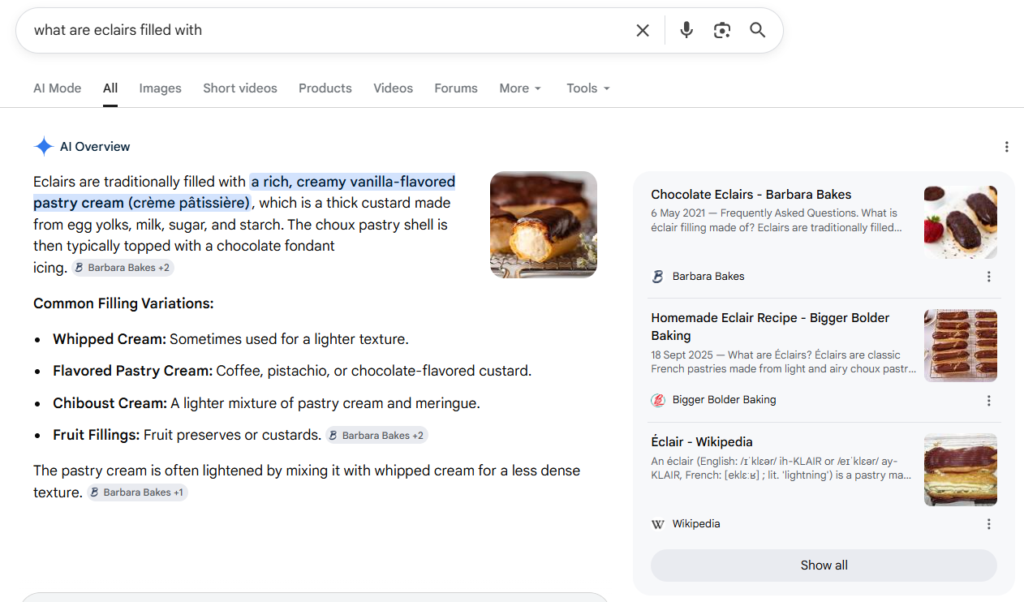
Screenshot provided by the author
Google looks at many different websites to build one answer. It pulls facts from multiple sources to create a single summary at the top.
For example, a search for “best AI writing tools” may pull features from one site and key considerations from another.
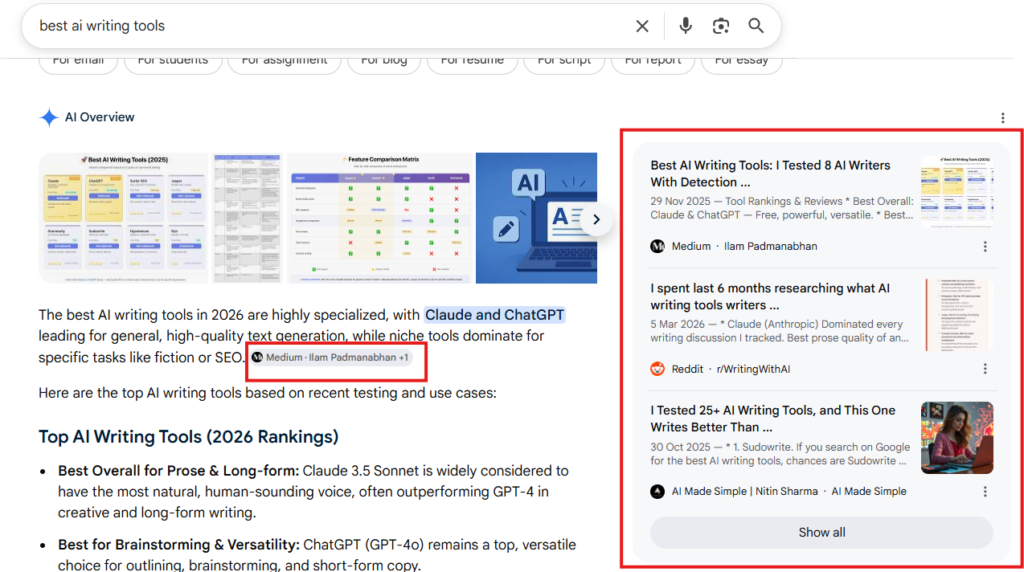
Screenshot provided by the author
Your page can influence these answers even if no one clicks your link.
Old tactics don’t work as well now. Stuffing exact-match keywords or making vague updates wastes time. Writing just to rank is a thing of the past.
Search engines now focus on semantic understanding, technical SEO, and how easily they can extract a clear answer. You can’t just incorporate the keyphrase “best email marketing software” 20 times in one post. It won’t help if the page lacks comparisons, context, or useful answers.
AI systems crave clarity and topical depth. They need a clean structure and fresh details to trust your work. They also look for entity relationships and strong trust signals.
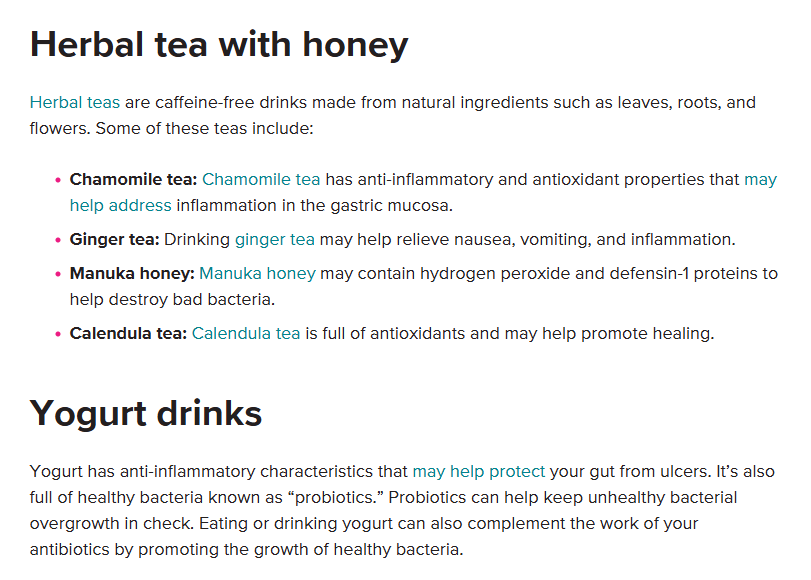
For example, a recipe or medical site that links ingredients to specific health benefits shows better topical depth. These elements help Google pick your site for a summary because AI systems prioritize content that answers questions clearly, connects related concepts naturally, and provides enough context to support extraction.
You cannot write good content without knowing what the user wants. AI systems look for specific answers that match the user’s goal.
Learn to spot if a user wants to learn, compare, or buy. Different searches need different answers.
Vague content doesn’t work because AI cannot find a direct answer to extract. For example, if someone searches “how to fix a pipe leak,” they need a guide, not a history of plumbing.
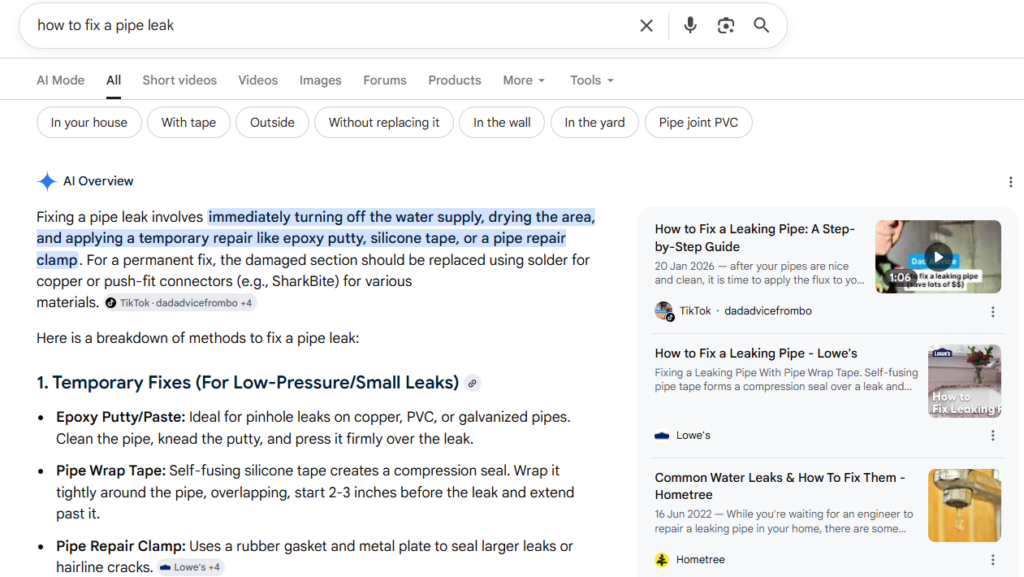
Screenshot provided by the author
What else are people asking? Look at Reddit, forums, and “People Also Ask” boxes for clues. You’ll find additional questions that make it easier for AI to extract your content for a summary.
For instance, you might discover that a post on “best cameras” should also answer, “How long does the battery last?”
Give users the layout they want, like a table or a list. Sometimes a simple definition or a step-by-step guide works best. This alignment helps AI systems find, understand, and show your content.
For example, a “best AI tools for content creation” article should use a clear list or a comparison table.
Writing for humans is now the best way to write for machines. You need to show Google that you understand the whole topic. This means moving past simple keywords and focusing on how ideas connect.
Entities are just people, brands, products, or concepts. Google looks at how these things relate to each other instead of just matching words.
For example, a Reddit SEO article may also mention subreddits, community discussions, and moderation signals. This context helps Google better understand the topic and improve visibility in AI Overviews.
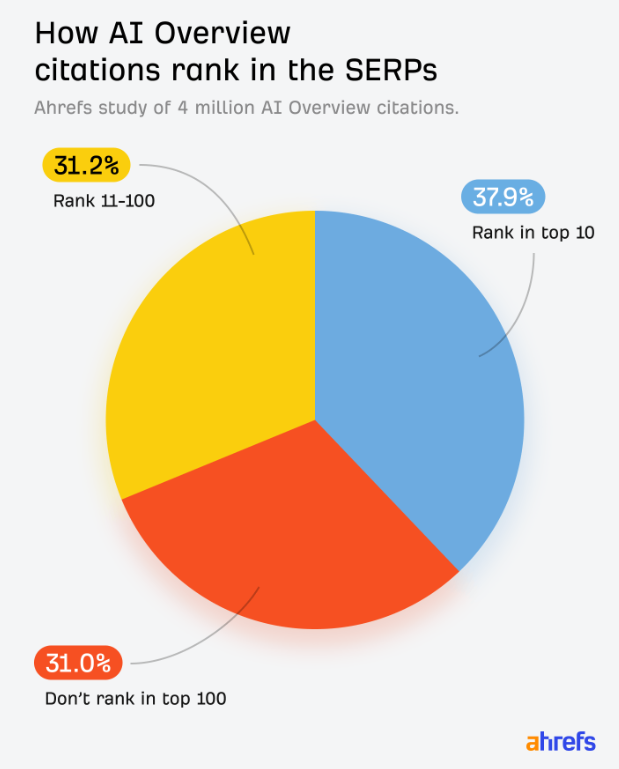
Ahrefs research found that only 38% of AI Overview citations come from pages already ranking in Google’s top 10. This suggests top-10 rankings help, but they are not the only path into AI Overview citations.
Repeating the same word makes your text feel stiff and hard to read. People search using conversational phrases and long-tail keywords.
Use variations like “AI Overview SEO” or “optimizing for generative search” to help the AI understand your point.
For instance, instead of saying “content optimization” multiple times, try “improving visibility in AI summaries”.
Variety improves readability while helping AI systems understand related phrases and concepts more naturally.
Don’t just make a claim. Give it some backup. Use definitions, use cases, and comparisons to add depth. Small, isolated statements don’t send a strong signal to AI systems.
For example, comparing two different software tools provides much more context than just listing features. Use internal links to show how topics connect across your entire site.
Good information is not enough on its own. If content is hard to scan or interpret, AI systems may skip useful passages during answer extraction.
Here’s what you can do to make it easier for AI to extract answers from your content.
Try the inverted pyramid style.
Put your most concise answer right at the top of the section. Save the deep explanation for the paragraphs that follow.
So, if you ask “how to bake bread,” start with the temperature and time before discussing grain types.
Vague headers like “Key considerations” confuse both bots and humans. Use explicit headings that have a clear meaning on their own.
For instance, “Best social media tools for small teams” works better than just “Our tools”.
Huge blocks of text make extraction hard for AI. Short sections improve scannability and help the system find your main ideas.
Let’s say you’re explaining on-page vs off-page SEO to beginners. It’s best to use a new paragraph for each new idea or step in the process.
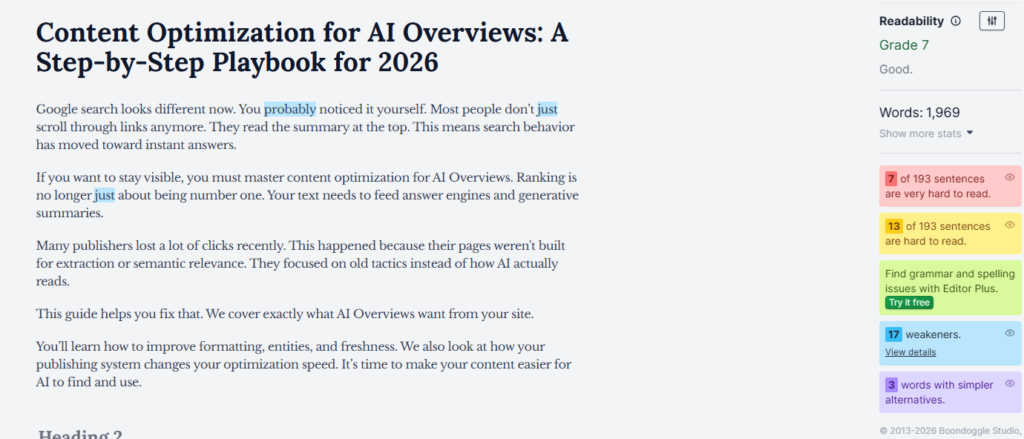
You might also run your draft through Hemingway. This writing tool highlights hard-to-read paragraphs. It makes it easier for you to edit your content and ensure it’s readable.
Formatting helps generative AI systems spot useful passages. Use things like:
For example, a table comparing phone prices is much easier for an AI to summarize than a long paragraph.
Content that doesn’t provide value doesn’t work in AI-generated search.
AI systems want content that clearly answers the reader’s problem. Depth doesn’t mean adding fluff or extra length for no reason.
Imagine you’re writing a guide on search engine optimization. It should cover the technical parts too, not just keywords. Even strong coverage can fail if the content is hard to scan, difficult to update, or inconsistent across your publishing workflow.
Your backend process matters as much as the words on the page. Fast updates help when freshness matters, especially for time-sensitive topics and AI search results.
If your workflow is slow, you lose freshness. Update delays mean AI systems might prioritize a more recent source over your content.
For example, a news site that takes two days to post may lose to a site that posts in two hours.
Content refreshes should feel simple. Many teams lose time fixing broken formatting, rebuilding tables, or cleaning messy CMS imports.
This can happen when updating a guide in WordPress, resulting in manual cleanup if headings, images, or lists aren’t consistent during upload.
Faster refresh processes help teams keep content accurate and easier to maintain.
Publishing tools help remove repetitive work from content operations. That gives teams more time to focus on optimization and updates.
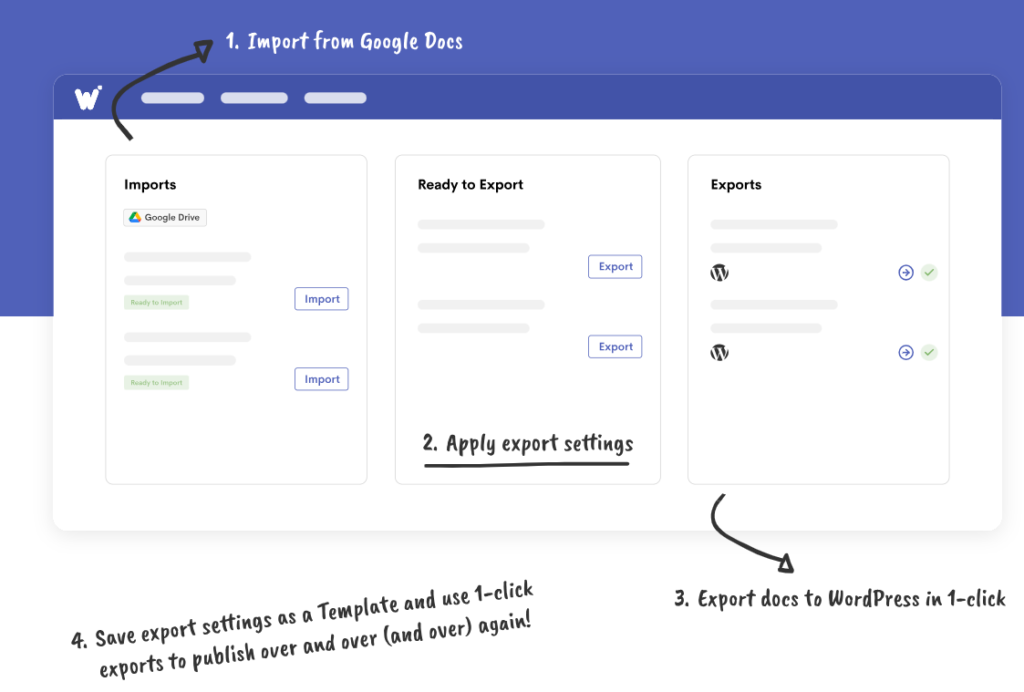
For example, tools like Wordable help teams publish faster while preserving formatting across platforms. That makes content updates easier, reduces manual fixes, and improves publishing efficiency across WordPress, HubSpot, and other CMS platforms.
Mistakes happen when content creators stick to old SEO strategies. Avoid these traps to stay visible.
Don’t bury the lead. AI needs to find facts right away.
If you hide a definition at the bottom of a page, a summary bot will likely skip it.
Repeating phrases won’t help you here. Focus on the whole topic instead.
A post about hiking should mention gear and trails, not just the word “hiking” 50 times.
Walls of text are hard for machines to scan. Use lists and clear headers to help bots extract your data.
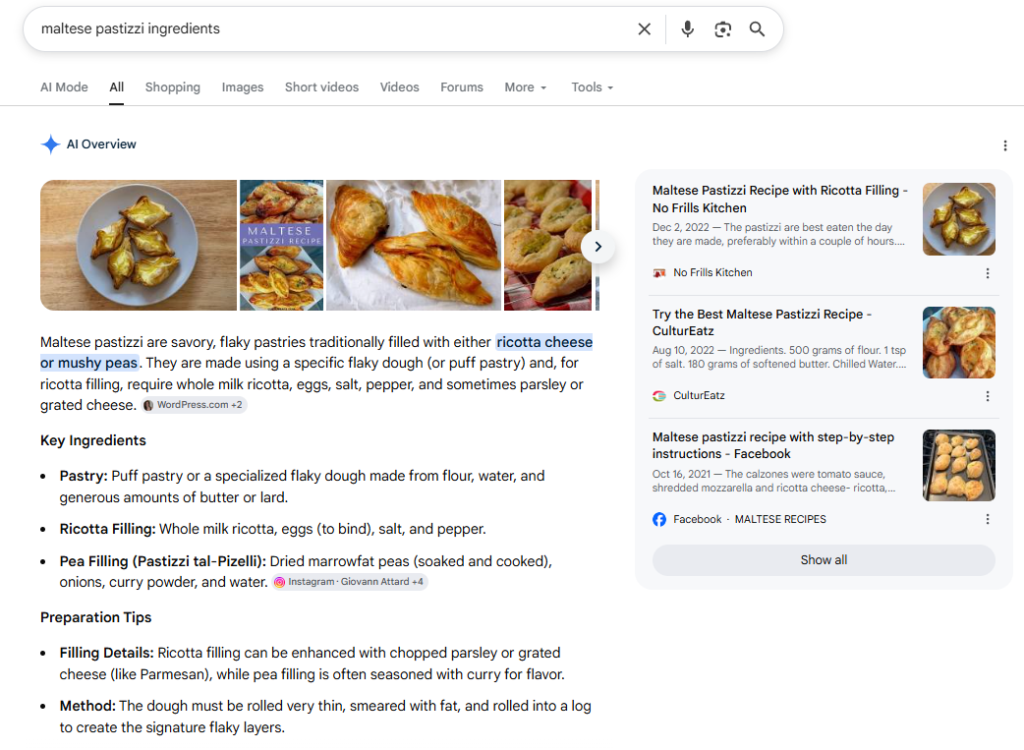
You can use a bulleted list for ingredients so the AI can pull them for a recipe card.
Screenshot provided by the author
Freshness is another trust signal. If your data is old, Google will find a newer source.
For example, a “best apps of 2023” list is useless in 2026 and will lose its spot in AI summaries.
Use this checklist to ensure your content is optimized for AI Overviews. Each step helps machines understand and extract your data.
Search looks different now. AI Overviews changed how people:
Ranking still helps. But visibility now depends on how well AI systems can understand and extract information from your pages for AI search.
That means structure, semantic relevance, freshness, and formatting all work together. Content needs clear answers, strong context, and enough topical depth to solve the reader’s full search queries.
Optimization is no longer something you do once and forget. Teams need to update pages as search behavior, products, statistics, and search results change over time.
Publishing speed also affects how fast teams can react. Slow workflows and formatting problems can delay updates that should take minutes.
If you want to simplify publishing and keep content updates fast, Wordable can help streamline your workflow across WordPress, HubSpot, and other CMS platforms.
Try Wordable now to speed up content optimization for AI Overviews with automated publishing.