


Digital marketing becomes messy when teams confuse copywriting and content writing. If you’re a marketer or SEO specialist, this guide shows exactly when to use each, how they work together in your marketing funnel, and how to measure their effectiveness with the right scoreboards.
You’ll also see where copywriting vs content writing overlaps, and where it doesn’t, so you can plan campaigns that earn traffic and convert it into sales.
Copywriting is the art of selling with the written word. It’s persuasive writing designed to get a specific action now.
In some cases, this involves a click, an opt-in, a purchase, or booking a call. Sometimes, it’s an internal action designed to change their beliefs and increase their market awareness level. This makes them more likely to purchase later.
You’ll see a lot of copywriting when you look at most marketing channels. Whether you read sales emails, watch YouTube ads, open a long-form sales page, or transcribe a webinar script, that’s all copywriting.
The best copywriting is clear, concise, and structured for quick scanning. That’s why most of the top copywriters use very short sentences and images to break up text.


There are many direct response copywriting structures.
But regardless of the structure, the core fundamental of copywriting is human psychology. It’s all about understanding your prospect, such as:
For example, say your target customer is overweight single men, and you have a weight-loss offer. They may say they want to lose weight, but is it because they feel constantly heavy and tired? Or is it because they want to feel more confident in attracting women and get more dates?
There are many forms of copywriting, from purely textual to video scripts and full sales funnels.
Some copywriters are full-stack and can produce various types of copy, while others, such as copywriter Sarah Sal, specialize in one specific form.
A landing page turns qualified attention into action. They qualify leads and continue building attention.
Above the fold, state the problem, the promise, and the CTA. Use subheads and quick proof to remove doubt. For paid traffic, isolate to make sure that the landing page matches the ad’s promise.

Sales pages handle longer buying cycles. They stack proof, answer objections, and make the offer feel safe with guarantees or trials.
Some sales pages are very long, shifting beliefs, and building market awareness. Copywriting techniques for sales pages include lede stories, future pacing, testimonials that eliminate objections, and price anchoring.
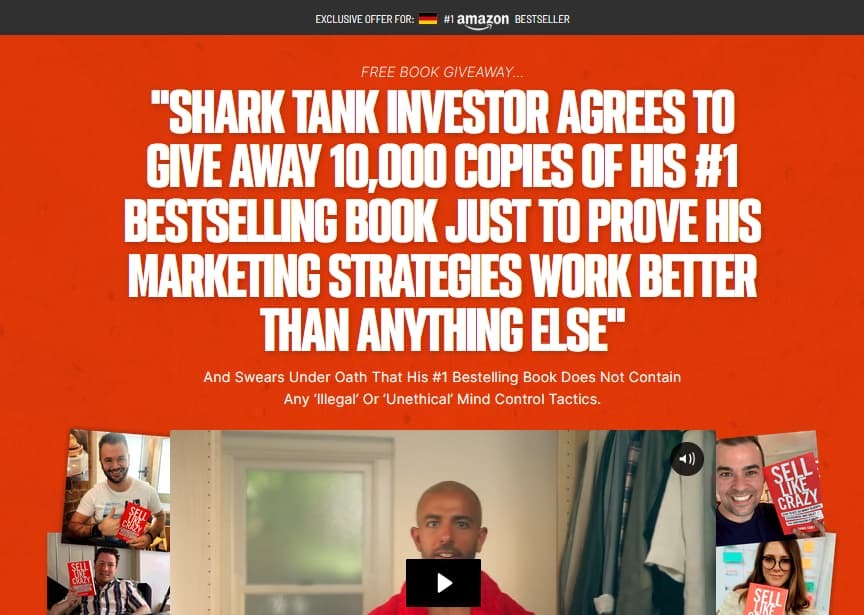
There are three primary forms of ads: text, image, and video. On most platforms, you can choose between pay-per-mille (PPM) and pay-per-click (PPC) models.
Ads are typically short, specific, and focused on a single angle. A typical format is a hook or headline, story, transition, and CTA.
To improve outcomes, budget cycles to drive clicks on pay-per-click ads by testing clarity, specificity, and CTA framing.

Sales emails convey a single message and a clear next step.
There are many email structures that copywriters use. These include PAS, AIDA, stories, “get X without Y” emails, and SPEAR (short, personal, expecting a reply) emails.

Every email campaign has one goal, whether that’s to add urgency, encourage a click, prompt a reply, or highlight why you’re different from your competitors.
Modern email newsletters often include copywriting. They’re designed to build know, like, and trust (KLT). Over time, this converts passive subscribers into loyal fans who trust you and your offers.
Email copy also builds market awareness and changes beliefs, even when it doesn’t ask for a click or a reply. This makes them more likely to want to change and become a better version of themselves with your product or service.
This is why when you do email marketing right, you can see an average return of 36X, as per Litmus’s State of Email 2025 report.
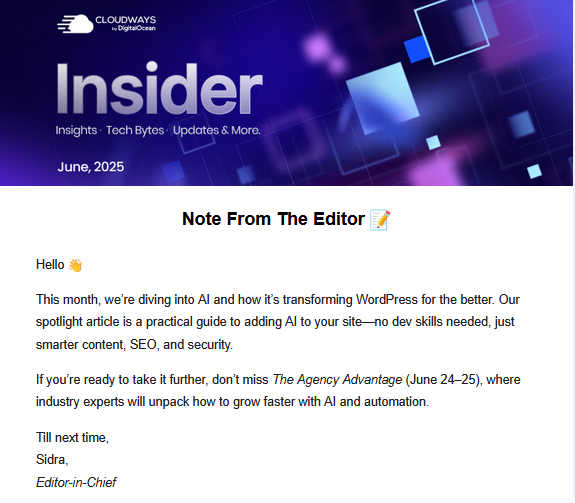
On the other hand, traditional corporate-style email newsletters are purely content-driven. They teach and inform only. They avoid offers, and if they use CTAs, it’s only to get more information. That is fine for keeping in touch, but it doesn’t generate much revenue or KLT.
An example of a traditional email newsletter is when SaaS platforms send version update emails:
Screenshot taken by the author
Good product description copy reduces comparison friction.
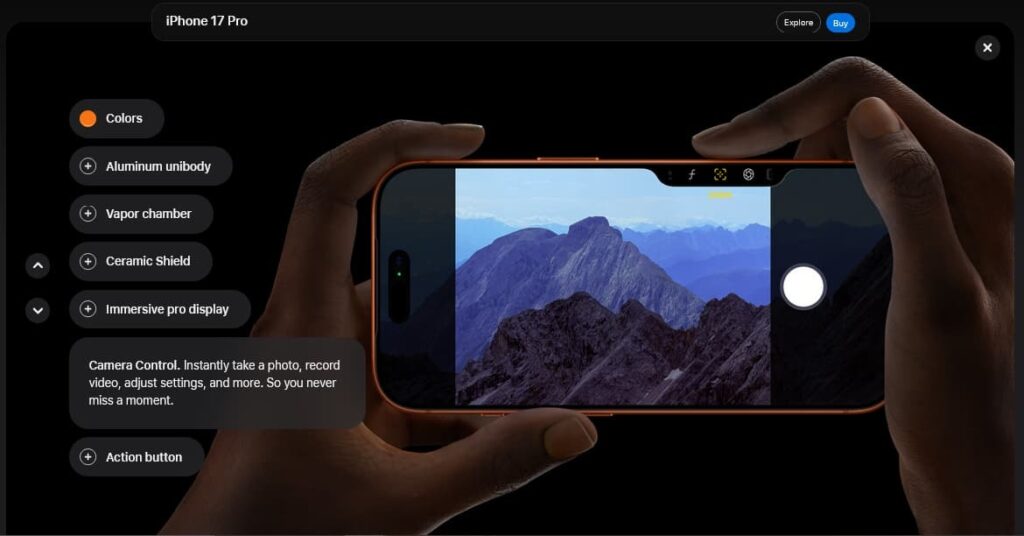
These typically include use case benefits, and not just features or specifications. Clarify what’s in the box, how it works, and what happens after purchase. Pair short bullets with a micro FAQ near the CTA.
Content writing attracts, educates, and nurtures. It is built for search engines and people, mostly for organic traffic. The focus is depth, structure, and trust, so readers can solve a problem and see you as an authority.
Typical formats include SEO-focused blog posts, case studies, white paper assets, blog articles, and social media updates. You will also see content video scripts used for explainers or walkthroughs.
For most businesses, content writing lives in a content strategy that supports other marketing campaigns driven by copywriting.
Content writing starts with market research.
For on-page SEO, you also need to focus on search intent. Do keyword research to find out what your target customer is looking for.
For other content marketing campaigns, the structure depends on the form. For example, you can use a standard white paper form, but then add in your brand’s tonality and style to match your website and socials.
Let’s look at a few examples of what counts as content writing.
An SEO-focused blog article (like this one) is a page designed to match search intent and win rankings for a cluster of queries. It teaches, but it also positions your solution. The structure is simple, scannable, and rich with helpful subheads.
Keyword-rich blog posts have two layers: on-page SEO and technical SEO. The idea is to use keywords to match intent for top-of-the-funnel (ToFu) and middle-of-the-funnel (MoFu) topics. Here, people want steps, definitions, or comparisons.

Sometimes, blog posts also blend copy advertorials. They include contextual lightweight CTAs like sign-up forms and lead magnet pop-ups.
Most brands that focus on long-term SEO growth create a content marketing workflow to produce dozens of new articles and updates.
A case study is a proof asset. It shows the problem, the solution, and the results with real numbers. It often includes quotes, screenshots, or graphs that make the story real.
Case studies work best in the MoFu and at the bottom of the funnel (BoFu). At this stage, people want proof before booking a call or making a purchase. They need to see that others like them got results. A good case study gives them that confidence.
The structure should be simple and scannable. Begin with a summary, then proceed through the challenge, approach, and results. Add a short FAQ to handle common objections, and close with a clear CTA that points to the next step.
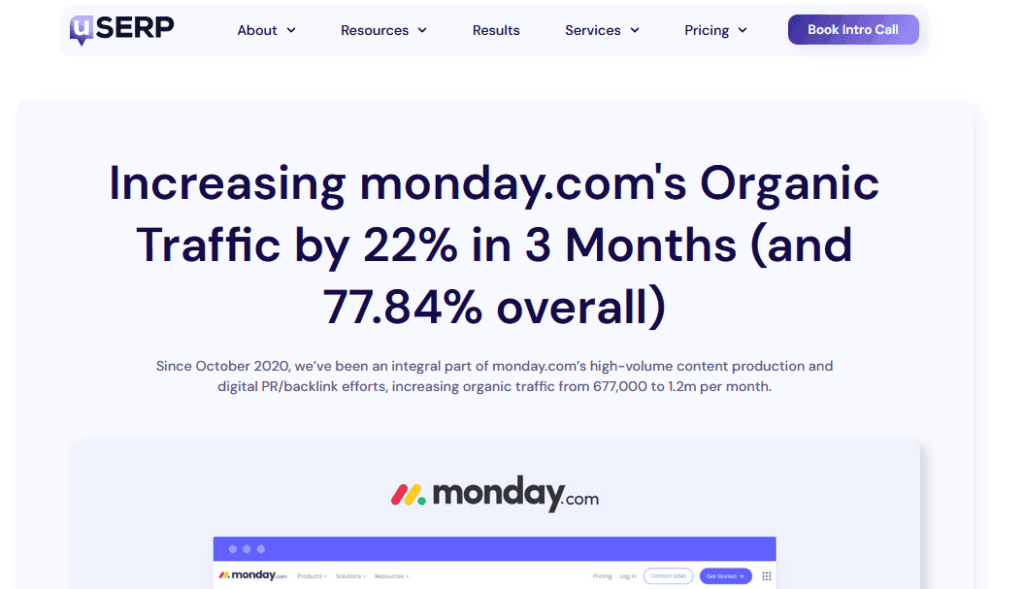
For a strong model, look at the uSERP case studies. They make outcomes easy to scan while still telling a clear story that supports authority and pipeline growth.
Medium and larger companies often publish white papers as a deep dive for their buying communities. A white paper is like a mini thesis with data, diagrams, and citations. It maps a path to change.
Typically, white papers are used to influence strategy conversions and win contracts from governmental and large corporations.
Be sure to review a few white papers and develop your own content strategy framework before creating one. Include your brand narrative so everything ties back to you and your brand.
White papers should be gated content, allowing you to collect lead information, such as email addresses, and use it to initiate conversations.

Social media posts and social media updates distribute ideas, clips, and visuals that spark conversation. They bring attention back to your pillars. They also train your audience to become more familiar with your voice and brand.
These include short insights, carousels, and quick explainers that keep the feed lively.
A good example of content social media posts is link baiting. This is when you create pieces of valuable content on your website and then share snippets of them on your socials. You’re still attracting, and there’s usually a CTA, so there’s still some element of copywriting depending on how much you push for the click.
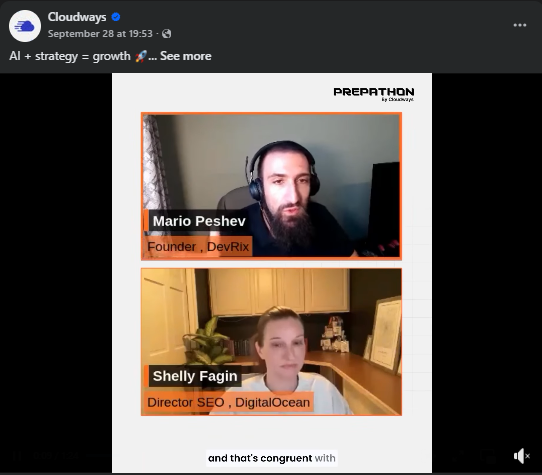
Content video scripts turn lessons into a sequence of beats. They combine visuals and images on screen to keep attention.
Examples of content video scripts include explainers, walkthroughs, and product education. These can live on your site, inside onboarding, and in social media marketing.
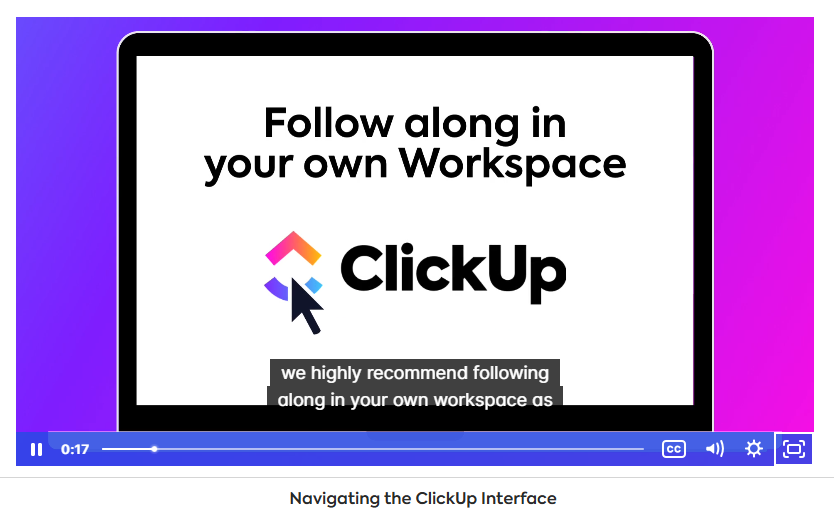
Not all forms of video scripts are content, though. Most social media marketing videos use copywriting principles to attract, keep attention, and get people to DM, comment, or click.
Copywriting and content writing often work together, but they serve different purposes. Both demand clarity, tight thinking, and a consistent brand voice. But there are some differences between copywriting vs content writing.
Copywriting is designed to trigger an action. This could be a click on a PPC ad, filling out a sign-up form, or buying a product on the spot.
Content writing aims to educate and increase authority. A blog post, for example, won’t always sell directly but will make readers more open to your brand in the long run.
Copywriting leans on human psychology. It tackles objections, plays on urgency, and uses specifics that push readers forward. Think of a sales page that shows guarantees, testimonials, and deadlines.
Content writing leans on search intent and structure. It focuses on depth and evidence. For example, SEO-friendly blog content ranks because it answers a question with clear steps and sources.
Copywriting shows up in sales pages, landing page copy, PPC ads, sales emails, product descriptions, chatbot scripts, and webinar scripts. These assets live closer to the money.
Content writing shows up in blog posts, case studies, white papers, email newsletters, and social media posts. These assets live closer to education, proof, and discovery.
Copywriting feels urgent and direct. The goal is to move someone from interest to decision. However, content writing feels educational, like guiding the user through problems step by step.
Copywriting is measured by numbers. These include conversion rate, click-through rate, and revenue per visitor. Copy is extremely scalable, especially with cold advertising.
Content writing is measured by long-term signals, like keyword rankings, organic traffic, sign-ups, and assisted revenue.
With content writing, expect slower but gains that grow gradually, especially when you refresh winners and do more of the things that work for you.
Don’t expect things to always stay the same, either. For example, a study by Ahrefs shows that AI Overviews reduce clicks by 34.5%. This is why we need to match contextual intent and match the user’s voice.
Copywriting works best at the BoFu. That’s where readers already know the problem and just need the final push.
Content writing works best at the ToFu. That’s where people are learning and not ready to buy yet.
In the MoFu, both can work together. Case studies, comparison guides, and email sequences are good examples of assets that mix education with persuasion.
Think of copywriting vs content writing as two tools in the same kit. Copywriting drives action when you need clicks, sign-ups, or sales today. It also builds market awareness and creates raving fans.
Content writing builds trust and authority that pays off over the long run. Use both with clear goals, and you’ll move people through your funnel with less friction and more results.
Want to publish faster without losing formatting? Use Wordable to export your Google Docs straight into WordPress and save hours on every post.