


Creating demand generation content and letting it live in one channel?
Gosh. That’s a missed opportunity.
Demand gen content is meant for the masses. But to reach as many people in your TAM as possible, repurposing and distribution have to be built into your content strategy.
Let me show you how to do that. In this guide, I’m breaking down how to distribute your demand gen content quickly so your brand shows up consistently, gets remembered, and earns attention at scale. 👇
Demand generation is a marketing approach that focuses on building market presence and long-term brand awareness. It often spans inbound or outbound marketing tactics to help brands show up consistently and stay top of mind.
It doesn’t focus on capturing leads the way lead generation does.
Instead, a strong demand gen content strategy builds awareness and stirs interest. Though this can eventually help drive qualified leads through other channels.
Content distribution is how you get your demand generation content in front of the right audience across multiple channels. It helps you build market presence, stay top of mind, and compete with competitors.
This is how you really gain Share of Voice.
*Pro-Tip: Use a SpyFu free trial to see which keywords and content topics currently drive your competitors’ visibility. Then create and distribute your demand generation content around similar topics to reach the same audience and strengthen your market presence. 👇
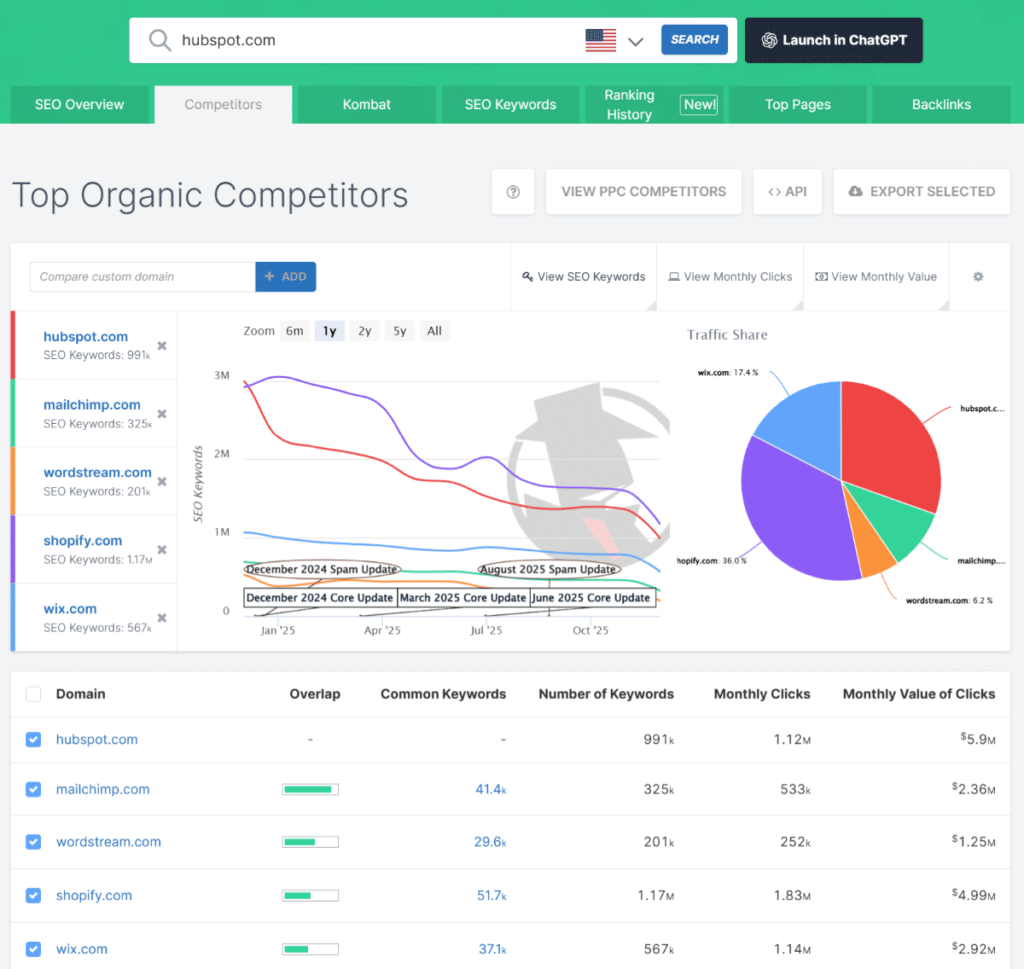
Competitor Research
For instance, you might distribute your content …
Here’s how to use content distribution tactics to help your demand gen content reach more people and make a bigger impact.
Review and repurpose your high-value content (e.g., blog posts) into dozens of LinkedIn posts, Shorts/Reels, and snippets for other channels. Make sure to resize these properly and differentiate them enough so each asset is a new piece. Canva has a magic resizer tool you can use for this that’s pretty cool. ✨
Start with your cornerstone informational intent content pieces. These are most aligned with your target buyer personas and brand-building goals.
Then, look for existing snippets you can pull out, resize, and reuse on another channel.
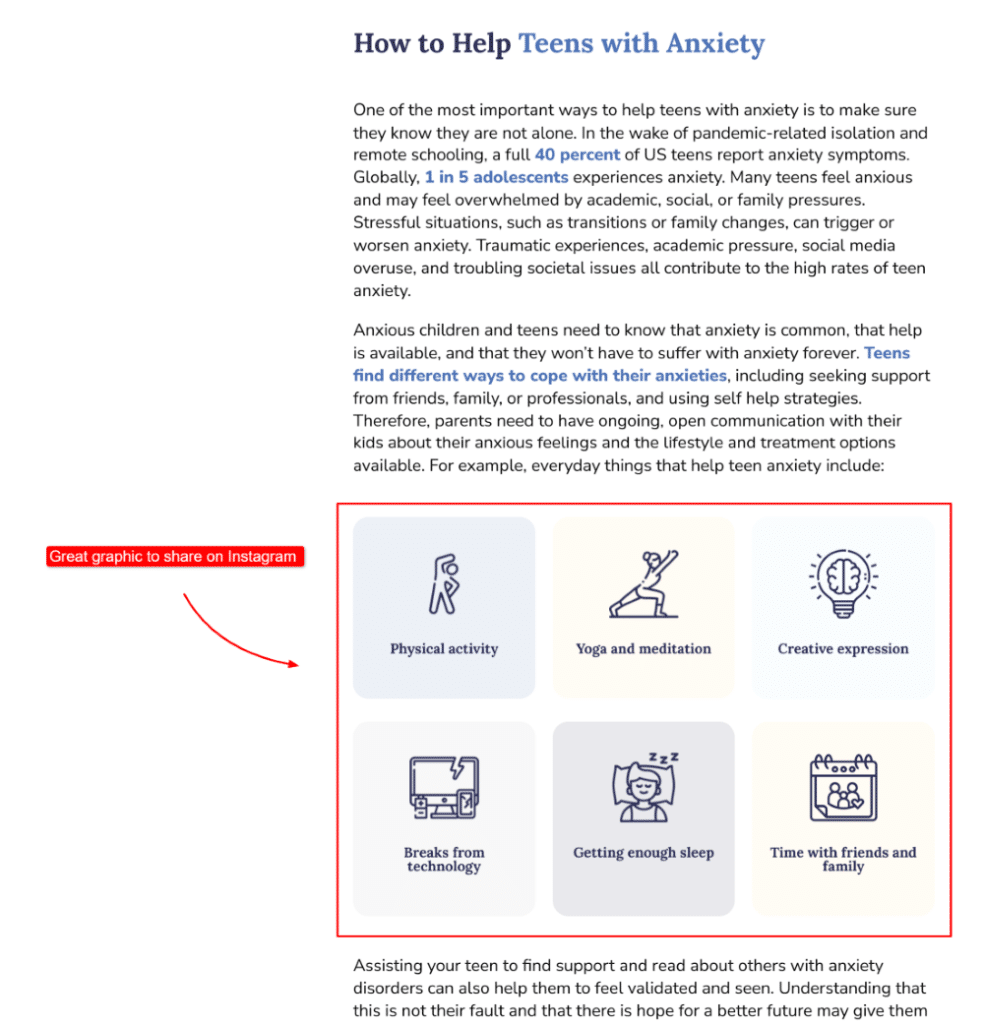
For instance, this cornerstone piece on treating anxiety in teenagers has a graphic that’d be perfect to share on Instagram:
Another way you can distribute content faster is by building a repeatable content system around one strong theme. We love this.
For example, a history tour company in Normandy can turn a single travel experience into endless content. They can share video episodes, photo stories, and blog posts — and repurpose the best Band of Brothers Tour Normandy locations and key moments. Each stop can become its own short video, carousel post, or snippet for different channels. 👇
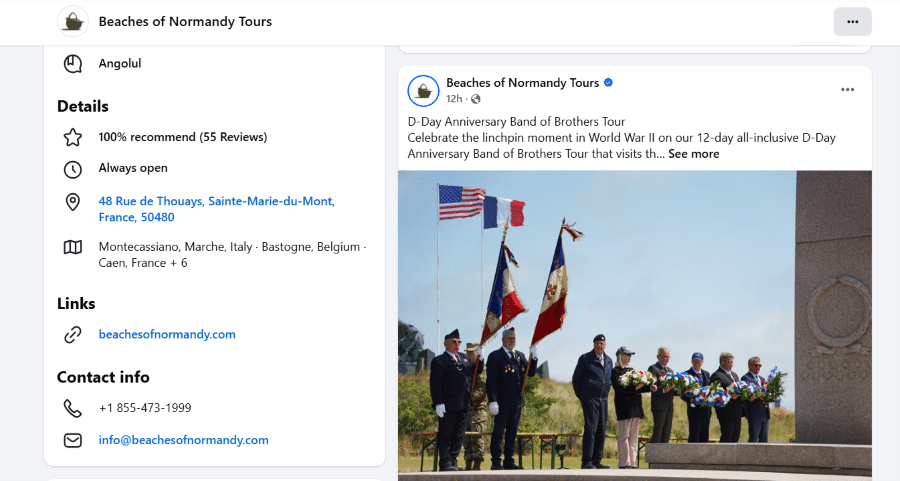
Beaches of Normandy Facebook
By planning around one theme, you get multiple pieces of content from a single source without needless extra effort.
You can also use AI generation tools to respin your content assets for you, but make sure to edit all outputs in your brand voice and look.
Stop treating publishing as the finish line. Instead, create a content production workflow that includes a distribution process immediately after publishing.
Since you’ll be doing this every time you publish demand gen content, pick channels that make the most sense. I recommend high-velocity options. For B2B brands, that’d be Reddit threads, YouTube, LinkedIn, X, and industry-specific communities. For B2C brands, that’d be TikTok, Pinterest, Facebook, and Instagram. But feel free to experiment.
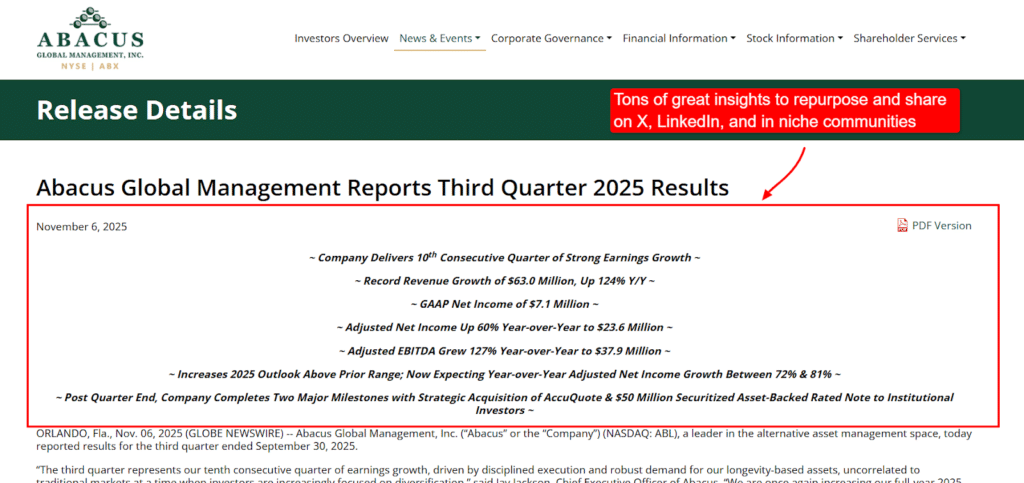
Take a look at this third-quarter results report by Abacus Global. 👇
Abacus Global
The insights highlighted in the red box are perfect B2B snippets to share on X, LinkedIn, and in niche communities where data and conversion metrics really matter. (It’s all about the humble brags!)
Here’s a quick example of how you could spin this for LinkedIn:
“Abacus Global just reported record Q3 results! Revenue jumped 124% year-over-year to $63M, and adjusted net income rose 60% to $23.6M. Adjusted EBITDA also grew 127% to $37.9M.
Here’s how that happened …”
Distribute your high-value, ungated educational content. Think whitepapers, deep-dive videos, reports, ebooks, and in-depth guides.
While most brands save these for warm sales funnel leads, users at the top of the marketing funnel may still want in-depth information to read through. Plus, this might be what eventually nudges them down the sales funnel! 🌪️
Make a distribution plan that highlights which of your monthly educational assets to share and where. Share these on LinkedIn with your thought leadership insights or in niche communities.
You can also create pages that showcase part of your gated content while keeping an opt-in button for users to access the full version. (You might’ve seen this on industry report landing pages. The publisher highlights a few choice stats and research, and keeps the rest behind a gated opt-in.)
Again, I like this because it caters to buyer personas in multiple funnel stages. Newbies can get a taste. And warm leads will likely sign up if they need the report.
Here’s an example of Gartner’s B2B marketing report page that supports the customer journey:
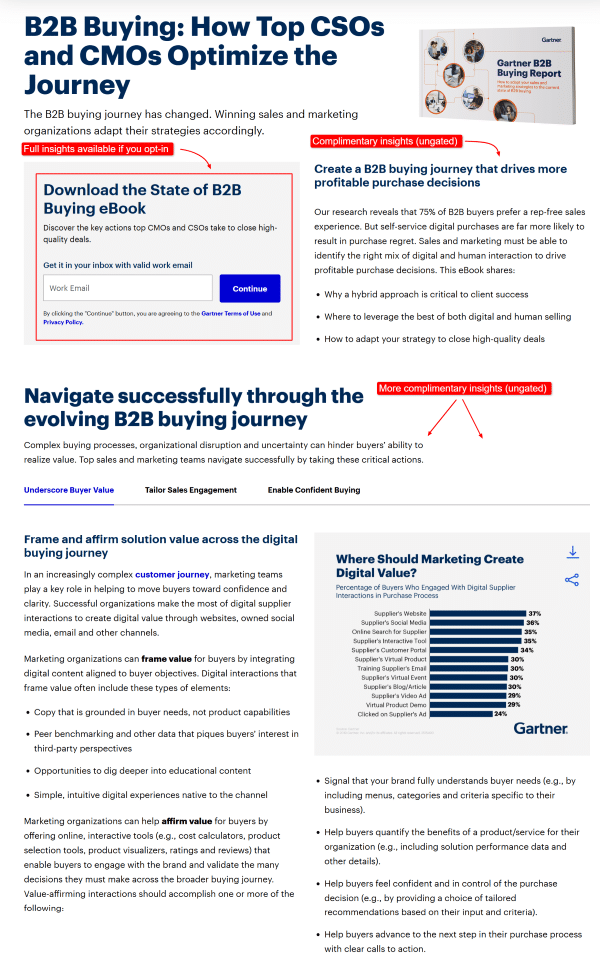
To the left, there’s an opt-in section to access the full report. To the right and further below the page, there are stats, research, and relevant advice pulled from the report. (That’s ungated.)
Speaking of reports, valuable industry reports often spread like wildfire when distributed strategically.
Consider doing a survey every month or quarter to pull data that your target audience and industry would be interested in.
Here are some solid examples:
Lock arms with professionals who can help your content spread even further.
Work with influencers, affiliates, and industry peers and have them distribute your best-performing content. You can also partner up with them to help you create reviews or user-generated content.
This can compound very quickly.
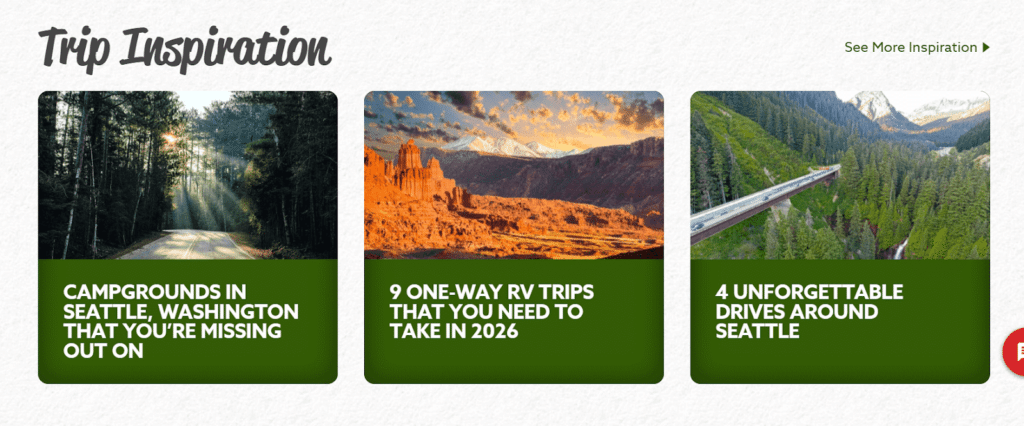
For instance, Cruise America, a leading provider of RV rental in Seattle, shares trip inspo on its site to get content creators excited to share their related travel stories. 👇
Their Instagram bio also reads:
“📍 Tag us @cruiseamericarv in your stories + posts
50+ Years Creating Road Trip Memories! 🚐💨
#BeThereNow #OutHere #CruiseAmerica”
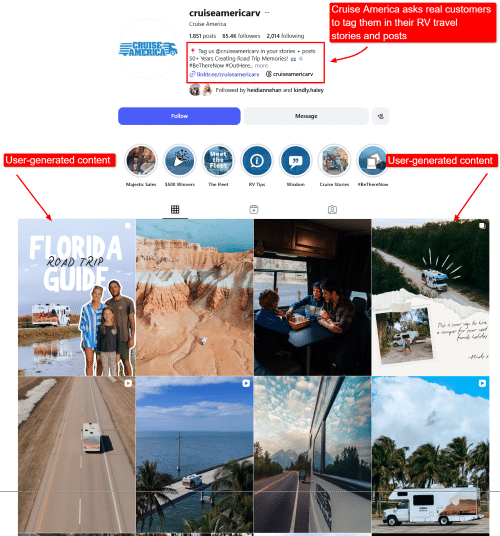
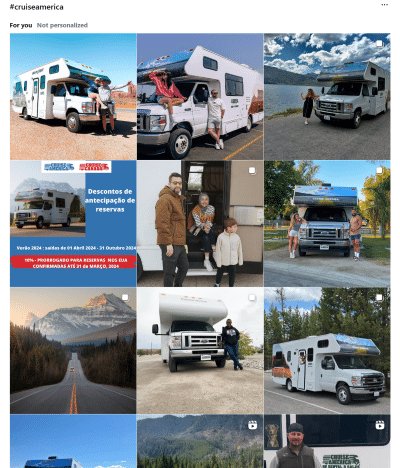
This has led to tens of thousands of followers and endless user-generated content. Seriously, I tracked the hashtags and lost count! 👇
Create a more memorable brand identity by scaling your video content. (Social algorithms love video. If you want your demand generation content to reach more people and build brand presence, video content is essential. I’ve included a super helpful checklist for this below.)
Start with one long video at a time. And then think about how to repurpose content and redistribute every piece across channels, formats, and audiences. Again, you can use an AI tool to help with this. But be careful with the outputs. They need to remain on brand.
Here’s how to scale your demand gen video content. 👇
Transform long-form content into micro-videos:

Repurpose for different formats and channels:
Leverage video across your blog and website:
Add dynamic repurposing with social proof:
Batch, schedule, and automate:
From a single long video, you could publish:
This can generate dozens of touchpoints across your audience and feed into multiple marketing funnels. Yeaaaah baby! 💪
*Pro-Tip: Always tailor each repurposed video to the platform you’re using. LinkedIn prefers thought leadership and professional insights. X thrives on quick, shareable stats. And Instagram/TikTok want visually engaging, attention-grabbing clips.
Demand generation focuses on building awareness, staying top of mind, and showing up consistently across your audience’s channels.
The key to success in 2026 is repurposing, distributing, and scaling your content so every asset reaches its full potential. From micro-videos and carousel posts to ungated reports and partner amplification, there are countless ways to turn one piece of content into dozens of touchpoints.
The top takeaway: Plan for distribution before you hit publish. Build workflows, prioritize high-velocity channels, and repurpose assets across content formats and platforms.
Psst … did you know that Wordable helps you publish content from Google Docs to WordPress in seconds? Faster publishing means faster distribution, so get on it!
When should a company start investing in demand generation?
Immediately. If you want your audience to recognize your name before competitors, start now. Demand gen works best when it starts early and compounds over time. Think of this as something you’ll do forever and ever.
Is demand generation only for big brands with big budgets?
No. Smaller teams can win with demand generation content by being focused and useful. Include clear points of view, strong education, and stay consistent.
How does demand generation support sales if it doesn’t create leads?
Personalized content for TOFU leads warms the market. Sales conversations and demand capture are easier when prospects already understand their problems and trust your brand.
How long does it take to see results from demand generation?
Longer than lead gen marketing activities — and that’s the point. Demand gen compounds and brings in website traffic and higher engagement metrics over time. The longer you do it well, the easier growth becomes.
That’s why I strongly suggest locking arms with a content creation agency that can help you scale high-quality content, like uSERP💜