


Last year, a mid-sized payment processor watched their transaction confirmation emails from their email campaign suddenly start landing in spam. Customers couldn’t verify purchases because the messages never reached subscribers’ inboxes. It took three weeks to diagnose the problem: their shared IP pool had been poisoned by another sender on the same infrastructure, damaging their IP reputation.
That’s the hidden cost of treating email delivery as an afterthought.
In FinTech, email carries everything from two-factor authentication codes to fraud alerts to regulatory disclosures. When these messages fail to reach inboxes, you’re not just annoying customers. You’re also breaking core functionality and potentially violating compliance requirements.
This guide breaks down why email deliverability matters specifically for financial services. We’ll learn what actually affects inbox placement, and how to implement solutions that work in regulated environments.
Email deliverability in FinTech measures whether your messages reach primary inboxes and maintain a strong inbox placement rate rather than spam folders or get blocked entirely. It’s not the same as “delivered” – that only means a receiving server accepted your email. Deliverability is about landing where customers actually look.
Financial services face stricter challenges than other industries. You’re handling sensitive data under regulations like GDPR and SOC 2. You’re sending time-critical messages where a 30-second delay can mean a lost customer. And you’re operating in a threat landscape. Criminals constantly impersonate financial institutions, making inbox providers hypersensitive to any suspicious signals.
Customers aren’t very forgiving about this. A study published in the International Journal on Science and Technology states that nearly 45% of banking clients say they’d leave after only two major service failures. And about 25% would leave due to poor communication.
When a password reset email arrives 10 minutes late, your customer can’t log in and starts questioning your platform’s reliability. When a fraud alert is filtered into spam, you might miss the window to prevent unauthorized transactions.
Overall, three main barriers block financial services emails:
When Gmail receives a password reset email claiming to be from your fintech platform, how does it know it’s legitimate? Three email authentication protocols provide that proof.
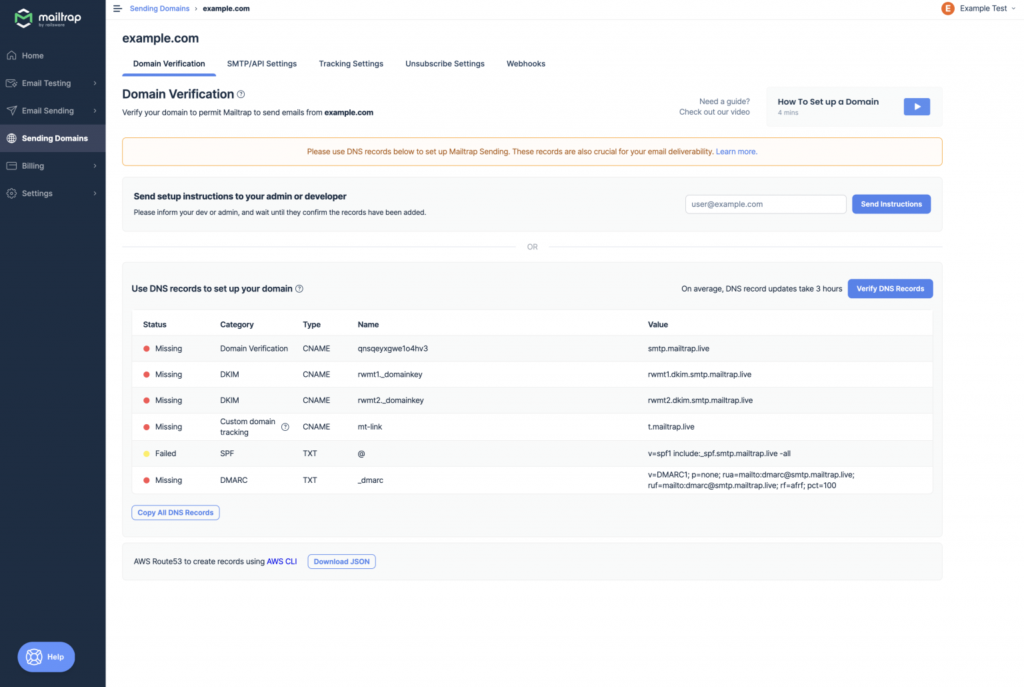
Gmail and Yahoo now require email authentication for all senders. As of February 2024, you need at least SPF or DKIM configured. If you’re sending more than 5,000 emails daily to Gmail addresses, both SPF and DKIM are mandatory, plus a DMARC record; emails without proper authentication will be rejected.
The impact is measurable immediately. If you completely authenticate emails with SPF, DKIM, and DMARC, you are 2.7 times more likely to reach the inbox (Source: Bloom!). In contrast, unauthenticated emails often get discarded. Placement rates fall quickly, sometimes dropping to just 30%-50%.
Setting these up requires access to your mail-related DNS records. Most providers, such as Mailtrap, SendGrid, or Amazon SES, provide step-by-step DNS instructions. However, SES requires significantly more technical expertise to configure correctly. Check your current setup using MXToolbox’s free testing tools. If you see failures, that’s likely hurting deliverability right now.
Start with SPF and DKIM first – these provide immediate deliverability benefits. Add DMARC only after confirming SPF and DKIM are working correctly, starting with a ‘none’ policy to monitor before enforcing.
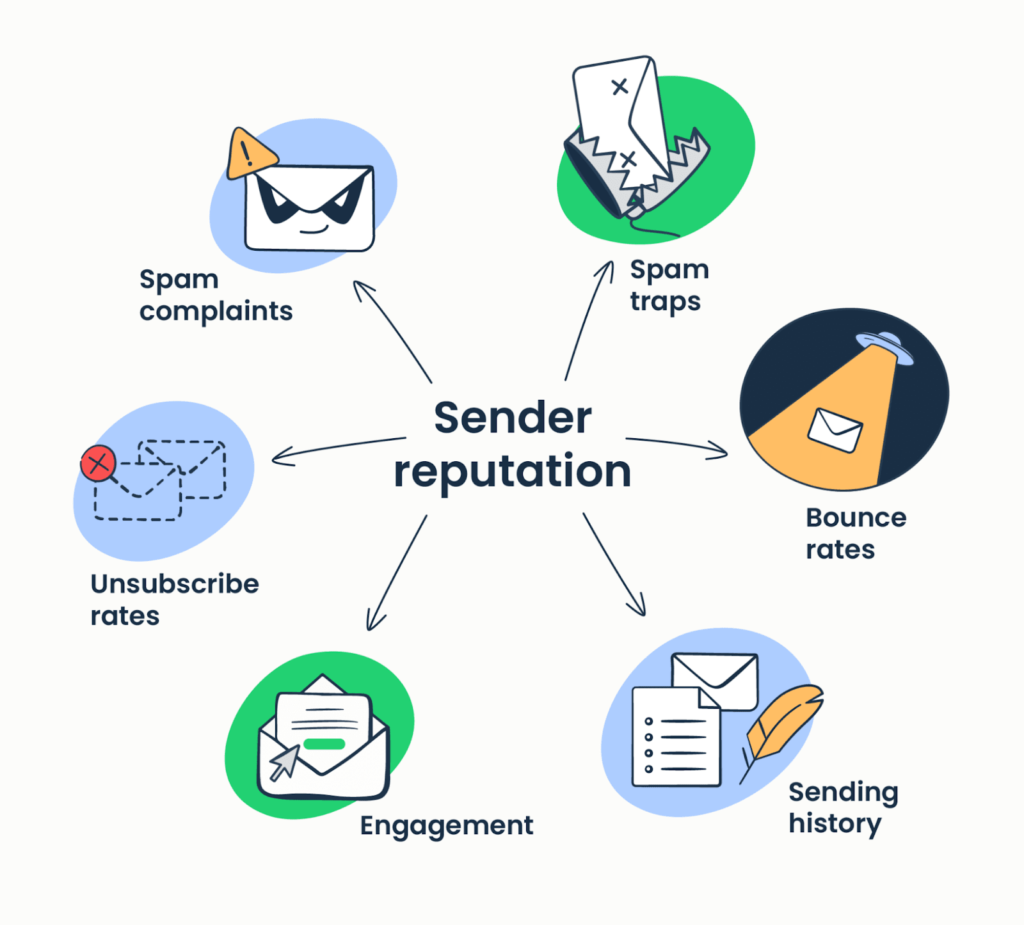
Internet Service Providers and Inbox providers track your sending behavior. Then they assign a reputation score that determines email deliverability. This score considers bounce rates, spam complaints, sending volume patterns, and user interaction.
Here’s what many senders miss: reputation actually exists in two places – your sending IP address and your domain. Even with a dedicated IP, your domain reputation matters. This means authentication (SPF, DKIM, DMARC) protects you even on shared infrastructure. It builds positive domain-level signals. These follow you regardless of which server sends your emails.
The challenge: sender reputation lives on your IP address. If you’re using shared IPs, other senders’ bad behavior can hurt you. This is what happened to the payment processor in our opening example.
Dedicated IPs give you complete control over your reputation but require careful management. You can’t just start sending 50,000 emails from a new IP – that also looks like spam. Instead, you need to “warm up” the IP by gradually increasing volume over 2-4 weeks.
Maintaining a strong reputation is tough. Major email providers enforce a strict spam complaint threshold. If more than 0.3% of your emails are marked as spam, you’re in trouble. If your bounce rate exceeds 2%, your messages start getting filtered immediately. ISPs view a high number of bounces as a clear indication that you’re using a poor-quality list.
Mailtrap automates this warm-up process on their Business and Enterprise plans, which include dedicated IPs. SendGrid and Mailgun offer similar features on their higher tiers. Amazon SES provides dedicated IPs starting around $25/month, but leaves the warm-up strategy entirely to you.
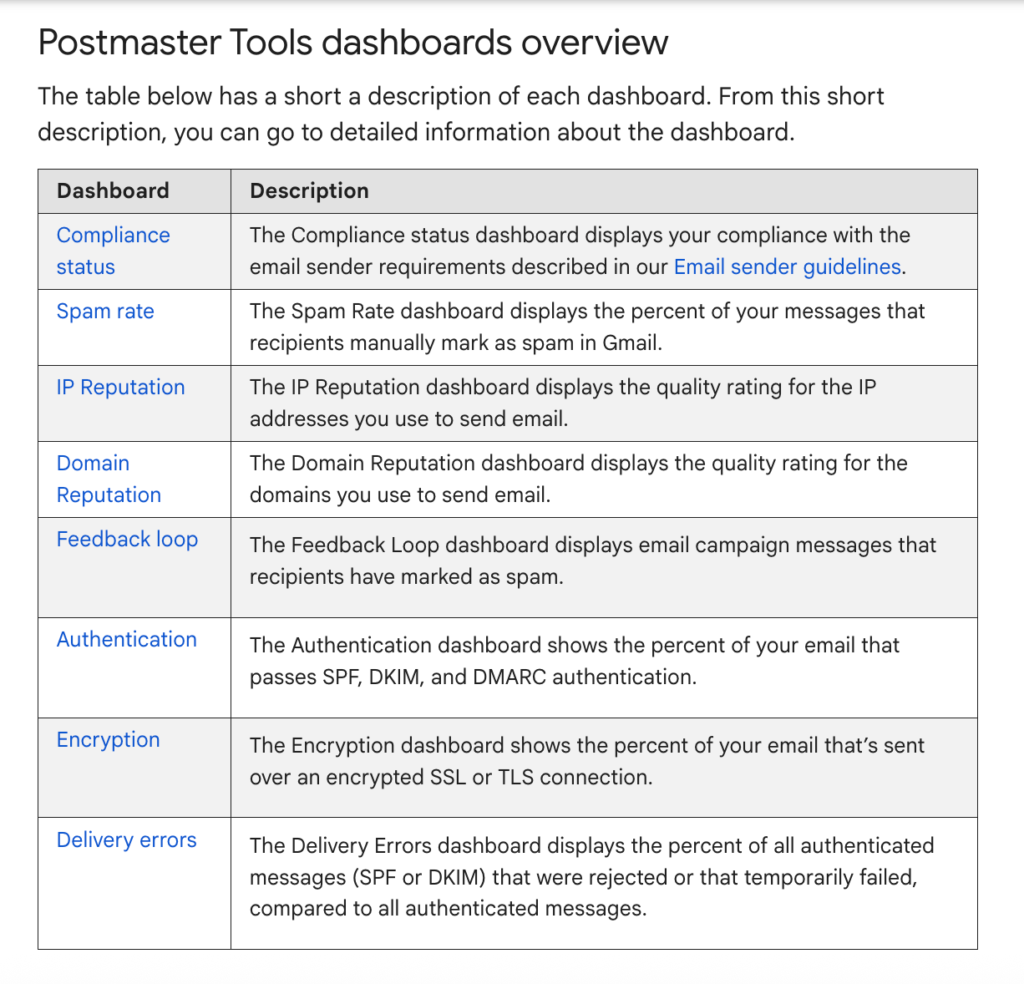
Monitor your reputation using Google Postmaster Tools (free, but only shows Gmail data) or paid services like Sender Score. Aim to keep your bounce rate below 2% and spam complaint rate under 0.1%.
If reputation drops significantly, recovery takes a few weeks of careful sending to engaged subscribers. The payment processor we mentioned earlier spent three weeks just diagnosing their problem. After that, they spent another month rebuilding trust with inbox providers. They achieved this through strategic list segmentation and consistent positive engagement signals.
Invalid email addresses kill email deliverability; anything above 2% is considered too high. When you send to addresses that don’t exist, receiving servers notice and downgrade your reputation. A 10% bounce rate essentially tells Gmail, “this sender doesn’t maintain their lists – they might be a spammer.”
Even more dangerous than invalid addresses are spam traps. These are email addresses specifically created by inbox providers to catch spammers. These look like real addresses, but they never opted into your list. Hitting spam trap signals that you’re scraping addresses, buying lists, or failing to clean your old data. For FinTech companies, this is particularly risky. Financial services already face heightened scrutiny.
Here’s what you can do to offset that:
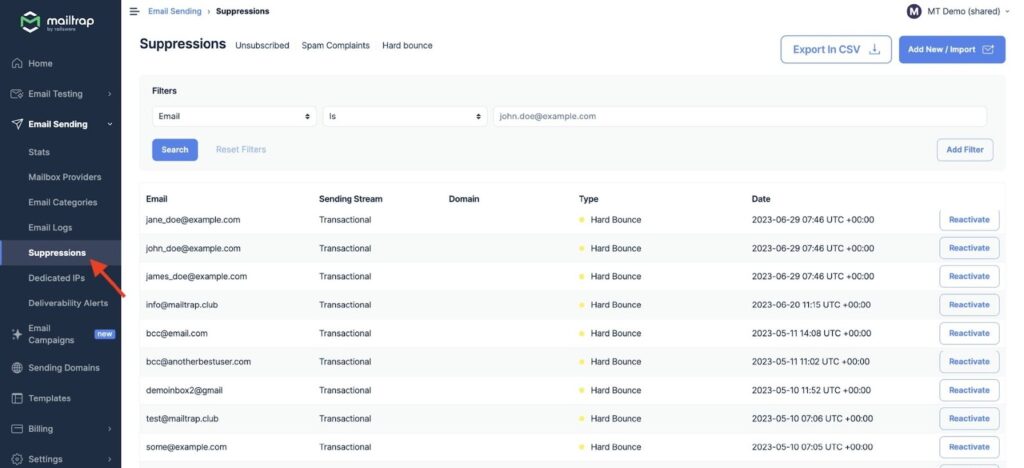
Even well-maintained lists naturally decay by 20-30% annually. People change jobs, abandon addresses, or lose interest. This is normal. What’s not acceptable: buying email lists or scraping addresses. Beyond being illegal under GDPR and CAN–SPAM, purchased lists guarantee spam trap hits and spike complaints. That can permanently damage your domain reputation.
Tools like ZeroBounce or NeverBounce can validate email lists before you send, catching typos and known spam traps at about $0.008 per verified email.
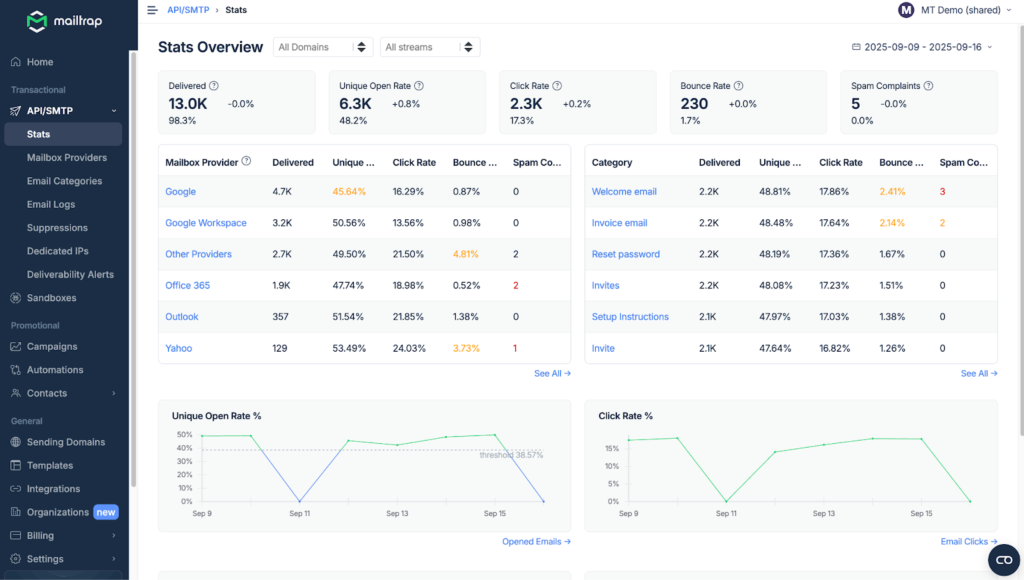
Mailtrap Email Platform offers an API and SMTP service designed for developers who need reliable delivery with deep visibility into performance.
Transactional and bulk emails use separate sending streams. Your marketing campaigns can’t damage the email deliverability of critical transactional notifications.
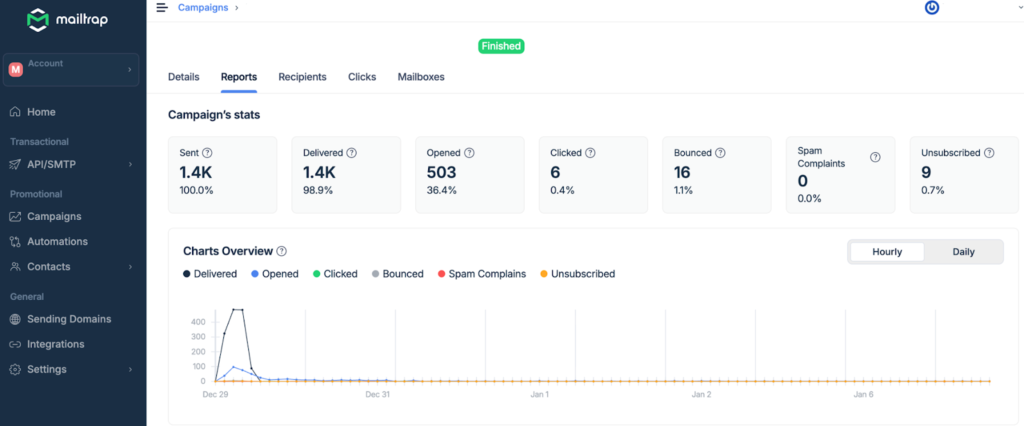
Analytics dashboards show delivery rates, bounce breakdowns, spam scores, and inbox versus spam placement. Log retention can last up to 30 days, depending on your plan.
For higher email deliverability, Mailtrap rotates DKIM keys monthly and enforces TLS encryption on all transmissions. They’re GDPR-compliant, ISO/IEC 27001:2022-certified, and working toward SOC 2 compliance. Pricing starts at $15/month for 10,000 emails and scales with volume.
Where Mailtrap might not fit: If you’re already deeply integrated into AWS infrastructure with experienced DevOps resources, Amazon SES’s $0.10 per 1,000 emails becomes more economical at very high volumes (above 500K/month), though you’ll build your own analytics.
As indicated a couple of times before, when authentication codes don’t arrive, customers get locked out of accounts. Support teams resolve an influx of tickets instead of working on higher-value problems. Some frustrated customers leave for competitors with “more reliable” platforms, which may result in a barrage of comments across your social media.
To add fuel to the fire, FinTech marketing email performance collapses when deliverability drops. Your product announcement reaches 60% of your list, rather than 95%. Revenue attribution becomes impossible because analytics show low engagement that doesn’t reflect content quality – it reflects emails that never arrived.
Deliverability problems directly impact ROI. If a third of your emails never reach inboxes, you’re effectively wasting a third of your email marketing budget with zero return.
Regulatory risk is harder to quantify but potentially expensive. FINRA requires timely communication of account changes. GDPR mandates prompt data breach notifications. If your emails consistently fail to reach customers, can you prove you met notification requirements? Some regulators are starting to ask for email deliverability metrics as part of compliance audits.
Now, I don’t mean to scare you or anything, but you should be well aware of the risks involved. And this article is here to help you mitigate those risks. So, take a breath and read on about the preemptive measures.
You don’t have to overhaul your entire email system to reach people’s inboxes instead of their spam folders. The key is staying on top of the technical basics every day.
Here’s what you should do: review your sender reputation, automate list cleaning, and choose the right tools to ensure your emails actually reach your customers.
Log in to your DNS provider and add the SPF, DKIM, and DMARC records your email provider specifies. Mailtrap provides these in your account dashboard under “Sending Domains.” Copy the records exactly – one typo breaks everything. Use MXToolbox to verify they’re working within 24 hours. This single change typically improves deliverability by 10-15 percentage points.
Sign up for Google Postmaster Tools (free) and add your sending domain. Check your reputation score – it should be “High” or “Medium.” If it’s “Low,” investigate your bounce and complaint rates immediately.
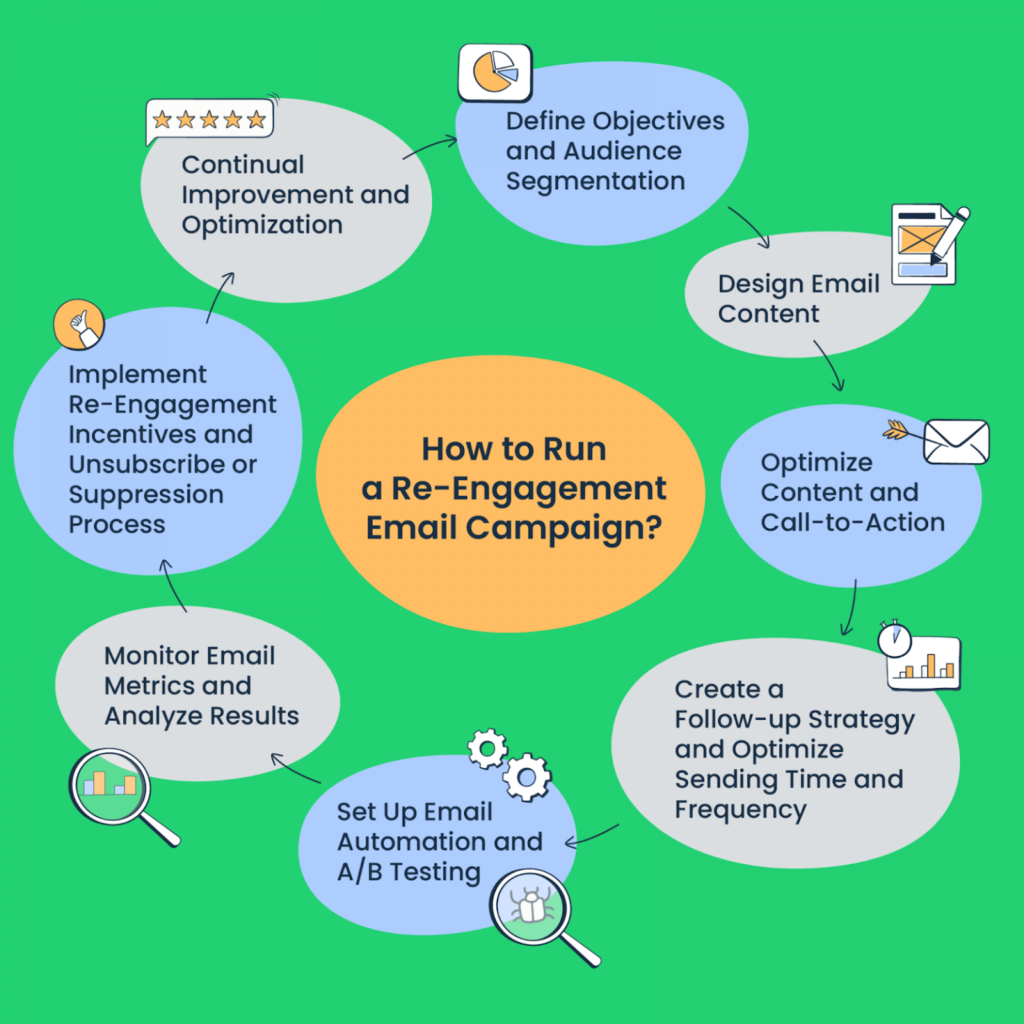
Export your email list and filter for addresses that have had no opens or clicks in the last 90 days. Send them a re-engagement sequence: “We noticed you haven’t opened our emails – here’s what you’ve missed.” Wait one week. Still no engagement? Remove them. Most FinTech companies see email deliverability improve 5-10 percentage points after aggressive list cleaning.
Track delivery rate (should be above 95%, ideally 98%+), bounce rate (keep below 2%), spam complaint rate (must stay under 0.1%), and open rate relative to your baseline. Sudden drops indicate deliverability problems requiring immediate investigation.
When evaluating SMTP providers for fintech, factors like deliverability consistency, compliance support, and infrastructure control should take priority over cost alone. If you’re a startup sending under 50K emails monthly with limited DevOps resources, Mailtrap’s managed infrastructure makes sense. If you’re at scale with technical teams, Amazon SES’s economics become compelling despite the need for more hands-on management. Don’t pick based on brand name – pick based on your specific sending volume, technical capability, and budget constraints.
Email infrastructure isn’t glamorous and may seem overly technical, but it determines whether your FinTech platform feels reliable or broken to customers.
And yes, deliverability requires ongoing attention but isn’t mysterious. At the end of the day, you just need to do the following and stick to it:
Check your email deliverability metrics today. If you don’t know your delivery rate or bounce rate, you’re already behind. Most problems are fixable with technical changes you can implement this week.
Looking for more helpful resources on email marketing and FinTech? Head on to the Wordable blog to deepen your knowledge of these topics.