


Marketing is a high-pressure world that requires good managers to help teams feel supported. It’s performance-driven, fast, and cross-functional. You’re dealing with multiple campaigns, performance targets, and shifting priorities. In that environment, the difference between burnout and scalable growth often comes down to communication quality.
Unfortunately, many leaders treat one-on-one meetings like a simple status update. They let project discussions crowd out real professional development.
When you only talk about deadlines, you miss the person behind the work.
Effective one-on-one meetings are both an art and a science.
The science lies in structure and repeatability.
The art lies in the empathy and safety you build with your direct report.
In this guide, you’ll learn how to turn these sessions into your most powerful management tool. You’ll see how they drive employee engagement, stop churn, and boost performance. We’ll also look at ways to make sure tactical work doesn’t eat your calendar during the next check-in.
Highlights
Let’s be honest. Most leaders don’t intentionally misuse one-on-one meetings. They’re just busy. There’s always another launch, another report, or another fire to put out.
So the meeting becomes a quick checkpoint.
“Are we on track?”
“Did the client approve?”
“Where are we with Project X?”
But that’s not leadership; effective leaders engage with their team members. That’s actually traffic control.
If you use this time only to review tasks, you’re diminishing what should be strategic. You can use a content collaboration tool like Slack to ask for status updates. You can also check your analytics dashboards.
A one-on-one conversation is too valuable to waste on information you could skim in two minutes; use it to build trust.
And this is where mindset matters.
Steven Rogelberg, an industrial and organizational psychologist, has studied meetings for years. In his 2006 study, he explains that perceived meeting effectiveness has a strong, direct relationship with job attitudes and well-being.
In plain terms, when people believe a meeting was useful, they feel better about their jobs. When they see it as a waste of time, their engagement drops, affecting overall productivity.
If you walk into a one-on-one trying to “manage” someone, they’ll feel it. Even if you think you’re being subtle, employees feel the impact of your communication style.
But when you walk in asking, “How can I support you?” the tone for the meeting shifts. And the conversation opens up, allowing team members to express their thoughts and ask the questions they want to ask.
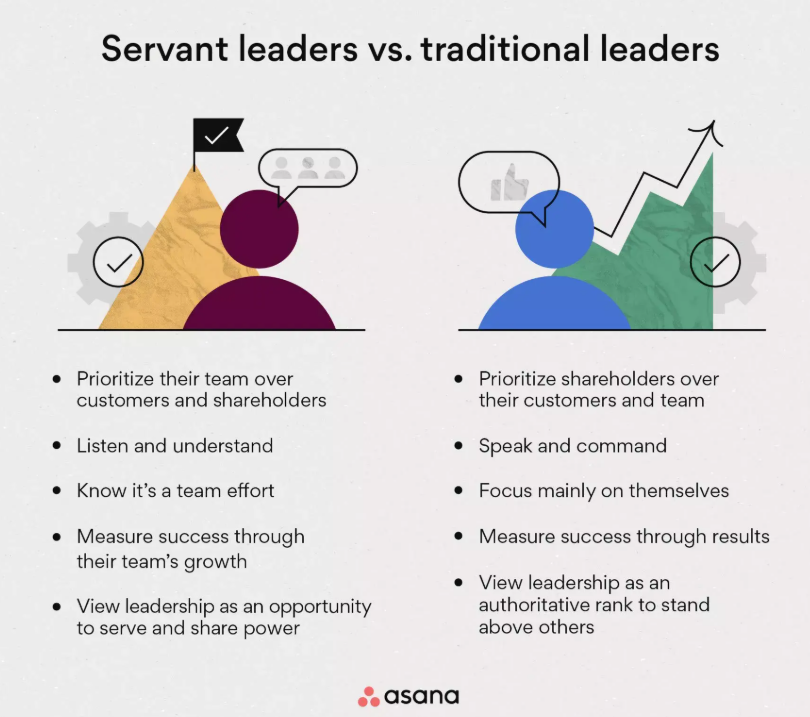
This is servant leadership. This concept was introduced by Robert K. Greenleaf. You ask better questions and listen to your employees. The goal is to support others’ growth and well-being.
Most leaders think about ROI in numbers.
But there’s another kind of return that doesn’t show up in a dashboard right away.
A high-quality one-to-one meeting helps protect your team before problems escalate. It gives you early signals that should prompt you to ask key meeting questions. For example, you might notice tension between departments before it turns into a bigger issue.
By the time burnout appears in performance metrics, it’s already been building for months.
This is the return most leaders miss.
You’re not just aligning campaigns with strategy. You’re aligning them with human capacity.
Don’t just ask “Should we launch this?”
But ask, “Can we actually execute this well?”
Feedback doesn’t work without trust.
You can have the perfect script. The perfect framework for facilitating two-way conversations. And the right data. None of this matters if your direct report feels tense the moment the meeting starts.
When someone feels threatened, their brain shifts into defense mode. They stop thinking about growth and start thinking about self-protection, which can create roadblocks for team members. In that state, advice doesn’t land.
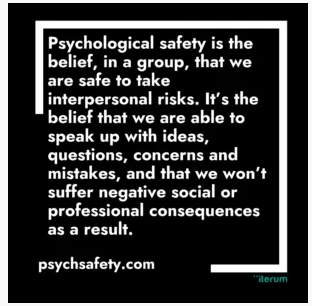
That’s where psychological safety comes in. It means employees can speak openly without fear of embarrassment or punishment.
In marketing, this is critical for improving employee productivity. Creative work requires exposure. You’re asking people to share ideas that might flop. To test angles that might fail, it’s important to have open conversations during check-ins. If they worry about being criticized personally, they’ll stick to safe, predictable work.
And safe ideas rarely drive results.
Safety shows up in subtle ways.
People notice these things.
When managing a remote team, it’s even easier to misread signals. For instance, a distracted glance can feel like disapproval or signal that you’re disinterested in what the team is discussing.
Make sure to be fully present and ask thoughtful follow-ups.
When people feel secure, they think clearly. And that’s when feedback turns into real improvement.
Great 1-on-1 meetings need planning.
You shouldn’t walk into the room thinking, “So… what do we need to cover?” That uncertainty sets the wrong tone.
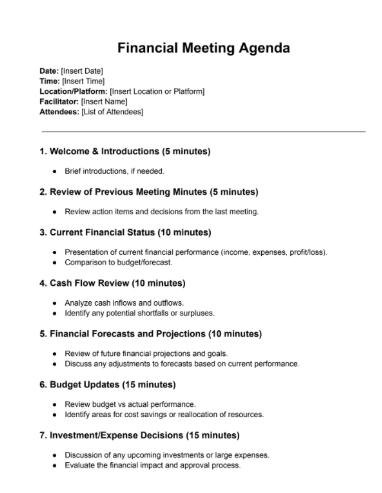
A shared agenda doc changes that. It makes the meeting feel real.
Keep a Google Doc that both you and the attendees can update during the week. Add wins and blockers. Also, add topics that feel too small for Slack but too important to forget. Over time, that document becomes a record of growth and of pressure points inside the team.
Structure helps the conversation breathe.
Start with them. Let the first 10 minutes focus on their priorities and blockers. Ask what’s slowing them down and what feels unclear.
Listen more than you speak here.
Then shift to alignment for the next 10 minutes.
For the final 10 minutes, talk about career development and long-term goals. What skills do they want to build next?
This rhythm keeps the meeting balanced. It prevents it from turning into either a therapy session or a status report.
Never end a meeting without clear next steps. Write down the action items immediately.
You can also let an AI note taker for in person meetings handle writing automatically, so you stay fully present in the conversation instead of splitting your attention between listening and typing.
How often you meet depends on the role. For most, weekly is best.
If you wait for annual performance reviews to give feedback, you’re already behind.
Marketing moves too fast for that. Campaigns shift, and priorities change, but managers and employees must adapt together.
Small mistakes can snowball if not addressed early.
Feedback needs to happen in real time.
Small adjustments keep performance stable and confidence intact.
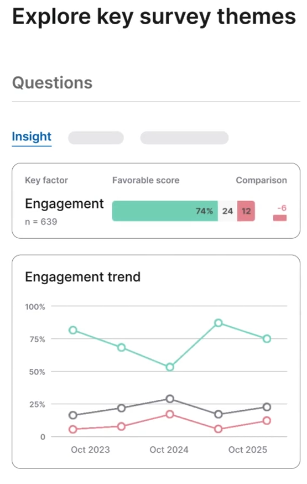
You can use performance management tools like Culture Amp. It can surface trends and collect data. But it can’t replace a real conversation. When there’s a performance problem, you have to address it directly, without damaging trust.
The Situation-Behavior-Impact (SBI) model is a great tool for marketing and can help frame questions to ask employees. It keeps feedback clear and grounded.
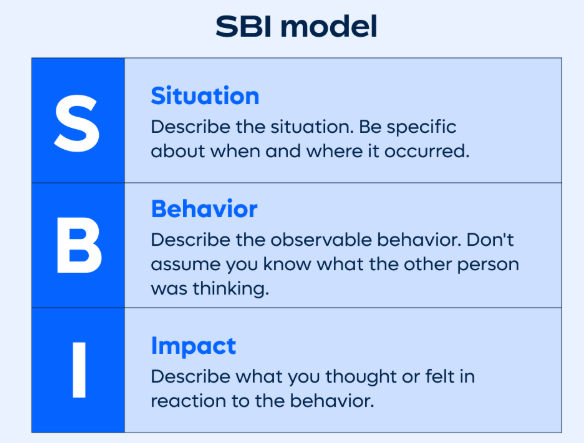
Step 1: Start with the situation. Be specific. —> “During the Project X launch on Tuesday…”
Step 2: Then describe the behavior. —> “…the ad copy wasn’t delivered by the agreed deadline.”
Step 3: Explain the impact. —> “…which meant the design team had to stay late to finish the work.”
Notice what’s missing? There’s no judgment. We’re only mentioning facts. The conversation is clear and not defensive. It keeps the focus on actions.
And remember: When feedback feels factual instead of personal, people are far less likely to get defensive.
Feedback shouldn’t just be about the past.
After you address what happened, ask, “What would make this easier next time?”
You might say, “Do you have questions about any other topics like project timelines?” “Let’s check in 24 hours before the deadline.” Or, “How can I help you prioritize your queue better?”
Now the tone changes. It’s not about blame. But you’re working with the meeting attendees to improve something, creating a two-way dialogue.
And this approach works. Gallup found that 80% of employees who report receiving meaningful feedback in the past week describe themselves as fully engaged.
When you focus on growth instead of punishment, people stay engaged. They see feedback as a tool, not a threat.
Not every one-on-one should center on what went wrong; it can also focus on constructive questions to ask for improvement.
Performance grows faster when strengths are reinforced. If someone handles conflict well, say it. If they lead a client call calmly, point it out.
You could say something like, “You kept that cross-team discussion steady. That prevented escalation.”
There’s also a bigger leadership move here to become a better manager. Praising in public, when done thoughtfully, signals what the team should value. It tells everyone which behaviors matter. But private recognition during a one-on-one often goes deeper, helping team members feel appreciated. It feels specific and intentional.
Then go further. “Let’s find ways for you to use that skill more often.”
When people feel seen beyond metrics, their confidence rises. And confident marketers take smarter risks.
It is easy to get stuck in the weeds and forget to focus on development opportunities. But your job is to help your remote employees see the big picture. You have to move from “Did you finish the task?” to “What skills are you building today?”
Every direct report should have development goals. These should be part of every conversation. Ask them where they want to grow. Do they want to move from a specialist to a manager? Or maybe a director?
Map out their growth and development path together. If they want to learn SEO, give them a project that lets them practice. Encourage autonomous help-seeking so they feel empowered to find their own answers.
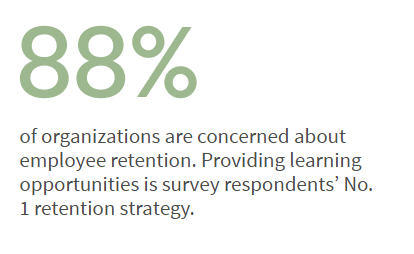
When you link weekly tasks to career development, work feels meaningful, and people don’t leave jobs where they’re constantly growing. In fact, 88% of organizations say they’re concerned about retaining employees. Offering learning opportunities ranks as their top strategy for retaining talent, according to LinkedIn’s 2025 Workplace Learning Report.
Even strong leaders sometimes get this wrong.
The most damaging mistake isn’t saying the wrong thing. It’s repeatedly moving or skipping 1-on-1 meetings. This sends a quiet message: this isn’t important. Over time, your team starts to believe they aren’t important either.
Another common trap is talking too much. When you dominate the conversation, you miss what’s really going on. You can’t uncover performance challenges if there’s no space for honesty.
Avoiding tough conversations is another slow leak. If there’s a performance problem, address it early. Waiting doesn’t make it kinder. Actually, small issues grow when no one names them.
And then there’s follow-through.
If you don’t write down action items, they fade. If you forget what you promised, credibility slips. Leadership is all about consistency.
One-on-one meetings help managers build trust with team members. But they only work when people believe what happens in them actually matters.
As your team grows, you can’t attend every 1:1 meeting anymore. And, you can’t personally coach every manager.
So the question is: How do you scale quality?
Start by training your managers how to be good managers who can facilitate effective check-ins. Not just on process, but on judgment. If you have a content team, they need to know how to provide clear feedback to writers.
Structure helps here. Share meeting templates to create consistency. These serve as guardrails so no one forgets what’s important.
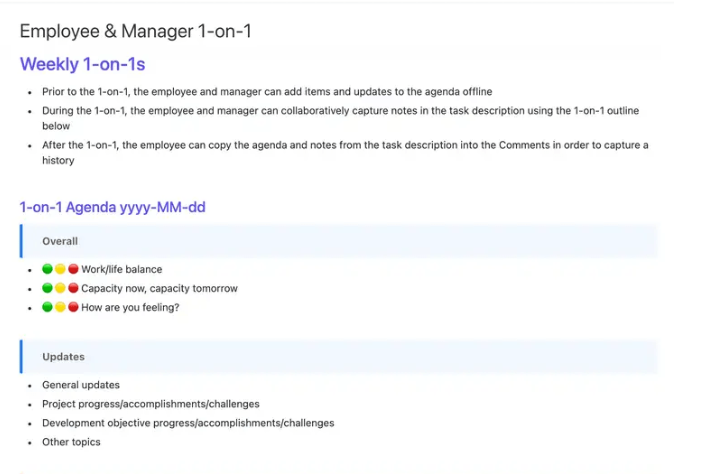
Look for recurring themes across the whole team to identify best practices. This creates an organization-wide impact. If everyone is struggling with the same tool, it’s an ops issue, not a people issue. Use these insights to drive a better management strategy.
Align these individual talks with your quarterly OKRs. This ensures that personal and company growth move in the same direction. Consistency is the key to preventing leadership gaps as you scale and to ensure that everyone has development opportunities.
You might even set up facilitation groups for your managers. This allows them to share what’s working in their own one-on-ones. Learning from one another is the fastest way to improve the entire department and help everyone feel supported.
Great marketing leaders build people, not just pipelines, fostering a culture where employees feel valued. When you take one-on-one meetings seriously, you see higher engagement and lower churn. You build a much stronger support network for the entire team.
These meetings are your chance to build a legacy. They turn a group of individuals into a high-performing unit. You stop being a boss and start being a mentor who drives real results. This is the best way to help your employees grow in the long term.
Want to lead smarter?Head over to the Wordable blog for more tips on how to improve employee engagement. We have tons of guides on communication and scaling your marketing ops.