


Social media content marketing is no longer about posting every day. The era of “shouting into the void” and hoping for a click is over. Algorithms are stricter now. And many brands are fighting for the same attention.
If you’re a marketer or an SEO, you know the struggle. You spend hours creating content, only for it to die in minutes. Companies that win in 2026 build distribution systems, not random posts.
This guide breaks down how you can execute and evaluate a modern social media marketing strategy that drives measurable business growth. You’ll learn how to turn your social media content into a compounding asset that feeds your entire marketing platform.
Highlights
The definition of success has changed. It’s no longer about how many social media channels you can manage at once. It’s about how well you can move a target audience through a specific journey using a digital content marketing strategy.
Today, we’ve moved away from reactive posting. This includes publishing random updates whenever something comes to mind, without a clear strategy or a long-term plan.
Modern brands treat social media as a distribution layer for their core intellectual property. This includes your research, webinars, and thought leadership.
Your content strategy should act as a structured ecosystem. For example, a single deep-dive interview shouldn’t be a standalone post. It should be the source for ten different social media marketing assets that point back to your revenue goals.
AI-driven marketing is now the standard for ideation and drafting. However, it cannot handle your differentiation. If your content creator relies solely on natural language processing to write posts, your brand will sound like everyone else.
Organic reach now requires depth. For example, a post that sparks 10 long comments is worth more than one with 1,000 likes. Strategic teams use Google Ads or platform-specific paid tools to boost these high-performing organic posts. This ensures your best marketing content reaches potential customers who haven’t yet discovered you. Building visibility consistently can also help you grow your social media audience and create more opportunities for new users to discover and engage with your content.
You might think social media is too crowded to be effective. But for companies using a smart social media plan, it remains the most powerful way to stay top of mind.
High-quality content without a distribution system gets buried. You could write the best white papers in your industry. But if no one sees them, they don’t exist. Today, platform owners reward meaningful interaction over frequency.
Think about a small software company publishing a strong case study. If they share the link once, it disappears. But if they turn it into a five-part visual content series, one insight per post, it stays visible. It shows up repeatedly where their audience already spends time.
Modern buyers rarely book a demo after one touchpoint. They observe first. They check what a brand says on social media to see if it really knows its stuff.
For example, a CTO might follow an executive on LinkedIn for six months. They see steady insights into future trends and marketing adoption. Then, by the time the CTO needs a solution, trust is already in place.
That’s why brand identity is closely tied to social presence. It’s not about visibility alone. It’s about credibility built over time.
Social media content isn’t just used for awareness. It also supports intent.
This is where demand creation comes in. Sometimes people don’t even know they have a problem yet. And a simple educational post can spark that realization.
But social also shows up when buyers are closer to a decision. This is when they’re comparing options and looking for proof.
For example, a SaaS brand might share a helpful guide about social media management. That builds curiosity. A few weeks later, they post a customer video walking through a real Google Analytics dashboard. Now the product feels real. People can see how it works. And that makes the decision easier.
Building a strategy requires more than a content calendar. It requires a deep understanding of your buyer persona and how they interact with your brand across the web.
Stop measuring “noise” and start measuring impact. Your digital marketing goals should be clear. Are you looking for brand awareness, customer retention, or lead generation?
Each goal needs a key performance indicator (KPI). For example, if your goal is lead generation, you should track how many people download your lead magnets after seeing a post. If it’s retention, look at how your current customers interact with your customer service updates on social.
Don’t try to be everywhere. Otherwise, you’ll spread your resources too thin. Focus on the social media platforms where your audience actually spends their professional time.
Platform choice should also reflect how your buyers consume content and what your team can produce consistently. If your team writes strong opinion-led posts but cannot sustain video, LinkedIn may outperform YouTube. If your product relies on demos or walkthroughs, video-first platforms may be a better fit.
Here’s how that typically plays out across major channels:
For example, a B2B company might allocate 80% of its effort to LinkedIn and 20% to a social media content calendar for YouTube. They might skip TikTok altogether if that’s the platform their audience rarely uses.
Content pillars keep your messaging consistent. They should connect directly to your sales conversations. Common pillars include industry insights, educational frameworks, and company transparency.
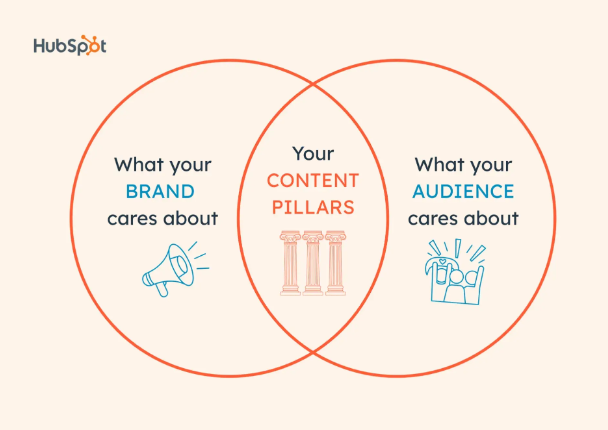
For example, if your audience manages distributed teams, one pillar could be “Managing Remote Teams.” Every post under that theme might cover communication gaps, productivity systems, or async workflows. Over time, your social media marketing strategy reinforces your authority in that space by focusing on one thing at a time.
Your social media content should meet people where they are. Someone in the awareness stage needs different info than someone in the decision stage.
For example, a brand might use influencer marketing to drive awareness, then use detailed blog posts shared on social to help with consideration.
The way we consume information has changed. We want it fast, we want it visual, and we want it to feel human.
Short-form videos reflect how people actually consume information today.
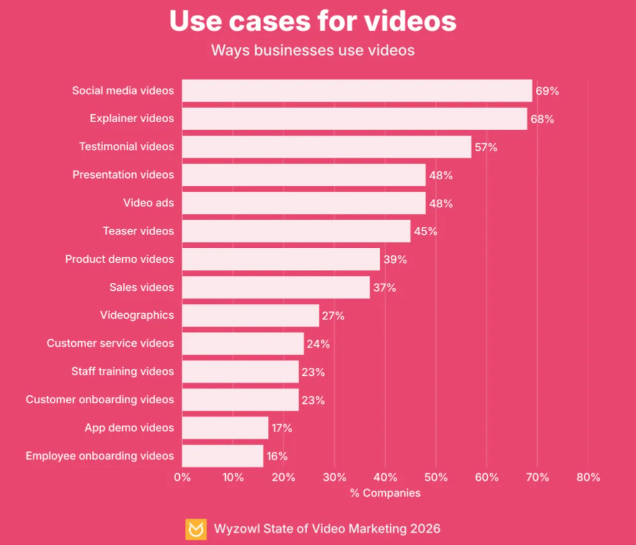
In a 2026 survey, Wyzowl found that 91% of businesses use video for marketing purposes. And 69% of marketing professionals are creating social media videos more than explainer, testimonial, or presentation videos.
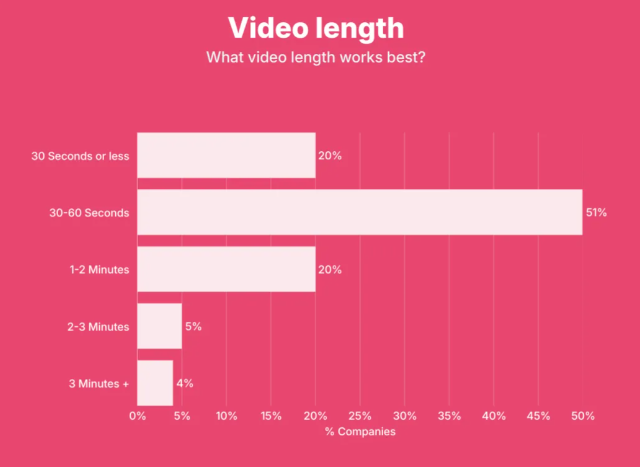
Wyzowl also discovered that 51% of people believe 30–60-second videos are the most effective. This is compared to shorter and longer videos.
In fact, in a recent National Geographic post, Gloria Mark, author of Attention Span: A Groundbreaking Way to Restore Balance, Happiness and Productivity, explained that the average human attention span has dropped to around 40 seconds. In 2003, it was 2.5 minutes.
Now consider this. A founder publishes a polished two-minute commercial about the company’s vision. It’s well-scripted and professionally shot. But it takes time to reach the core message. They also record a 45-second video sharing one lesson from a recent product launch. What worked, what failed, and what changed.
The latter performs better. It feels direct and respects the viewer’s time.
People love to learn at their own pace. Carousels and framework threads allow users to consume “mini-courses” without leaving the platform.
A well-designed carousel that breaks down digital marketing strategies can be saved and referenced later. This increases the “half-life” of your marketing content. For example, a “5-Step Framework for SEO” carousel provides immediate value and encourages shares.
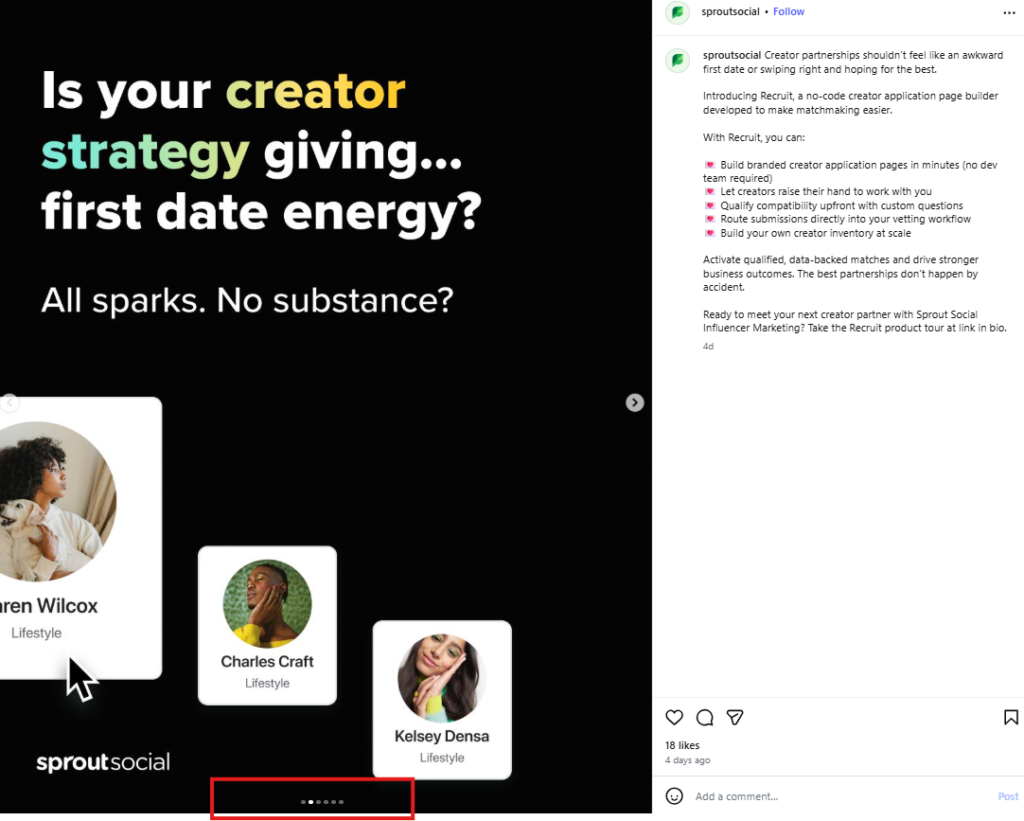
Social media works best when it actually feels social.
Use polls, Q&As, and user-generated posts. These formats invite social media users to participate, helping them feel part of the conversation.
For example, a hairstylist might create a branded hashtag so clients can share photos of their new looks. When salons repost customer content, they turn clients into collaborators. According to Goodcall, salons that repost customer posts see an 86% increase in engagement and 23% more client-generated content.
Content repurposing plays a key role in efficiency. If you’re starting from scratch every time you post, you’re losing money. Strong social media content marketing is a system that leverages the ideas you already have to extract more value.
Every long-form blog post or webinar is a goldmine. You can extract dozens of pieces of social media content from one high-quality asset.
For example, a single 2,000-word article can become:
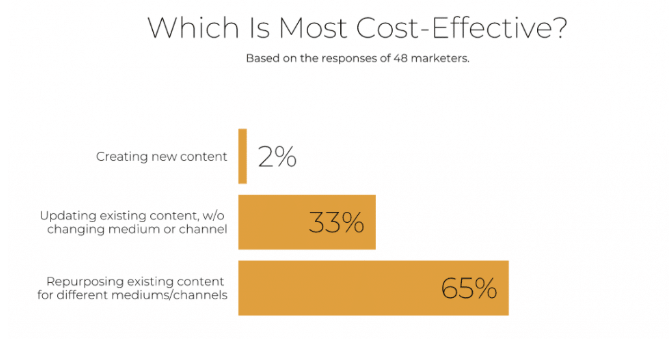
ReferralRock surveyed 48 marketers on the benefits of repurposing content and which content types you can “recycle” without sounding boring. 31% of marketers believe that repurposing content can boost content engagement. 65% also consider this method a cost-effective option if you don’t want to spend much on content marketing.
If you want practical examples, check out our guide on repurposing your blog into Instagram posts for step-by-step guidance.
Efficiency comes from having a centralized hub. You need a way to move content smoothly from draft to publish and then to distribution. If your team’s still copying and pasting between platforms, they’re wasting too much time.
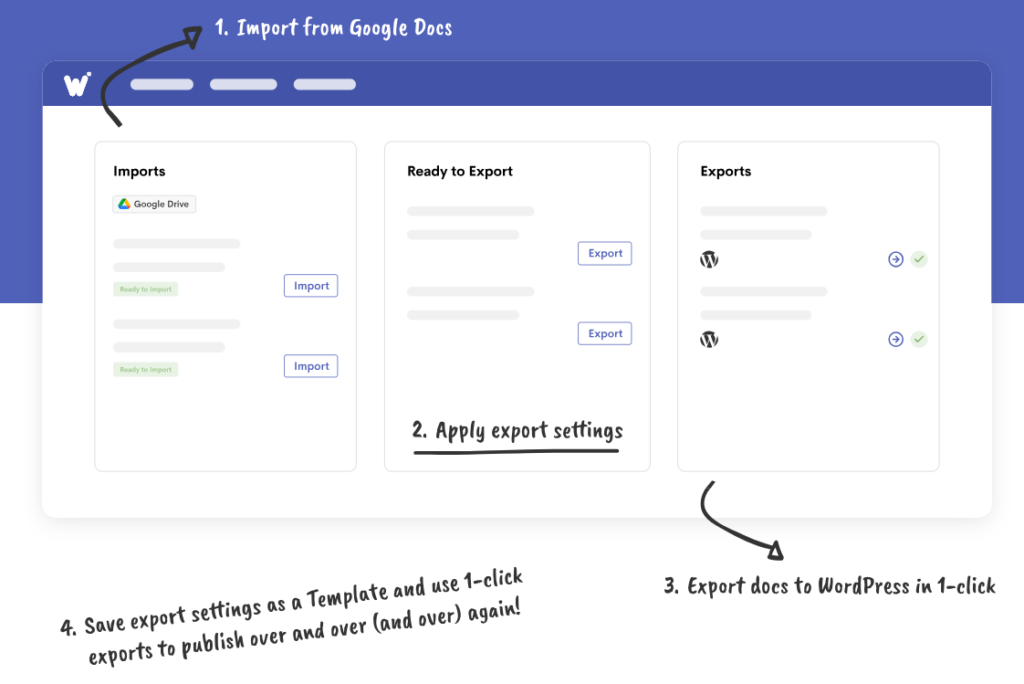
A dedicated workflow tool makes a difference. For example, using Wordable to move content from Google Docs to your site (like WordPress) and scheduling posts through a content calendar keeps everything moving. Fewer bottlenecks mean more digital marketing campaigns without adding headcount.
Repurposing extends the lifespan of your best ideas. It reinforces your authority by repeating key messages in different ways. It also reduces the creative pressure on your content creator.
Instead of needing five new ideas every week, you only need one great idea that you distribute five ways. For example, an agency might focus on one “Big Rock” piece of content per month and spend the rest of its time on social media marketing distribution. This is how you see business growth without burnout.
To see how your social media content marketing strategies are going, you need to look at the metrics.
Here’s what to track.
Even with better tools and more data, many teams still get the fundamentals wrong.
The biggest mistake is weak positioning. If your content talks about everything, it stands for nothing. Your audience should understand what problem you solve within seconds of visiting your profile. Clarity builds trust.
Another issue is over-relying on generative AI. AI writing tools are great. But if you let them do all the thinking, you lose your original insight. People can smell “AI-written” content from a mile away.
And finally, many teams hit “publish” on a post and never look at it again. Strong content should be redistributed, reshared, and reframed. Visibility compounds only when the distribution is consistent.
Social media content marketing rewards systems, not volume. The brands that win build something steady. Something that keeps working even when they’re offline.
The teams that get results do not treat social as a separate channel. They build repeatable workflows and distribution systems that compound over time.
When you treat social media marketing as a distribution engine, results compound. By focusing on repurposing, workflow efficiency, and genuine trust, you can turn your feed into a revenue-generating machine.
The real advantage isn’t posting more. It’s publishing smarter.
If publishing and formatting are slowing your team down, give Wordable a try. It helps you move your draft to your favorite CMS faster. No manual formatting involved (which saves a lot of time!). This gives you more time to focus on your strategy.