


Traditional finance relies on centralized systems, while blockchain introduces a decentralized model for recording and transferring value. It changes how money moves, how records are shared, and how trust is built across the financial sector.
In this guide, we explain the core components of blockchain in finance. Then we go deeper into topics like distributed ledger technology, smart contracts, and the shifting market infrastructure.
Highlights
Blockchain in finance is a shared, tamper-evident record of money movements and related events.
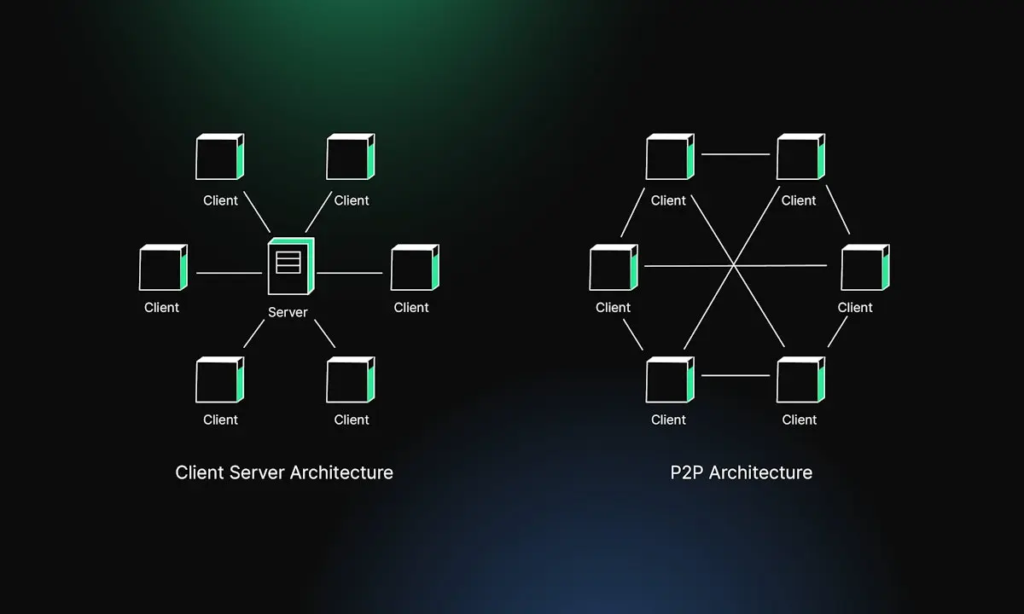
Instead of one central database, the system copies the same record across many computers, called nodes, in a peer-to-peer (P2P) network.
Every node sees the same data, so no single party can secretly alter the history. This transparency builds trust and speeds up reconciliation across institutions, which is why many organizations now rely on advanced DeFi development services to build secure and scalable financial systems.
Transactions are grouped into blocks. Hashing creates a unique fingerprint for each block and links them in order. A cryptographic signature proves who sent a transaction, and a Merkle tree lets systems verify many transactions with just a small proof. Together, these cryptographic methods make edits easy to spot and very hard to fake.
Additionally, a consensus mechanism decides which transactions are valid before the network adds the block. In public blockchains, Proof of Work (PoW) uses computing power to secure the network. Proof of Stake (PoS) relies on validators who lock up value, called a stake, to keep the system fair and efficient.
In enterprise settings, Byzantine Fault Tolerance (BFT) helps trusted participants reach agreement quickly, even if some nodes fail or behave dishonestly.
When a block reaches finality, the network treats its entries as permanent and extremely difficult to reverse.
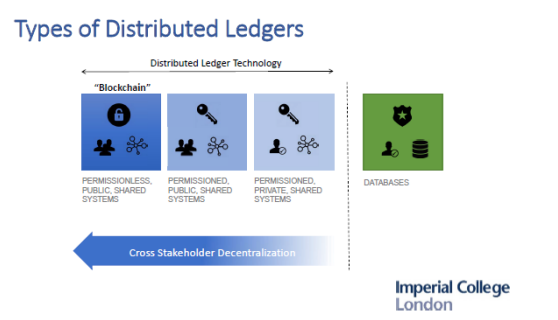
Permissionless blockchains let anyone participate. On the other hand, permissioned systems restrict membership to known entities.
Governance defines who can read, who can write, how keys are managed, and how software changes roll out. Designs can protect privacy by limiting what is stored on the chain and by using techniques that reveal only what is needed.
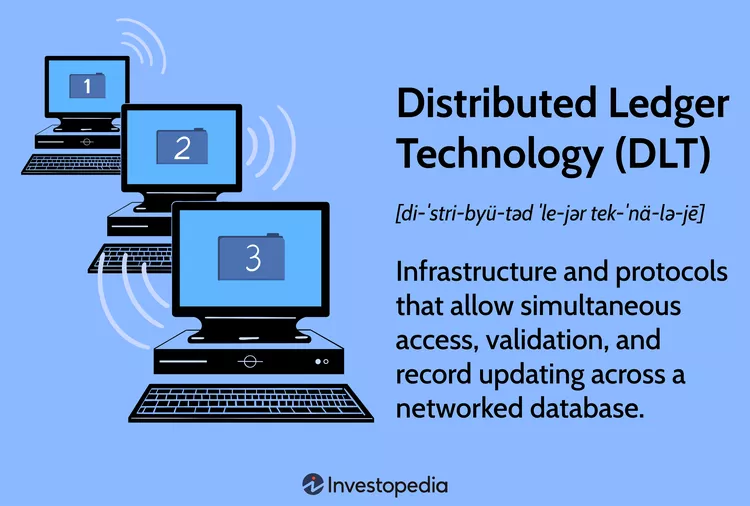
In a distributed ledger, each node keeps a copy of the same shared record. When a transaction enters the system, nodes verify it, reach consensus, and update their records. Everyone sees the same result.
This shared state lowers reconciliation time and supports automated settlements. Banks and financial institutions experience fewer breaks and faster closing cycles, freeing up time and liquidity.
Smart contracts are programs that automatically execute predefined actions when specific rules are met—no manual steps, intermediaries, or waiting.
ERC-20 tokens follow a standard that allows wallets and exchanges to handle assets consistently. Stablecoins and tokenized fiat link digital assets to currencies like the dollar or euro, keeping prices steady and practical for everyday payments.
DApps, or decentralized applications, use these contracts, supported by smart contract development solutions, to simplify processes such as settlements or claims, cutting costs and reducing human error.
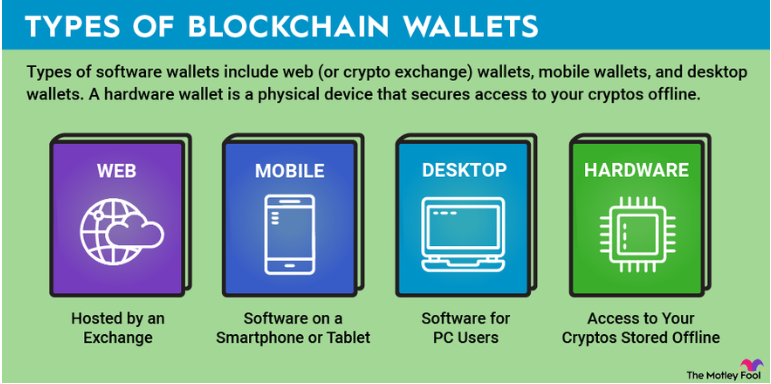
A blockchain wallet is a digital tool that stores your cryptographic keys. Your public key works like an address where others can send funds. But your private key is what you use to sign and approve transactions.
Together, they allow users to send and receive digital assets without relying on a traditional bank.
Digital identity sits alongside your wallet. It can prove facts about you, like your age, citizenship, or verification status, without revealing personal details. This makes processes like Know Your Customer (KYC) faster and safer.
For example, instead of sharing a full ID, a user can show a simple proof that they are over 18. The system checks the proof but never sees the actual birth date. This approach protects privacy while still meeting compliance requirements.
The same verification logic applies to businesses, not just individuals. KYB (Know Your Business) onboarding confirms a company’s legitimacy and ownership before a firm extends credit or opens an account.
Blockchain creates the biggest impact where money, records, and trust move together.
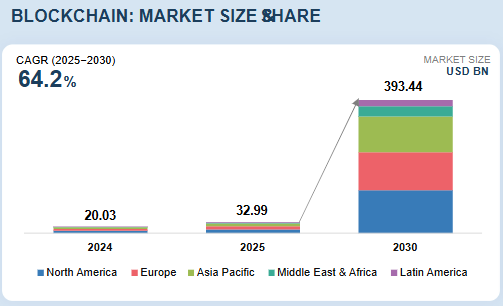
MarketsandMarkets’ forecasts project that the global blockchain technology market will grow to nearly $394 billion by 2030. This reflects steady growth driven by adoption in financial services.
This acceleration proves how banks and institutions are turning to decentralized systems to improve transparency, speed, and cost efficiency.
Payments, markets, and digital identity are leading this shift. Each use case shows how blockchain helps cut costs and improve clarity across financial operations. For a broader perspective, check guides on top fintech trends to see how blockchain fits with other innovations.
Cross-border payments often take several days and pass through multiple intermediaries.
A decentralized ledger can speed things up by cutting out unnecessary steps. Everyone on the network sees the same record, which reduces the need for repeated checks between banks. This transparency lowers fees and makes tracking payments much easier.
Blockchain also supports cryptocurrency payments, which move value directly between parties. These transactions can happen in minutes, not days, and often cost less than traditional transfers. This means faster access to funds and better predictability for cash flow.
The results are faster settlements, lower costs, and clearer updates for finance teams and customers. With the right design, privacy also improves because participants transfer less sensitive data between parties.
For example, a group of banks could use a shared ledger to net positions in small batches. That frees liquidity for other work and reduces manual errors.
Trade settlement is another area that is ready for change. Today, several disconnected systems process delivery versus payment. With blockchain, both the cash and asset sides can settle on the same programmable rail. That cuts waiting times and reduces failed trades.
This setup lowers counterparty risk, improves audit trails, and builds trust among regulators and investors. When every party can see updates in real time, there’s less room for mistakes.
Blockchain is also transforming cryptocurrency trading. Digital assets can now move instantly between traders, exchanges, and custodians. Smart contracts handle transfers and settlements automatically, removing delays that used to take hours or even days.
For example, a bond could settle with atomic settlement, meaning both sides complete together or not at all. If a rule fails, the system pauses the trade and shows why.
Trade finance depends on digital documents, guarantees, and strict rules. Distributed ledger technology (DLT) can track events, proofs, and timestamps for every shipment. Large files stay in off-chain storage, while hashes on the ledger verify authenticity.
This improves trust and reduces disputes. Funds are released faster because everyone views the same verified data. Fraud risk drops, and fewer calls or emails are needed for updates.
For example, a factoring firm could buy receivables and record proofs on-chain. Once goods arrive and match the rules, the system releases payment automatically.
Asset digitization turns fund shares or securities into digital tokens. Smart contracts enforce transfer rules. These ensure that trades only happen when conditions are met. The distributed ledger records every change so that NAVs and cap tables stay accurate.
An example of a digital token is a non-fungible token (NFT).
This approach allows fractional ownership, faster settlements, and cleaner audit trails for regulators and investors. Reports can pull directly from the chain, giving real-time visibility.
As blockchain in finance grows, it needs strict rules and a secure design to stay reliable. Governance, privacy, and regulation work together to protect users, prevent misuse, and build trust across financial systems.
Blockchain systems rely on architecture choices that protect privacy, manage access, and ensure secure data exchange.
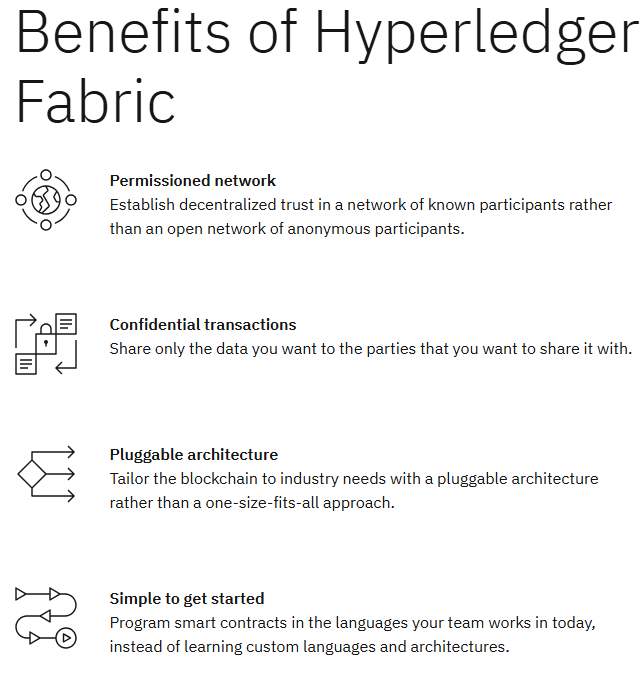
Hyperledger Fabric is one example often used in finance. It runs on a permissioned model, so only approved participants can join and share data safely. Its modular design allows businesses to set clear roles, manage identities, and control who can view or update records.
Not all information needs to live on a blockchain. Teams often store large files or private data off-chain, in external databases or cloud systems. The blockchain only keeps a small fingerprint, called a hash, to prove the data hasn’t been changed.
Oracles link external data—like stock prices or weather reports—to smart contracts. This enables them to trigger real-world actions. Blockchains also need secure bridges to enable assets and data to move between networks.
Together, these architectural choices define how blockchain in finance meets privacy, compliance, and reliability standards set by regulators and institutions.
Regulators decide how crypto assets and digital currencies fit into modern finance. But there are still gaps in federal oversight, disclosure, and custody.
In the EU, the Capital Markets Union works on shared standards. In the US, Congress and FinCEN review KYC and data privacy laws.
Global rules such as GDPR and ISO standards govern how data is stored and used.
Central banks continue expanding pilots and limited deployments of digital currencies for both retail and wholesale use. Some focus on offline access, while others focus on faster cross-border payments. These are often called central bank digital currencies (CBDCs).
Note that CBDCs are not like Bitcoin. Bitcoin is decentralized, whereas CBDCs are linked to fiat currencies.
Stablecoins also help improve speed and transparency. The European Central Bank outlined the next steps for the digital euro after completing the preparation phase in October 2025. The final decision on issuing the currency still depends on EU legislation
Attackers can steal private keys, smart contracts may contain bugs, and oracles sometimes deliver incorrect data. However, quantum computing could challenge today’s encryption.
To stay safe, teams can rotate keys, test code, and run incident drills. Clear governance and fast responses help protect trust and stability. Pairing those practices with IT service management gives teams a structured way to log incidents, route fixes, and document resolutions without losing audit history.
Marketing blockchain and fintech topics takes more than good writing. You need to turn complex ideas into content people understand and trust. Let’s see how to build credibility, engage readers, and promote your brand.
Readers care about clarity, not buzzwords. Use verified sources and explain blockchain concepts in plain English. Start with the basics, such as Bitcoin, Ethereum, smart contracts, and wallets. Once readers understand the foundations, they move into topics such as cross-border payments and trade finance. Keep the reading level steady and avoid jargon.
In fintech marketing, trust is your strongest currency. People researching finance expect accuracy and proof, especially when regulations and money are involved. Write for clarity first and let credibility grow from there.
Good financial content balances simplicity with compliance. Codeless offers a helpful guide on this approach: Content Marketing For Financial Services. It explains how to make complex financial topics clear and trustworthy. Use it as a reference to shape content that informs without overwhelming readers.
As you move from education to distribution, choose the right channels. Social platforms, newsletters, and partnerships all reach different segments of the fintech audience. Match your message and cadence to where your readers already spend time.
Once your content structure is in place, polish the experience. Strong formatting, short paragraphs, and scannable sections keep readers engaged. SEO-friendly blog posts with visuals and links help increase time on page and search visibility.
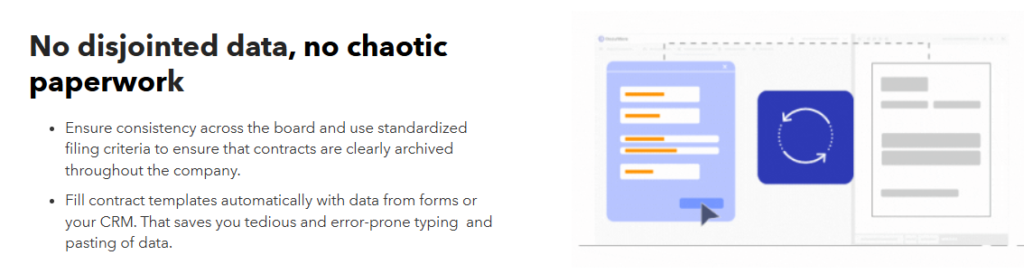
Behind the scenes, enterprise content management tools (like DocuWare) can help organize documents, audits, and records, especially if you work in regulated industries. They enable faster reviews and updates, reducing compliance risk.
If your brand aims to reach Web3 or crypto audiences, consider partnering with a blockchain marketing agency. These specialists know how to navigate blockchain communities, secure placements, and grow authority in the niche. With expert outreach and strategy, your brand can reach the right readers without the hype.
Blockchain in finance is changing how payments, settlements, and identity systems work. It builds transparency and trust while reducing the friction that slows traditional finance. With better governance and policy frameworks, it’s paving the way for faster, safer, and more efficient financial systems.
To dive deeper into similar topics, like fintech and digital innovation, visit Wordable’s blog page to explore more free resources.