


Productivity is how much you produce. Efficiency is how well you produce it. That’s the core of productivity vs efficiency. The two are not the same. And fixing them in the wrong order is a common mistake content teams make.
And yes, there IS a correct order when it comes to content operations.
You can build an incredibly efficient workflow and still publish the wrong content. 🙃
Below, you’ll learn why productivity comes before efficiency, how to diagnose which problem your content team has, and how to improve both.
Highlights
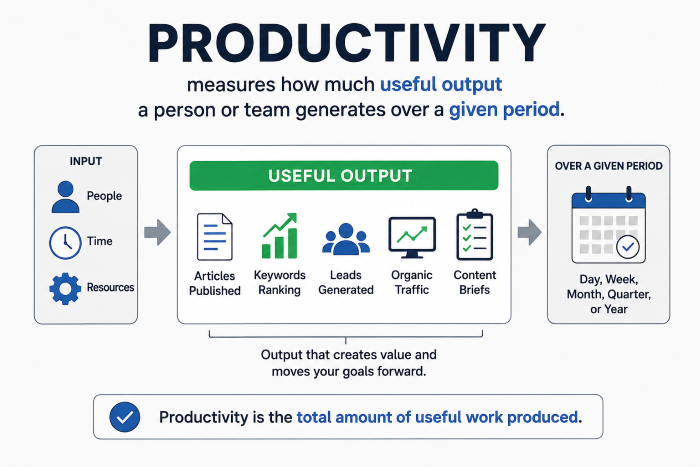
Productivity measures how much useful work a person or team creates over a set period of time.
(Image by Ioana)
For content teams, productivity metrics include:
Together, these metrics show if your team creates enough quality work. That work should support your marketing goals.
They answer questions like: Are we publishing consistently? Are we building enough content to grow our organic presence? And are those efforts producing meaningful business results?
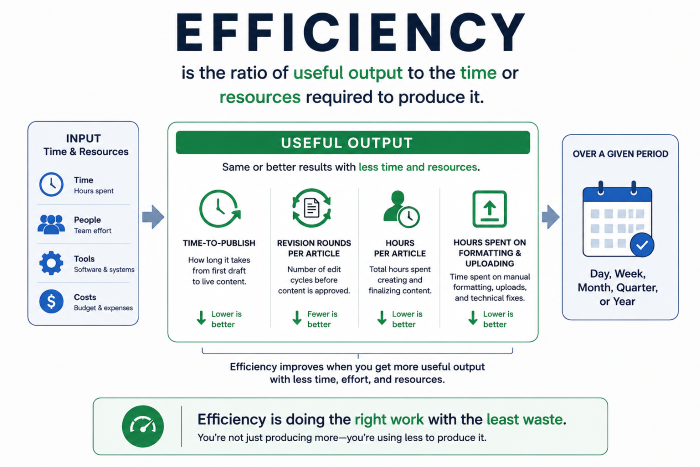
Efficiency compares useful output to the time or resources it takes to produce it. High efficiency means less effort for the same result.
(Image by Ioana)
For content teams, efficiency metrics include:
Together, these metrics show if your team uses its time and resources well.
They answer questions like: Are we publishing content faster? Are we reducing manual work? And are we getting the same or better results with less effort?
| Dimension | Productivity | Efficiency |
| Definition | Volume and quality of output produced | Output relative to time and resources used |
| Question it answers | Are we doing enough of the right things? | Are we doing those things without waste? |
| Content team example | Publishing 16 posts/month on target keywords | Publishing 16 posts/month with a 3-day review cycle |
| How to measure | Posts published, keywords ranking, leads generated | Time-to-publish, revision rounds, hours per article |
| Fix when low | Increase output volume; audit topic strategy | Reduce handoffs, manual steps, and rework |
| Wordable role | Frees time to publish more | Removes the manual publishing bottleneck |
The main difference between productivity vs. efficiency boils down to time and effort.
Productivity only measures output. It doesn’t consider how much time or effort it takes your team to produce that output.
Efficiency adds time and effort to the picture. It measures how well your team uses its time and resources to create that output.
Imagine two content teams. Team A publishes 20 articles a month. But every article takes weeks of back-and-forth edits and manual publishing. Team B publishes 10 articles a month with a smooth, streamlined workflow. Team A is more productive because it produces more output. Team B is more efficient because it produces its output with less time and effort.
➜ Neither team is ideal. The goal is to become productive first, then make that productivity more efficient.
Many content teams fall into the “efficiency trap.” They streamline their process before they publish enough useful content. The result? They get faster at doing the wrong things.
Here are three common examples:
The better approach is to build consistent, valuable output first. Once you’re publishing enough of the right content, look for ways to reduce manual work, shorten content production time, and improve your workflow.
| Symptom | Likely problem | Recommended fix |
| Publishing too infrequently; inconsistent cadence | Productivity problem | Audit topic pipeline; increase weekly output targets; reduce approval stages |
| Publishing enough but spending too many hours per post | Efficiency problem | Audit handoff steps; reduce revision rounds; automate repetitive tasks (e.g., publishing) |
| Ranking but not converting; traffic without leads | Productivity problem | Content strategy audit; reassess keyword and audience targeting |
| Fast output but high error rate or rework | Efficiency problem | Add a structured review checklist; reduce context-switching in workflow |
Not every content problem has the same solution. Before you invest in new blog tools or redesign your workflow, figure out whether you’re dealing with a productivity problem or an efficiency problem.
Once you’ve identified the symptoms, ask yourself two questions:
Your answer tells you what to fix first.
Below you’ll find specific ways you can improve content team productivity and content team efficiency.
Have you confirmed you have a productivity problem? Then focus on creating more valuable content. Leave workflow tweaks for later.
Here’s a quick guide you can follow:
Make sure you target enough relevant keywords. Then publish enough content to bring in real organic traffic. Your goal is to own your topic clusters. To do that, create the most complete, helpful resource on each subject. A topic cluster links one broad pillar page to several pages on related subtopics.

Use Semrush’s Keyword Strategy Builder to find ideas for pillar pages and subpages. Semrush reports “you’re likely to save hours” with this tool.
Limit your review and approval stages. Every extra stage slows down how often you publish. Stick to one draft review. Then move on to staging and publishing. Decide up front who signs off on each piece, so drafts don’t sit in a queue waiting for feedback.
(No need to pre-approve outlines and multiple draft rounds.)
Treat how often you publish like a key metric if you’re serious about blogging as a business.
Pick a concrete goal like “publish 10 articles a week.” Track it every week. If you start falling behind, look for patterns. Maybe briefs arrive late, or drafts stall in review.
Most pages get no organic traffic from Google, according to a study by Ahrefs. Often, that’s because the content never should have been created.
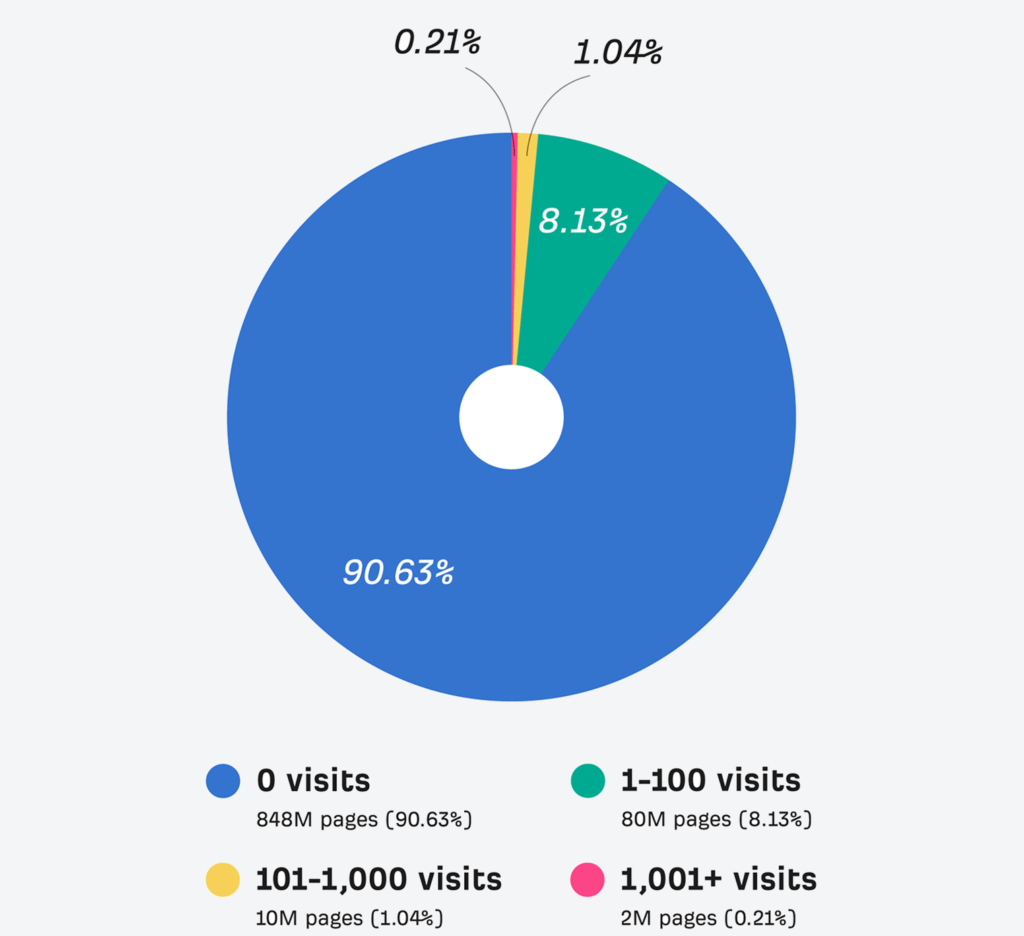
Review your keyword targeting, search intent, and audience segments often. Make sure you create content your ideal readers want. Publishing more only helps if it reaches the right people.
If you need more guidance, read our article on How to Create a Content Marketing Strategy.
Once you have a steady publishing rhythm, focus on cutting the time and effort it takes to keep it going.
Follow this quick guide:
Create a consistent process for drafting, reviewing, approving, and publishing content.
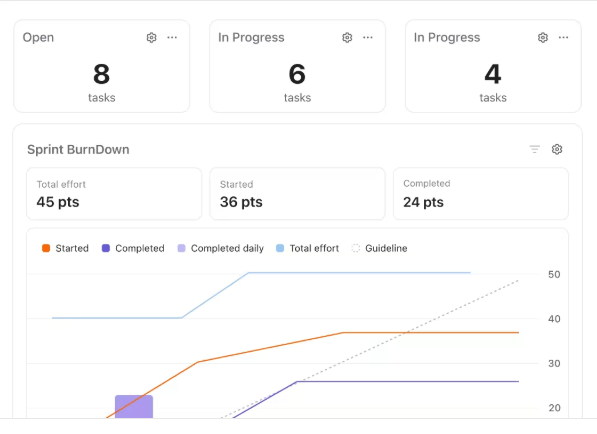
Use a tool with project views, like ClickUp or Asana, to standardize your workflow. That way, everyone on your team knows what stage each piece is in.
We highly recommend checking out our guide on how to write faster.
Cut down your formatting time when moving pieces between tools.
Pasting from Google Docs often means fixing heading styles, uploading images again, and cleaning up encoding issues. All of that eats into team time.
For instance, the gap between “ready to publish” and “live on site” is an efficiency drain many content teams overlook. Wordable removes this step by exporting straight from Google Docs to WordPress (or HubSpot). Your formatting stays intact.
Here’s how it works:
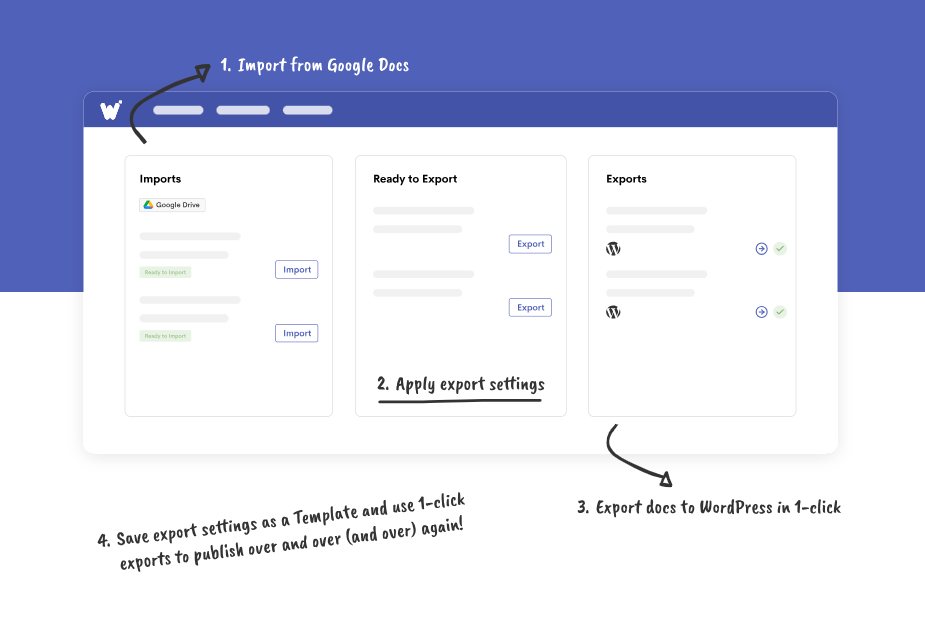
Group similar work together. Don’t keep switching between research, writing, editing, and publishing. For example, do all your keyword research in one session. Then schedule all your publishing in another. Each switch forces you to refocus, so fewer switches leave more time for deep work.
Measure how long content waits between key stages. Track the time from first draft to approval. Then track the time from approval to publication.
(Many teams track output but never measure how long content sits idle.)
Tracking time-to-publish helps you find bottlenecks. It also shows if changes to your workflow are paying off.
Productivity and efficiency work best together. But they shouldn’t be improved at the same time.
Start by making sure your team publishes enough valuable content for the right audience. Once that base is in place, improve efficiency. Remove extra steps, cut manual work, and shorten your time-to-publish.
The goal is a content operation that keeps producing valuable content. It should also get that content in front of your audience with as little wasted effort as possible. ☑️
P.S. Does your team publish from Google Docs to WordPress or HubSpot? Wordable can remove a major publishing bottleneck. It exports your content with formatting intact.
No. Productivity measures how much useful output your team produces. Efficiency measures how well your team uses its time and resources to produce that output.
Neither is more important, but productivity should come first. Once you’re producing the right content on a steady basis, improve efficiency. Cut the time and effort it takes to create and publish it.
Measure content team productivity with metrics like articles published, content briefs completed, keywords ranking, organic traffic, and leads generated from content.
Choose metrics that align with your team’s business goals.
Yes. A content team can publish a lot of content and still waste time. Extra reviews, manual publishing, and clunky workflows are common causes.
A team that publishes 20 articles a month is productive. But what if those articles need heavy editing, manual formatting, and long approval chains before they go live? Then the team is productive but not efficient.
Focus on publishing VALUABLE content at scale.
Build a consistent workflow. Target topics your audience cares about. And work with expert writers who understand your readers’ pain points.
Things that cause low productivity in content teams include:
These issues reduce the amount of valuable content your team can produce.
Inefficiency usually comes from extra manual work, repetitive tasks, many review rounds, and tools that don’t connect. These add time and effort to publishing. But they don’t make the final result any better.