


Editorial workflows don’t break because people are lazy.
They break because nobody knows what happens next. 🙃
Publishing a few pieces of content each month is one thing. Publishing dozens while maintaining quality, consistency, and momentum is an entirely different beast.
Modern editorial teams rarely scale through more meetings or longer to-do lists. They scale through clear systems.
A structured editorial system helps everyone know what to do, when to do it, and who’s responsible for the next step.
It gives you a clear way to publish at a steady pace without sacrificing quality.
Let’s take a closer look at how to build an editorial workflow that moves content from brief to published with less friction. 👇
Highlights
The demand for content is increasing.
According to Adobe research, 96% of marketers have seen content demand double over the last two years, while 62% report a fivefold lift.
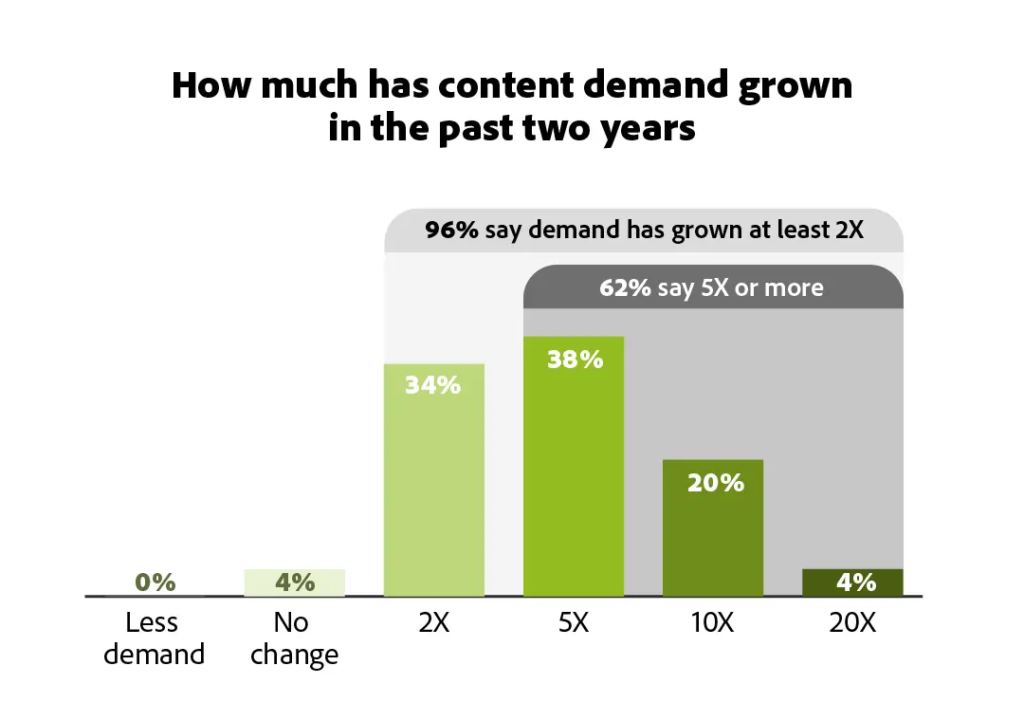
The challenge of producing more content is operational rather than purely creative. A few emails and a shared spreadsheet might work well when you’re publishing five articles a month.
Fifty articles a month is a different story.
Every new piece adds another brief, review, approval, image, deadline, and publishing task. Unless your editorial workflow is a structured system, small gaps tend to multiply.
As content production scales, informal processes start to strain.
(A brief arrives without key details. Two people work on the same task. Reviewers offer conflicting feedback. Writers wait for approvals. Publishing dates move. Yikes. 🙃)
None of these issues seem significant on their own, but together they add friction to the entire editorial process.
Despite these common operational issues, the Content Marketing Institute’s 2025 B2B Content Marketing report found that 45% of marketers still lack a scalable model for the content creation.
(I was shocked when I read that!)
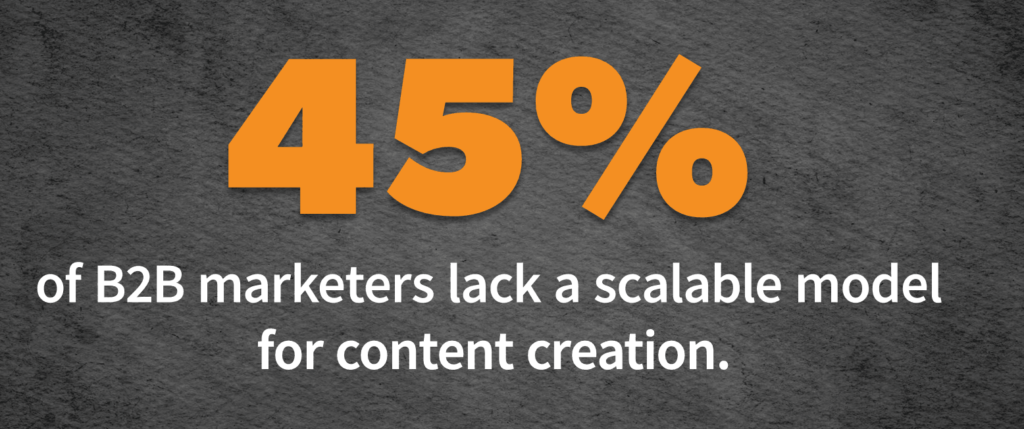
A structured editorial system offers that scalable model. It helps you overcome inconsistency by giving every article the same path from brief to publication.
Nobody’s relying on memory or workarounds. Instead, the editorial team follows repeatable steps. The process becomes easier to scale because everyone knows exactly what to do at each stage.
The payoff is faster publishing.
The production process contains fewer bottlenecks. Every handoff has a clear owner. Every stage has a purpose. And the entire team spends more time creating content and less time figuring out what comes next.
If your editorial workflow currently lives in Slack messages and everyone’s memory, we need to talk. 😅
What you need more than anything right now are clear systems.
Why?
Efficient content processes help your team meet deadlines and streamline collaboration.
Here’s what I recommend. 👇
Establish what success looks like first.
Every content marketing strategy exists to achieve something.
It might be …
Whatever your objective, the goal comes first. The process follows.
This is because your objectives shape every part of your content production pipeline. Your goals affect the content types you create, your publishing frequency, review stages, and KPIs.
For example, a team focused on SEO may need keyword reviews and search intent checks. A thought leadership program may require subject-matter expert reviews before publication.
To build your foundation, start by outlining the rules the process needs to support.
Once those decisions are in place, building the rest of your workflow guide is more straightforward.
Create a workflow map showing every step a piece of content takes from ideation to publication.
Start with your content calendar.
Plan, prioritize, and schedule content ideas. This helps your team manage deadlines, balance workloads, and keep every piece of content moving through the process.
From there, map the rest of your editorial process. Strong high-output content teams know exactly where a piece of content goes next and who’s responsible for moving it forward.
For example, your process might look like:
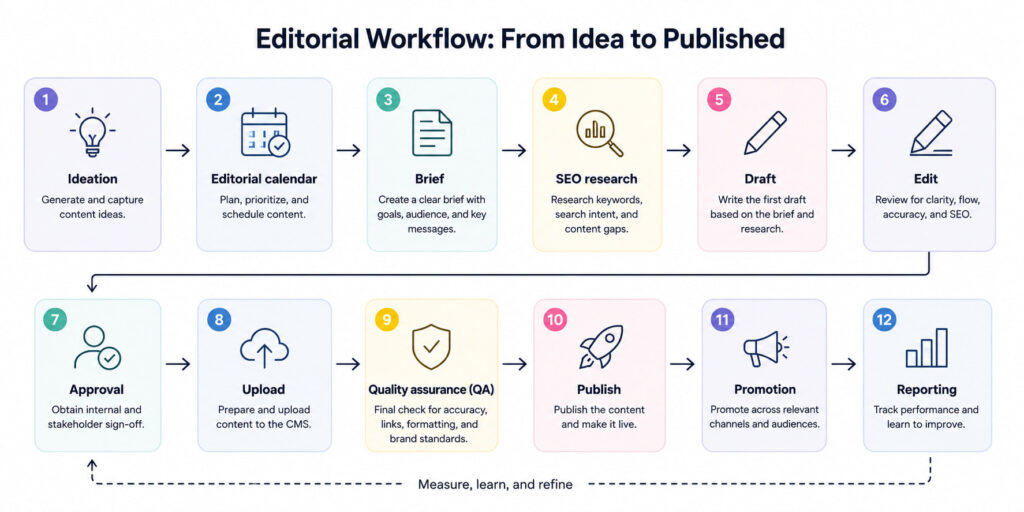
(Image by Ioana)
Once you’ve mapped the process, review it with your team and look for missing stages, duplicate reviews, or unclear handoffs. (Small adjustments here prevent bigger workflow issues later. Don’t ask me how I know …)
Give every stage of the process a single owner.
As content production grows, tasks often involve multiple people. That’s helpful for collaboration. But accountability still needs a home.
When ownership feels shared, nobody feels completely in charge of the task. This can lead to stalled approvals, reviews, and publishing. Instead, create a simple ownership table for your editorial process.
Define clear roles and responsibilities early so it’s easier to assign work.
Here’s a quick example:
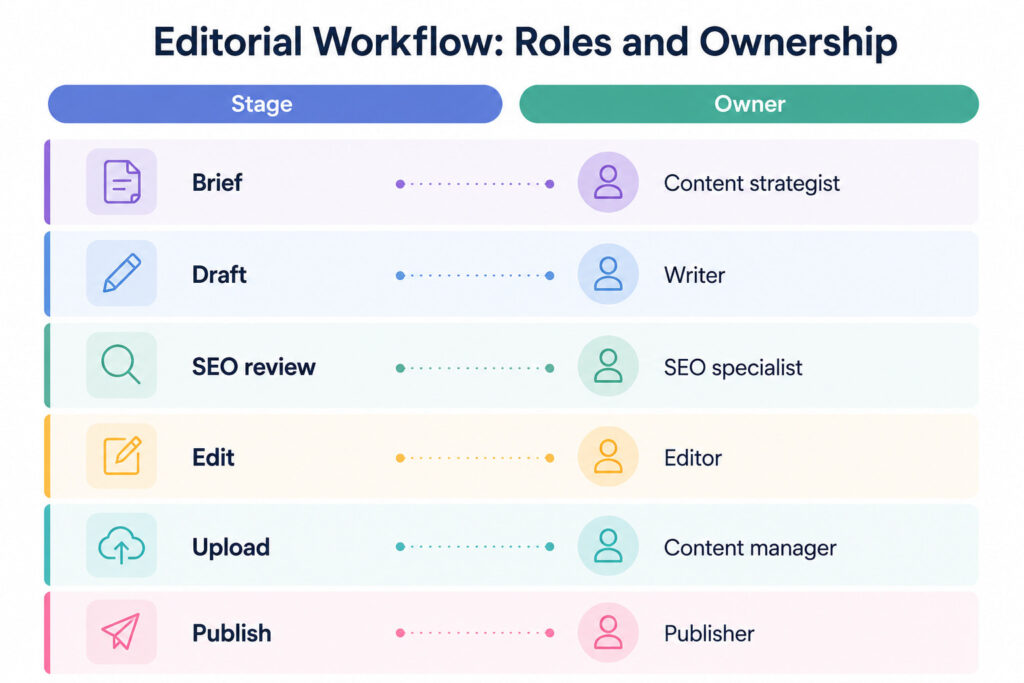
(Image by Ioana)
Of course, others can contribute at each stage, but one person should own the task.
This reduces confusion. Answers come faster, decisions happen sooner, and work keeps moving.
Create a standardized content brief template before assigning projects.
Standardization gives everyone a shared starting point.
(Strategists know key information to support content goals. Writers know what’s expected from each piece. And editors know what they’re reviewing.) This consistency is especially valuable as your content output grows.
Make sure your briefs answer key questions contributors usually ask before they begin work.
Include:
Make sure to include any relevant formatting instructions or quality standards.
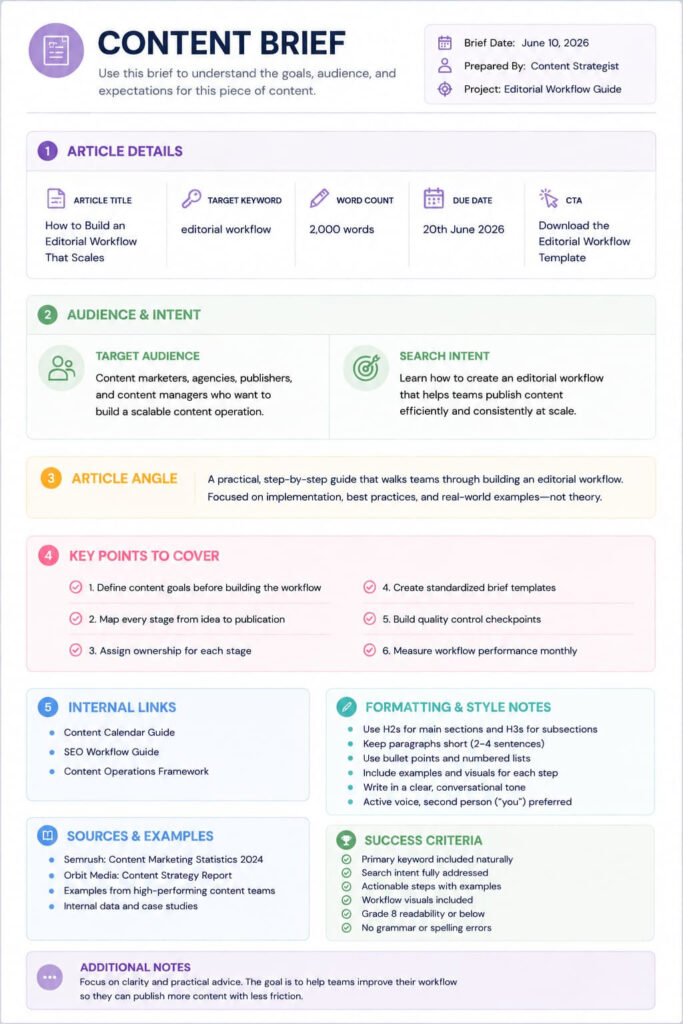
As you use the template, pay attention to additional recurring questions from writers and editors. If the same information comes up repeatedly, add it to the brief.
Build a QA checklist that content must pass before moving to the next stage.
Most teams know what effective content looks like. The challenge is checking for the same things every time.
A checklist helps you improve your editorial consistency as you scale.
For instance:
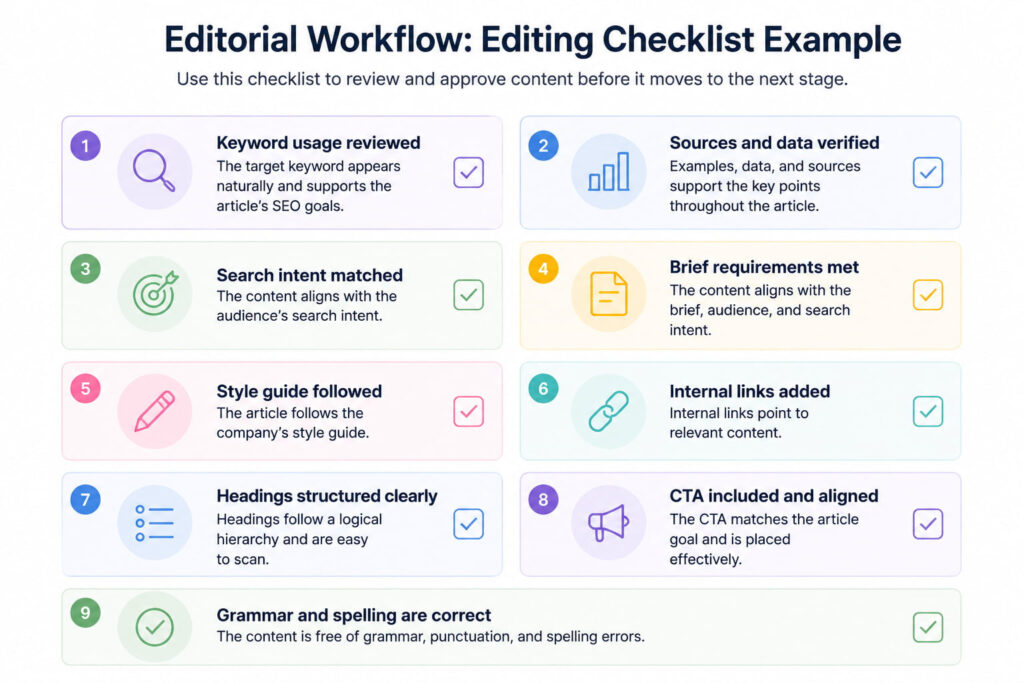
(Image by Ioana)
The exact items will vary from team to team. But the purpose stays the same: Help people catch small issues early and move content forward.
Include content review stages in the process instead of saving all feedback for the end.
Early reviews help teams make adjustments while projects are still easy to update. They also create opportunities to confirm that the content is heading in the right direction before anyone wastes time.
Review checkpoints also support stronger collaboration among team members. Everyone sees feedback at the right stage, which makes it easier to strengthen the article as it develops. Each checkpoint adds value, and the final review becomes a quick check rather than a major task.
A simple review structure might look like this:
Brief review → Outline review → Draft review → Final QA
Use AI and automation to handle routine tasks, so your team has more time for strategic work.
According to the Typeface Signal Report, leaders spend more than 15 hours a week on work they believe they could automate. The same report shows the value of employing AI to do this work. AI users are four times more likely to keep pace with content demand.
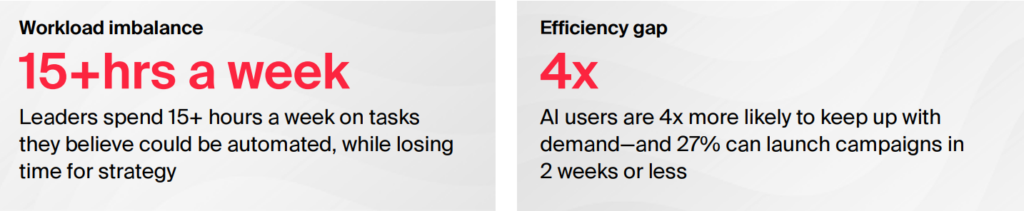
The biggest opportunities often appear between the major stages of content production.
You need to organize research, create briefs, write metadata, and compile reports. None of these tasks are too difficult — but they eat away at time you could spend on strategy and problem-solving.
Here are some practical ways AI can support repeatable tasks throughout the process:
| Workflow stage | What takes time in a manual workflow | How AI can help |
| Planning | Reviewing performance data, prioritizing topics, identifying content gaps | Surface trends, identify content opportunities, summarize performance data |
| Briefing | Gathering research, organizing notes, creating briefs from scratch | Summarize research, generate first-draft briefs, organize source material |
| Content creation | Building outlines, researching supporting points, filling knowledge gaps | Generate outlines, summarize sources, suggest supporting topics |
| Review | Checking briefs against drafts, chasing approvals, following up with reviewers | Flag missing requirements, route content to reviewers, send reminders and status updates |
| Publishing | Writing metadata, creating social copy, preparing assets for publication | Draft metadata, generate social posts, create image captions and alt text |
| Distribution | Scheduling content across channels and repurposing messaging for different audiences | Create channel variations, schedule posts, generate newsletter summaries |
| Reporting | Gathering data from multiple sources and creating updates for stakeholders | Compile reports, summarize results, identify workflow bottlenecks |
Focus AI on repeatable operational work across the workflow. Then keep content strategy, expertise, positioning, and final editorial decisions with your team.
Create a publishing process that transitions into distribution after the article goes live. This helps your content reach more people and continue to deliver value after publication.
Make a checklist covering every post-publication task.
This might include:
With a continuous publication flow, one blog post can turn into several social posts, a newsletter feature, and future content ideas.
Building these activities into your content workflow helps you get more mileage from every article.
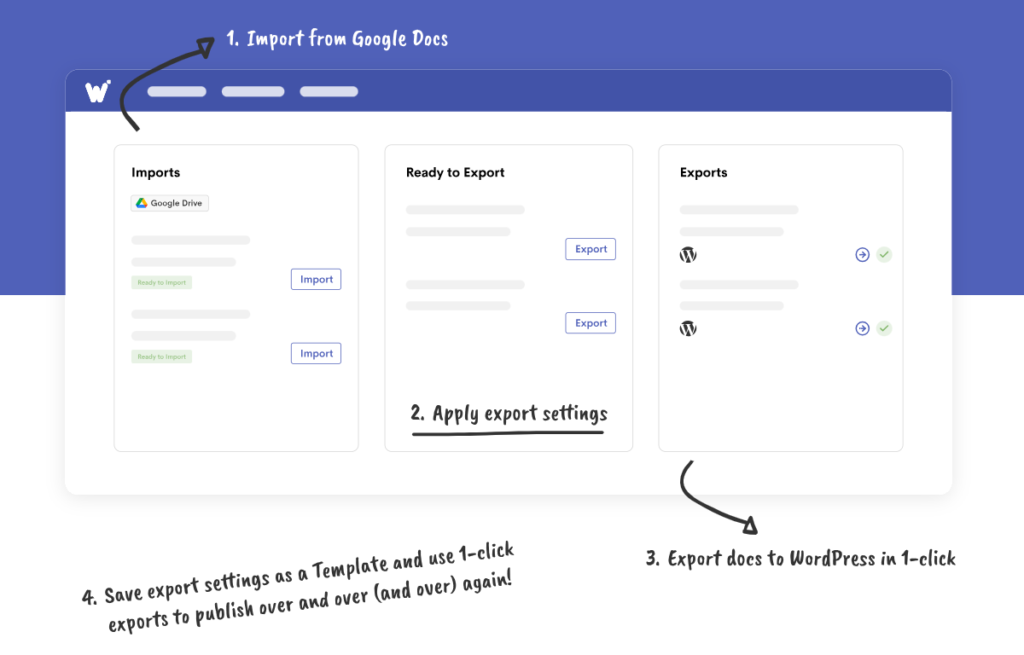
*Pro-tip: To format and publish your pieces from Google Docs to WordPress faster, use Wordable!
Write down your process and store it somewhere the whole team can access it.
Teams grow. People join, responsibilities change, and new projects start. Documenting your editorial workflows gives everyone a reference for finding answers and following the process.
I recommend creating a central hub using shared documents, Trello, or another workflow management tool. If you use other content marketing tools, add instructions to those workflows as well.
Include SOPs, onboarding materials, checklists, content briefs, approval and permission steps, and quality standards. If someone needs information to do their job, they should be able to find it here.
This gives your team members a clear reference point and supports onboarding as your content operation grows.
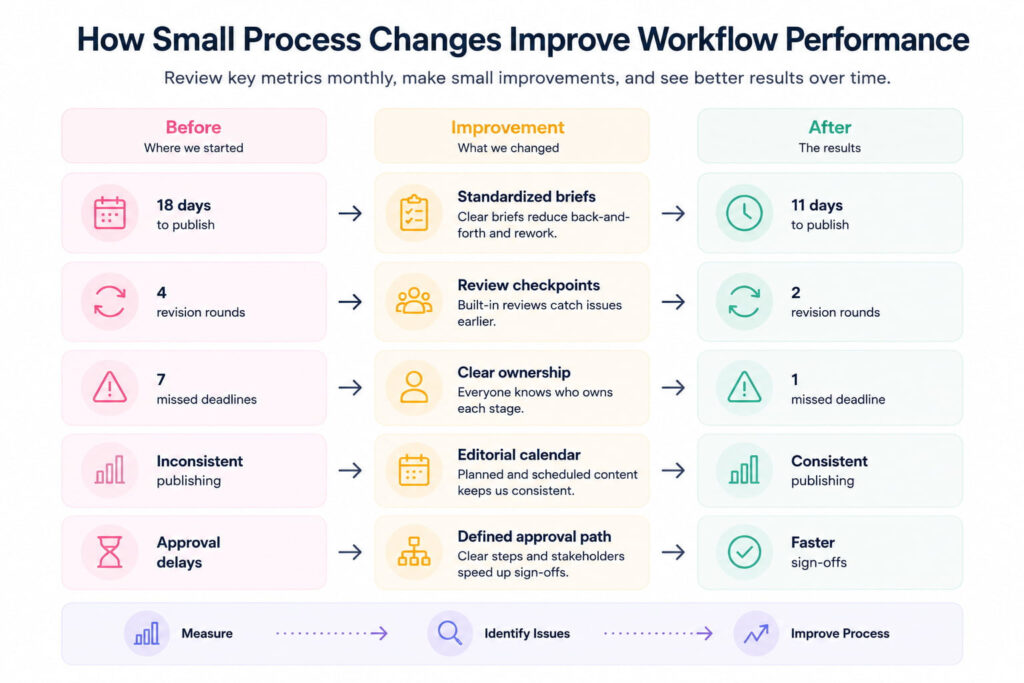
Track workflow performance regularly and use the data to improve your process.
Even the most effective editorial workflow benefits from regular review. As teams publish more content, new challenges and requirements can arise. (Stuck automations and crappy formatting continue to plague content teams no matter how many years go by. 🙃)
Choose a small set of metrics and review them monthly.
Common metrics include:
These metrics help you see what’s working and what needs attention.
Look for patterns over time.
If approvals regularly slow projects down, review that part of the process. If certain content types require many edits, update your quality standards. Set up one-on-one meetings to check in with leadership and writers when you can — ask them for process feedback and try to implement it when possible.
(Image by Ioana)
Small changes add up. Over time, they can help your team publish more content with less effort.
An efficient editorial workflow creates clarity. Team members know what happens next, who owns each stage, and how content moves from brief to publication.
If you’re creating an editorial system for the first time, keep it simple:
Then refine the workflow as your needs evolve.
The goal is to create a process your team uses consistently. That’s what helps content teams maintain quality, scale content production, and publish with confidence month after month.
Once the workflow is documented, the last step is reducing friction during publication. That’s where the right publishing tool can save the team real time.
And remember, if you need help publishing blog posts from Google Docs to WordPress, Wordable can save your team LOADS of time.
An editorial workflow is a structured process that guides content creation from idea to publication. It covers planning, briefing, writing, editing, approvals, publishing, and promotion.
A documented process helps everyone understand what happens next and who’s responsible for each stage.
To optimize your editorial process, start by identifying stages that slow projects down. Then assign ownership, standardize templates, and remove unnecessary approvals.
Track metrics such as time to publish, revision rounds, and missed deadlines. This helps you spot opportunities to improve the process.
An effective editorial workflow should include:
It should also include clear roles, quality checks, and review stages.
Use helpful tools like Google Docs, Wordable, and workflow platforms like Trello or ClickUp.